
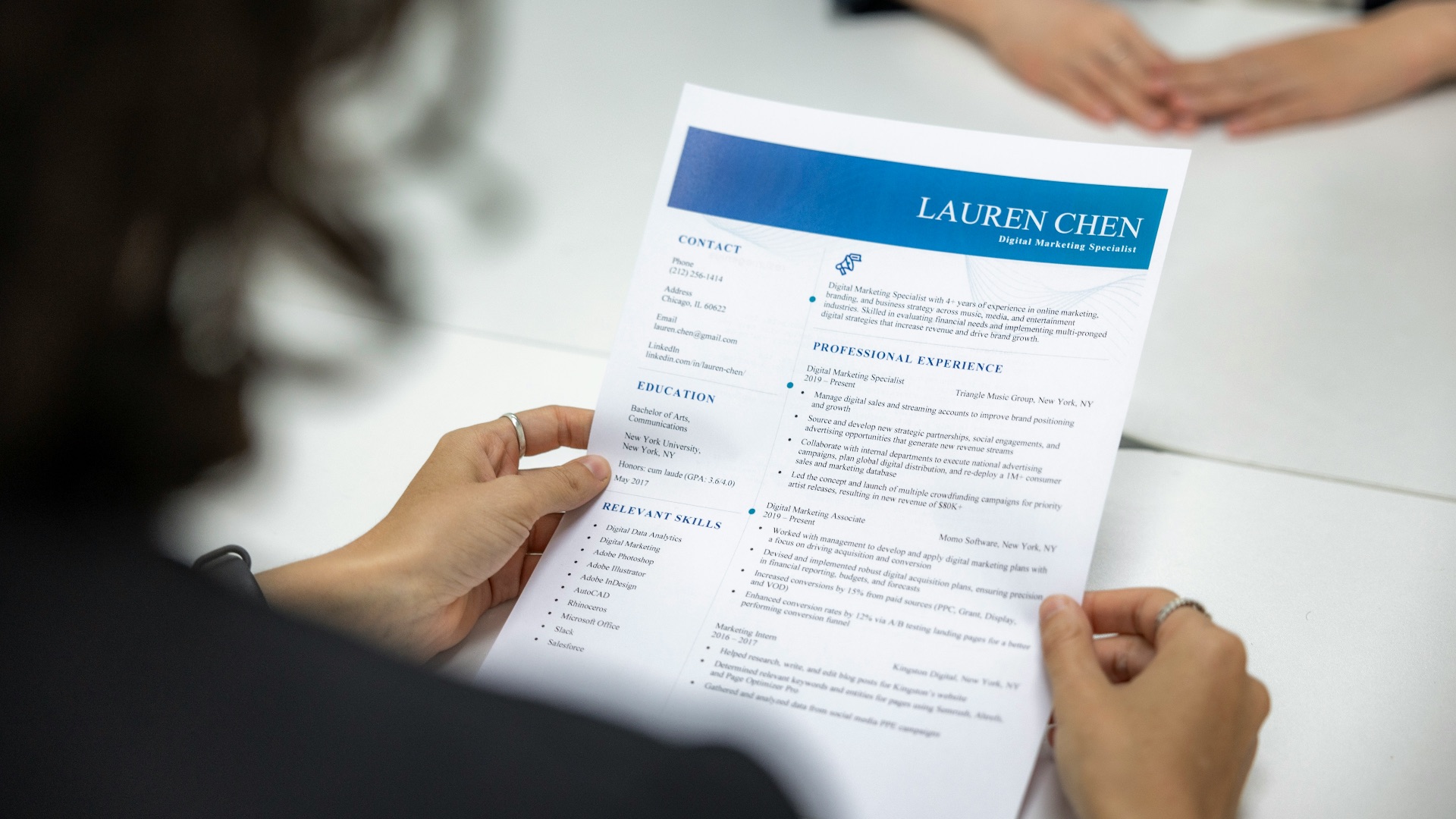
Job hunting can feel like a numbers game, and the odds aren't exactly in your favor right now. With AI screening tools rejecting roughly 75% of resumes before a human ever reviews them, every part of your application, from your cover letter to how you present yourself on the big day, needs to work in your favor. Even when you make it past the algorithm and land an interview, a handful of avoidable missteps can undo all that effort in a matter of minutes.
But there is a silver lining: most rejection-triggering mistakes aren't about your qualifications at all. Instead, they're more about the small, often overlooked behaviors and details that hiring managers notice immediately. Below, we're breaking down three of the biggest offenders, why they matter so much to employers, and what you can do instead to keep yourself in the running.
Showing Up Without Doing Your Homework
One of the fastest ways to get crossed off the list is walking into an interview without knowing much (or anything at all) about the company. Recruiters can tell within the first few minutes whether you've put in the effort to learn about the role and the organization, and that first impression sticks. In fact, insufficient knowledge about the hiring company is responsible for nearly half of all interview failures, which makes it one of the most preventable reasons people lose out on a job offer.
You might think that most people would know not to commit such an error, but this mistake actually tends to happen because candidates assume their resume and experience will speak for themselves. Yet, while your background matters, employers also want to see that you understand what they do, who their competitors are, and how the role fits into their broader goals. Skipping that research can come across as disinterest, even if you're genuinely excited about the opportunity. It signals to the interviewer that you're applying everywhere rather than specifically targeting their company.
The fix doesn't require hours of preparation. Spend 20 or 30 minutes looking into the company's recent news, mission, and any projects relevant to the position you're applying for. You just need enough context to ask thoughtful questions and connect your answers to what the company actually values. That small bit of preparation can be the difference between blending in and standing out.
Stretching the Truth on Your Resume or in Your Answers
It might be tempting to round up a number or embellish a title to make yourself look more impressive, but employers are watching closely for this. A striking 85% of job seekers admit to embellishing or falsifying information on their resumes at some point, and hiring managers have caught on. Roughly 64% of them say they'll automatically disqualify a candidate the moment they're caught lying, regardless of how strong the rest of the application looks.
The problem isn't just getting caught during the interview itself. In fact, you might get through the hard part just fine, and your interviewer may not even sense that anything is off during the conversation. Still, inconsistencies tend to surface later, whether through reference checks, background screenings, or follow-up questions that probe for specifics. If you claim you led a project but can't describe the details when asked, that gap becomes obvious fast. Interviewers are trained to dig past surface-level answers, and vague or shifting stories raise immediate red flags about your honesty.
This doesn't mean you should undersell your accomplishments either. The better approach is to frame your real experience in the strongest possible light using specific numbers and outcomes, rather than inventing ones you can't back up. Saying you contributed to a project that increased efficiency by a measurable amount carries far more weight than a vague claim you can't support. Authentic, detailed answers consistently land better than exaggerated ones, and they're a lot easier to keep straight under pressure.
Letting Your Body Language Work Against You
In the growing age of artificial intelligence, using AI tools can be useful when you’re preparing for a job search, especially for organizing thoughts, improving clarity, practicing common interview questions, or simply boosting your readiness and confidence. But there is a limit: when you repeatedly let AI replace your voice and real-time thinking, you're sabotaging your opportunity. From generic, impersonalized cover letters to scripted interview answers, if hiring teams suspect you’re hiding behind a tool instead of showing who you are, it's game over.
No matter how skilled you think you are at hiding your AI use, your judgment is probably off. A CV Genius survey reported that 80% of hiring managers disliked AI-generated resumes and cover letters, and 74% said they could spot when AI had been used in an application. And if you’re reading answers from another monitor being generated in real-time, the interviewer may see it as a trust problem. Your responses may sound professional and polished, sure, but job interviews are more than just about giving the "correct" answers. Recruiters and hiring managers chat with you to see if you'll be a good fit, and it's a chance for them to see how you think, listen, adjust, and communicate under normal workplace pressure, not how an AI might.
All that said, you don't have to swear off AI use completely. A smarter approach is to use relevant preparation tools before the interview: you can ask it to help you identify likely questions, tighten your examples, or practice explaining your personal experiences in a more professional light. These mini sessions can also help ease your nerves and boost your confidence. That way, once the interview starts, your answers still sound like you, but more prepared.
The bottom line is this: job interviews already come with plenty of pressure, and you don't want to kick yourself in the foot by making mistakes that rip the opportunity from your hands. Nerve-wracking as they are, conversations with hiring managers are really just a way for them to get a sense of who you are as a person, as you with them. So show up informed, be honest about your experiences, and present yourself with confidence. You'll put yourself in a much stronger position to move forward.