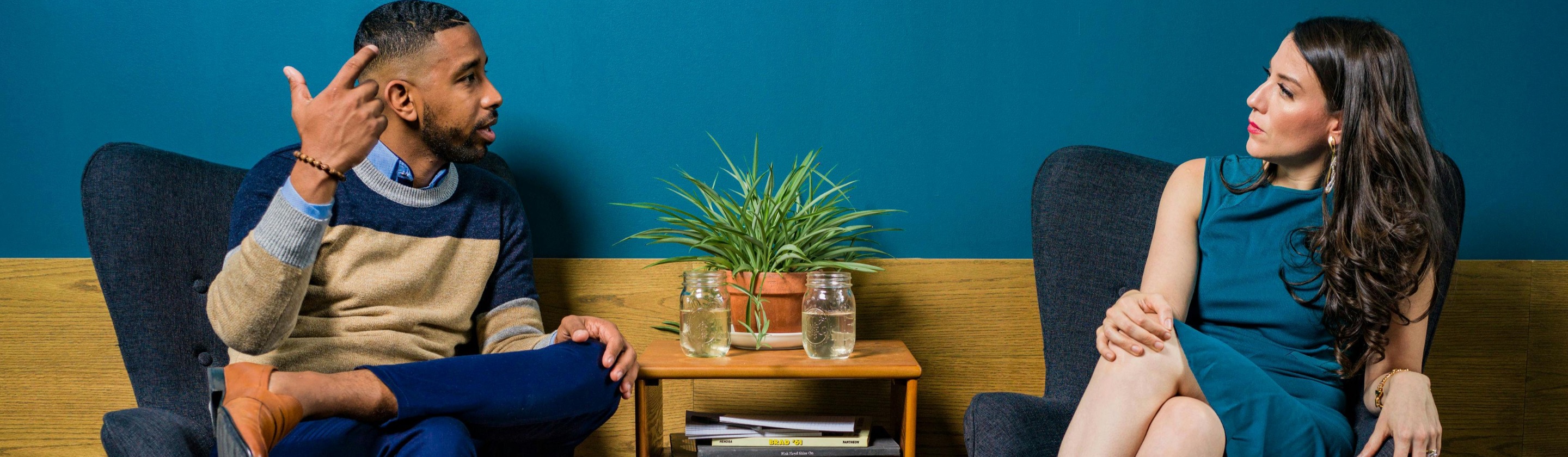

Understanding other people through nonverbal gestures can be difficult at first, but once you know what to look for, it can be easy to distinguish whether someone enjoys your company or not. Noticing subtle shifts in expressions can also tell a lot about whether someone may be lying, or is being insincere or inauthentic. For example, if someone raises their eyebrows when telling you they like your haircut, they might actually not like it.
Are you ready to learn how to read people better? In this article, we'll touch on some of the main things to pick up on when you're conversing with others, such as the mimicking or "chameleon" effect, eye contact, and closed versus open body language.
Are They Mirroring You?
People often think that when someone mirrors your body language, be it your gestures or the way you flick your hair, it means that they're attracted to you. But mimicking others nonverbally doesn't only indicate romantic interest. In fact, this phenomenon, called the "chameleon effect," is our way of building connection and rapport with others. You may, for example, copy a friend's speech patterns or cross your arms when the person you're chatting with is doing it, too.
"Mimicking" might seem like a negative thing, as if you or someone else is mocking your behavior and personality. But it's important to note that it simply means adopting the same gestures, patterns, and expressions. The chameleon effect is supposed to make us feel positive and closer to the other person; after all, it makes us feel more connected, understood, and part of the group. If you notice this effect happening during conversations with someone you're still largely unfamiliar with, take it as a good sign that you're both starting on the right foot.
The Importance of Eye Contact

Eye contact, as you probably know, is also important. Not everyone can maintain it, especially if they're more introverted and shy, but for those who can, eye contact can foster understanding, interest, and good communication. Like the chameleon effect, it can also help build stronger connections with the people around you; you likely wouldn't feel too great if someone were to train their gaze elsewhere while you're chatting with them.
But too much of a good thing may still be a bad thing. If a person maintains prolonged eye contact that seems awkward or suspicious, you have reason to be wary. Liars may sometimes hold their gaze a touch too long to convince you that they're being honest when they're anything but. In these cases, it's actually better if someone is shifty-eyed or glances away.
Closed vs. Open Body Language
Have you ever heard of how someone interested in you will point their body—or more specifically, their feet—toward you? It's all about open body language. Those who mimic your gestures, adopt your speech patterns, and shift their body to fully face you show that they're giving you their complete attention and that they're invested in the conversation. In contrast, someone who sits with their shoulders, feet, and head turned in the opposite direction means that they probably wish they could be anywhere else.
It's also claimed that people who sit with their legs crossed mean that they're both emotionally and physically closed off and feel defensive, and thus are less likely to be swayed or deterred in negotiations. Knowing this may come in handy the next time you're in a job interview or an important client meeting.
Raised Eyebrows and Other Subtleties

There are plenty of other subtle quirks and shifts that help you better understand people, too. For example, someone who raises their eyebrows when complimenting you may mean they're being insincere. You might also raise your eyebrows when you're worried, scared, surprised, or uncomfortable.
You should also know how to tell the difference between a fake smile and a genuine one. The latter often results in crow's feet and wrinkles around the eyes, known as the Duchenne smile; the absence of these wrinkles may mean that someone is only pretending they're happy.
A hunched or slumped body, shaky leg, or fidgeting hands can tell you a lot about someone's state of mind as well. It may signal that they're stressed, anxious, or even feel hostile toward you. Of course, the postures people show can often mean different things, so it's crucial to take other factors into account before making an assumption. Over time, as you continue to pick up on these signs and cues, you'll learn to understand how to read people better.