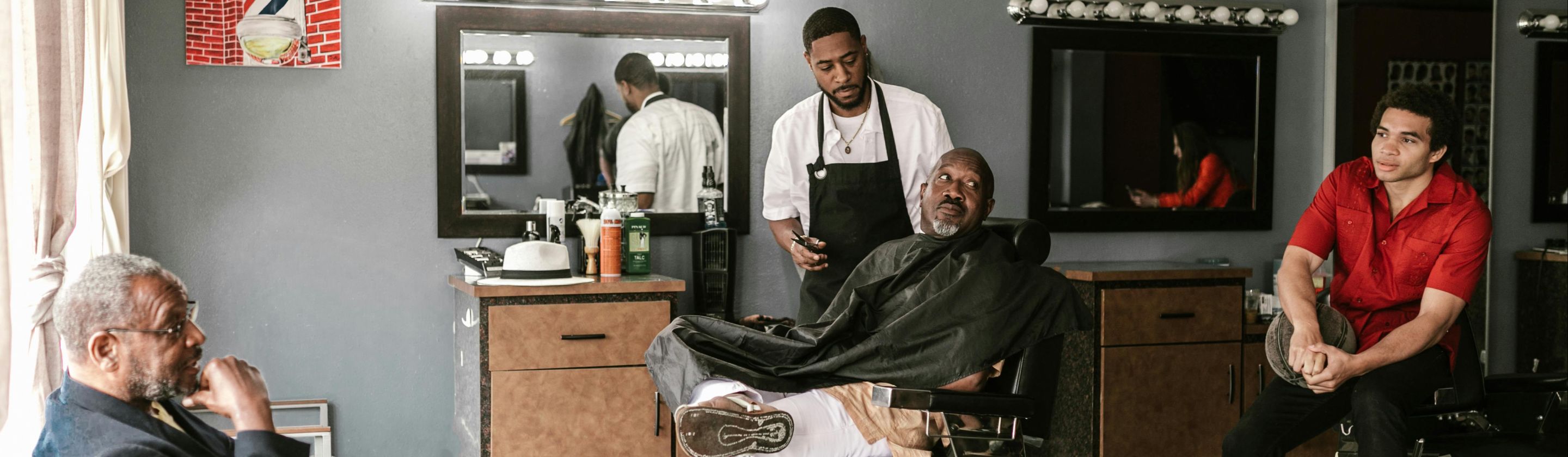
 Mayara Caroline Mombelli on Pexels
There's a particular kind of loneliness that shows up not in isolation but in a crowded room. You scroll past another neighborhood post about a block party, click "interested," and never go. You tell yourself you'll join that book club once things settle down, once you're less tired, once the timing is better. The timing never gets better. Meanwhile, the Surgeon General of the United States released a formal advisory in 2023 declaring loneliness a public health epidemic, estimating that roughly half of American adults report measurable levels of loneliness, with associated health consequences comparable to smoking 15 cigarettes a day.
The gap between wanting community and building it has never been more visible. We have more tools for connection than any generation before us, and by most measures, we're more isolated. The problem isn't access or opportunity. The problem is that real community requires showing up when it's inconvenient, tolerating people who exhaust you, and giving time you'd rather spend on something else. Most of us have quietly decided we'd rather not.
We've Outsourced the Work of Belonging
For most of human history, community was non-negotiable. You needed your neighbors for food, labor, safety, and basic survival. Sociologist Ray Oldenburg spent decades writing about third places, the informal gathering spots like barbershops, diners, and parks where community actually gets built, and his core argument was that these spaces work because they're structurally inconvenient. You go in for one thing and end up in a conversation you didn't plan for. That unplanned friction is the whole mechanism.
We've systematically eliminated that mechanism. Grocery delivery, remote work, and on-demand entertainment have made it possible to meet almost every basic need without encountering another human being. The architecture of modern convenience has been so effective at removing friction that we've started treating friction itself as a problem to be solved, rather than a condition of being in relationship with other people.
What we're left with is a curated version of belonging. We have group chats instead of dinners, comment sections instead of debates, and digital check-ins instead of presence. None of these are worthless, but they don't replicate what happens when you're stuck next to someone at a potluck and have to actually talk for an hour.
Convenience Culture Has Made Us Fragile Participants
When everything in your life is optimized for your preferences, other people start to feel like interruptions. The neighbor who knocks to ask for a favor, the community meeting that runs long, the friend who needs help moving on a Saturday morning: these feel like violations of a contract that was never actually written down but somehow got agreed to anyway. The contract says your time and comfort come first.
Robert Putnam's research in Bowling Alone tracked the decline of civic participation across the second half of the 20th century, and one of his more uncomfortable findings was that the more television Americans watched, the less likely they were to participate in community organizations. Passive entertainment trains you to receive without reciprocating. The dynamic that Putnam described in 2000 is an order of magnitude more powerful now.
The expectation of frictionlessness has made community feel like a product that should arrive on our terms, rather than something we co-create by tolerating each other. You see this pattern in how people talk about wanting connection while simultaneously declining anything that requires compromise, inconvenience, or showing up for someone who isn't showing up for them yet.
Community Is Built in the Interruptions
The research on what actually creates strong social bonds is fairly consistent. Communication scholar Jeffrey Hall's work found that close friendships require somewhere between 50 and 200 hours of accumulated time together, and that proximity-driven contact, the kind you don't schedule, plays an outsized role in how those hours actually accumulate. The key mechanism is repeated, low-stakes exposure to the same people.
This means building community requires engineering your life to have more interruptions, not fewer. Living somewhere and actually going outside, joining things you're not immediately good at, and sitting through the awkward early months of belonging somewhere before it feels natural. You have to be willing to be a stranger for a while, and then keep showing up anyway.
None of this is a revelation. We all know, somewhere underneath the optimization and the busyness, that connection works this way. The harder question is whether we're willing to accept the cost. Community is less a feeling you find and more a practice you commit to, which means accepting that you'll sometimes be inconvenienced, bored, or obligated to people you're still figuring out. That's not a bug in the design. That's the whole point.