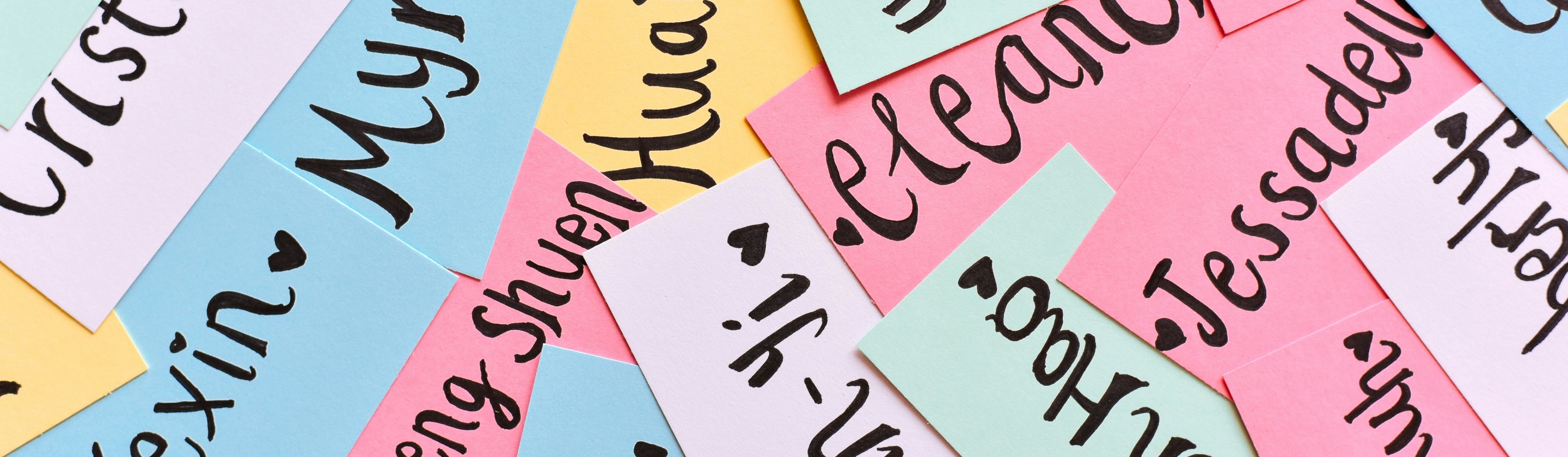
Your Eyes Might Mislead You
Pop quiz: how do you pronounce Sinéad? What about Eilidh? Or, here's one that seems easier: what about St. John? Sorry, but whatever just came out of your mouth is probably wrong. Sure, you've always been told to "sound unfamiliar words out," but sound out any of the names on the list and a native speaker might just laugh at you. Unless, of course, you're confident in your name-pronouncing abilities. With that said, how many of these 20 names that sound nothing like they're spelled can you guess right?

1. Sinéad
Sinéad is commonly pronounced “shi-NAYD,” which isn’t an obvious conclusion for someone applying English pronunciation rules. The accent over the “e” helps show where the emphasis belongs, while the opening “S” takes on a “sh” sound. It’s the Irish form of Janet and became widely recognized outside Ireland through singer Sinéad O’Connor.

2. Aisling
The opening vowels in Aisling may tempt you to say “ayz-ling,” but the name is usually pronounced “ASH-ling” or “ASH-lin.” It comes from an Irish word meaning “dream” or “vision.” Although the written form contains six letters, the spoken version is surprisingly straightforward once you’ve heard it.
 Jorge Fakhouri Filho on Pexels
3. Gráinne
Few English speakers would look at Gráinne and immediately arrive at “GRAWN-ya.” The accented vowel and slender consonant sounds follow Irish conventions that don’t translate neatly into English spelling habits. It’s an old name associated with several figures in Irish history and legend.

4. Eilidh
Eilidh looks as though it should contain several distinct consonant sounds, yet it’s generally pronounced “AY-lee.” The “dh” at the end isn’t spoken the way an English reader might expect. This Scottish Gaelic name is often treated as the equivalent of names such as Helen or Ellie.

5. Mhairi
Seeing Mhairi in writing might lead you to begin with an ordinary “M,” but it’s often pronounced “VAH-ree.” In Scottish Gaelic, adding an “h” after certain consonants can transform the sound significantly. Some people use different pronunciations, however, so it’s always worth following the individual’s preference.
 https://kaboompics.com/ on Pexels
6. Siân
The compact Welsh name Siân is pronounced approximately “shahn,” not “see-an” or “sigh-an.” The circumflex over the “a” indicates a longer vowel sound, while the opening letters produce a soft “sh.” It’s the Welsh form of Jane and has remained popular for generations.
 João Paulo de Souza Oliveira on Pexels
7. Ioan
You could easily mistake Ioan for a creative spelling of Joan, but this Welsh and Romanian name is typically pronounced “YO-an.” The initial “I” functions more like an English “Y” sound. Because the name exists in more than one language, the precise pronunciation can shift slightly depending on the speaker’s background.

8. Róisín
The accents and vowel combinations in Róisín offer little help to readers unfamiliar with Irish. It’s pronounced “ro-SHEEN,” with the emphasis landing on the second syllable. The name means “little rose,” although its sound is much easier to remember than its spelling may initially suggest.

9. Schuyler
Schuyler contains a crowded collection of consonants, but it’s generally pronounced “SKY-ler.” The surname came into English from Dutch and later became a given name as well. Modern spellings such as Skyler make the pronunciation more apparent, but the traditional version retains its older form.

10. Isla
The visible “s” in Isla might convince you to pronounce every letter, but the name is said “EYE-la.” That silent consonant regularly causes readers to guess “ISS-la” instead. Its growing popularity has made the pronunciation more familiar, though the spelling can still catch people off guard.

11. Cholmondeley
You could spend several minutes working through Cholmondeley and still miss the traditional pronunciation: “CHUM-lee.” Most of the letters in the middle have effectively disappeared from the spoken form. This English surname demonstrates how written names can preserve historical spellings long after everyday pronunciation has changed.

12. Featherstonehaugh
At first glance, Featherstonehaugh appears to demand five or six carefully spoken syllables. Traditionally, however, the surname may be pronounced “FAN-shaw.” That dramatic difference developed through centuries of contraction and changing regional speech.

13. St. John
When St. John appears as a personal name, it isn’t always pronounced like the words “saint” and “John.” The traditional British pronunciation is “SIN-jin,” compressing the two written parts into a compact pair of syllables. Anyone encountering it only on paper could be forgiven for missing that completely.

14. Menzies
Many people pronounce Menzies as “MEN-zeez,” and that version is now common in numerous places. Its traditional Scottish pronunciation, however, is “MING-iss.” The unexpected sound comes from an old letter that was later represented by a “z,” even though it wasn’t originally pronounced like one.
 Christina @ wocintechchat.com M on Unsplash
15. Mainwaring
You might naturally divide Mainwaring into “main” and “wearing,” but the surname is traditionally pronounced “MAN-er-ing.” Several written letters become reduced or disappear when the name is spoken. It’s a strong example of why recognizing every English word within a surname doesn’t necessarily reveal how the full name sounds.

16. Beauchamp
The spelling of Beauchamp reflects its French roots, but many British families pronounce it “BEE-chum.” Trying to give it a modern French pronunciation may therefore be just as inaccurate as sounding it out in English. Different families can use different versions, making personal preference especially important here.

17. Belvoir
Belvoir looks as though it should be pronounced “bell-vwahr,” particularly if you recognize the French words within it. In traditional British usage, it can instead be said “BEE-ver.” Very little of the original spelling survives in that shortened spoken form.

18. Wemyss
There aren’t many obvious clues that Wemyss should be pronounced “WEEMS.” The Scottish surname reduces its written “yss” ending to a simple “eems” sound. Once spoken aloud, it sounds considerably more familiar than it appears on the page.

19. Marjoribanks
With Marjoribanks, most readers understandably attempt to pronounce “Marjorie” followed by “banks.” The traditional Scottish pronunciation is closer to “MARCH-banks.” That shortened version removes an entire sequence of sounds that the spelling seems to require.

20. Dalziel
The letters in Dalziel suggest something like “dal-zeel,” but the traditional Scottish pronunciation is “dee-ELL.” Its spelling reflects older writing conventions rather than the sounds represented by modern English letters. Even after learning the correct version, you may need to hear it a few times before the connection feels natural.