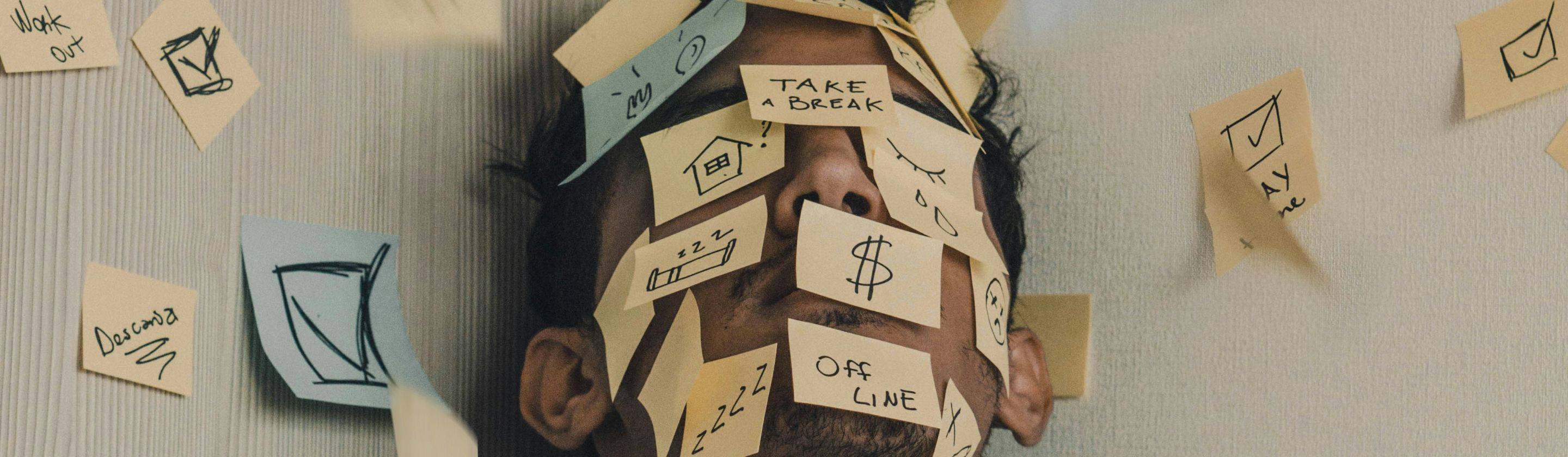

How many things are on your to-do list at the moment? Five things? Ten? Now, how many have you actually started, and how many do you think you'll finish before they have to be completed? If you tend to procrastinate, the answer might scare you.
How come it's so hard to tackle our tasks, even when we know that it puts us in a worse situation if we don't start in a timely manner? As you'll see, there's a lot more to why we put things off than just simple laziness. And don't worry—there are ways to break out of the bad habit.
The Stress of Starting
We've all been there: we're presented with a new task or project, and our minds blank. Even if we can see how we could start tackling it—and even if we have the time—our attention drifts, and we tell ourselves, "I'll do it later." Later, as we know from experience, could be two days or two weeks from then.
There are typically two reasons why the thought of starting makes us procrastinate: we either think the task is too easy and it wouldn't take much time to complete even if we did it later, or we think it's so impossibly difficult, we want to avoid it for the time being. The first scenario, where we think the task is too mundane, is simple enough. After all, why start on something that bores us when we can make better use of our time doing something else? The second scenario, however, is an entirely different beast.
When we deem a task too challenging to begin, we see it as a negative obstacle. It's too insurmountable to finish; it's too daunting to even think about. Imagine having to prepare an important work presentation or needing to book an appointment with your doctor to check an alarming symptom—both tasks frighten us. So, to avoid feeling these negative emotions and the anxiety that comes with them, we push the task aside. Out of sight, out of mind. Even if the decision might harm our future self, the temporary relief we get is too tantalizing to pass up.
The Looming Possibility of Failure

Sometimes, it isn't the thought of starting that makes us procrastinate—it's the possibility that we might fail. This is a perfectionist's worst nightmare: tackling a project that they may not be able to perfectly, successfully wrangle into something beautiful and worthy. Why start when failure is so much more likely? Why finish when the outcome might not be what we want?
What perfectionists don't understand is that inspiration usually strikes once they've gained momentum. To get over a creative block, the solution isn't to shove everything aside and hope that an idea will randomly grace us, or at least wait passively until then. The solution is to take action and try every possible path, so that we can find something that makes the fire spark.
Distractions Are Everywhere
But technology is another reason why procrastination happens. Sometimes, it's not that we don't want to start, but that we're too easily distracted by the things around us to sharpen our focus. From video games to TV shows, social media to text messages, there are countless traps we can fall into. Once our minds have drifted somewhere else, it feels almost impossible to snatch back. One TikTok suddenly turns into 50, and one episode turns into a marathon.
Can You Stop?

The real question is, can you stop procrastinating? Even with these obstacles—the stress of starting, the endless distractions, the perfectionist tendencies—is it possible to begin a task and finish it in a normal timeframe without it feeling insurmountable?
One thing that might help is to break it down. No matter how small or big the project is, simplify it into smaller steps. Try James Clear's—author of Atomic Habits—two-minute rule: instead of just telling yourself to start, scale the task to something less daunting and do it for two minutes. Then build up the habit until achieving the goal doesn't feel so impossible. If that doesn't help, you can also find other methods that might. The key is to continue pushing yourself forward, even when it feels like you're stuck between a rock and a hard place.