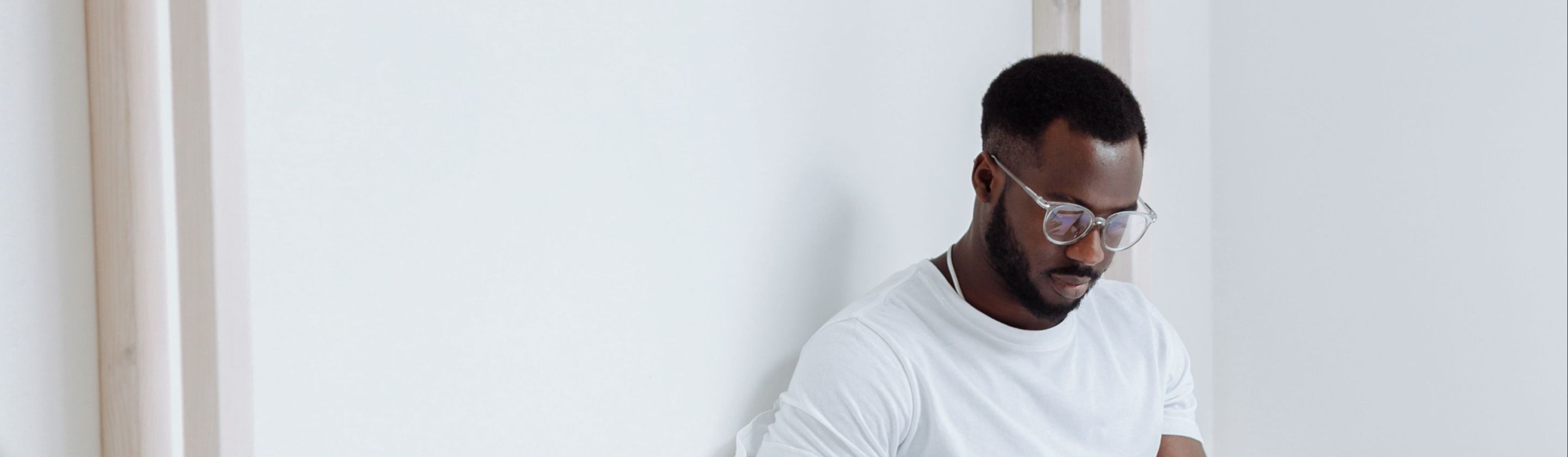

There are certain social contracts that nobody writes down and nobody explicitly teaches, but everybody somehow knows. You learn them the hard way, usually in someone else's bedroom, perched on the edge of a mattress wondering if you've already done something wrong. The bed is the most personal piece of furniture a person owns, and the etiquette around it is more loaded than most people stop to consider.
Proxemics, the study of personal space first developed by anthropologist Edward T. Hall in the 1960s, identifies the space immediately around the body as an extension of the self. The bed sits at the center of that territory. How you treat it when you're a guest says something, and the person whose bed it is will notice even if they never say a word.
The Positioning Question Is Not Neutral
Where you sit matters more than you think it does. Perching on the very edge of the mattress reads as polite and tentative, which is usually the right call on a first or second visit. Sitting cross-legged in the middle, by contrast, is a level of comfort that has to be earned or explicitly invited. Most people understand this instinctively, and the ones who don't tend to leave an impression.
There's also the question of what you do with yourself once you're there. Sitting upright is one thing. Leaning back on someone's pillow without being asked crosses into a different category of familiarity, because pillows are where people put their faces at night. Whatever is on those pillows is personal in a way that a chair cushion simply is not.
The headboard end of the bed carries more social weight than the foot. Sitting near the pillows implies a level of intimacy that sitting near the foot does not. If you're not close with the person, default to the foot end, or better yet, look around for a chair. Most bedrooms have one, and using it is never the wrong choice.
Shoes Are a Separate Conversation
The shoes-on-the-bed situation is one of the few unspoken rules that has genuine hygiene data behind it. A 2008 study by microbiologist Dr. Charles Gerba at the University of Arizona, found that the average shoe sole carries around 421,000 units of bacteria on the outside, including Escherichia coli and other organisms you do not want transferred to a surface where someone sleeps. The person whose bed it is already knows this, even if they've never cited the study.
There are cultural dimensions here too. In many East Asian and Middle Eastern households, shoes come off at the door as a matter of course, and placing them anywhere near a sleeping surface would be considered a serious breach. Even in households without an explicit no-shoes rule, most people feel a version of this instinctively. Reading the room before you sit down is the simplest possible version of paying attention.
If you're wearing shoes and the only option is the bed, sit on the absolute edge and keep your feet on the floor. This is not a complicated solution, and pulling it off without being asked demonstrates a social awareness that people remember, even when they can't articulate exactly what they noticed.
What You Touch and What You Move
Someone's bed is usually an ecosystem. There are books, chargers, a specific arrangement of pillows, a blanket folded a particular way. Moving any of it without permission is a small act of disruption that can feel larger than it looks. This isn't about being precious. It's about recognizing that people have routines built around their sleeping space, and rearranging it uninvited puts the burden of restoration on them after you leave.
The same logic applies to anything on the nightstand or tucked near the pillows. Medication, journals, a phone face-down for a reason, items that happen to be visible because this is someone's private space and you're in it. The appropriate response to all of it is to register nothing. Looking, commenting, or picking things up to examine them transforms you from a guest into an intrusion.
Leaving the bed in the same condition you found it is the baseline. If you've shifted the pillows, put them back. If you've wrinkled the duvet, smooth it out. If you're not sure whether something has moved, err toward straightening it anyway. The highest compliment you can pay someone's bedroom is leaving it exactly as you found it.