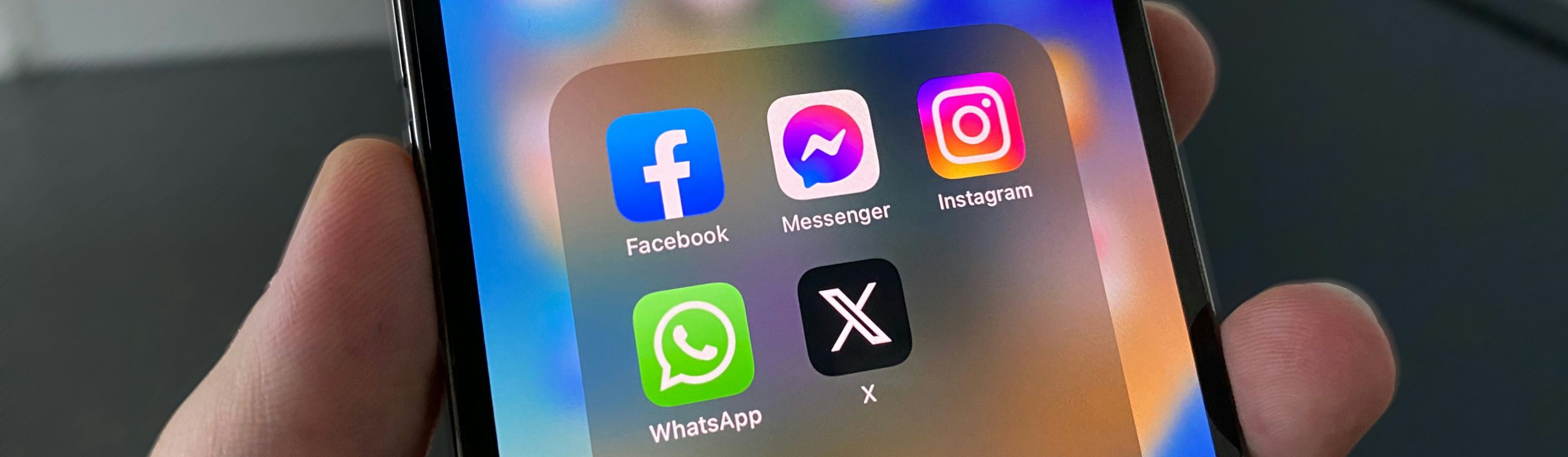
For most of modern history, people encountered beauty standards through magazines, movies, television, advertising, and celebrities. Social media changed that relationship by making appearance-based content constant, interactive, and much more personal. Instead of simply seeing an actress or model in a magazine, you can now scroll through hundreds of ordinary people, influencers, celebrities, and creators presenting carefully selected versions of themselves.
That being said, there has been no evidence to prove that social media created beauty standards or changed the way we perceive attractiveness. But it can have effects on our body image if exposed to many pictures of ideal bodies and social comparison to others' appearances. In 2022, after looking at 43 experiments, there were conclusions that looking at idealized images on social media caused higher levels of body dissatisfaction. And a meta-analysis of 83 studies concluded that there was a correlation between social comparison on the internet and body image.
One of the biggest changes is the sheer number of people who can participate in presenting beauty ideals. In the past, a magazine editor, casting director, or advertising agency had considerable influence over which faces and bodies appeared in popular media. Social platforms opened the door for practically anyone to build an audience, although popularity and platform algorithms still determine which content receives the most visibility.
It has become closer in proximity. There's a chance you're comparing yourself to that coworker, someone you know, some social media star, or just another person that you find yourself wanting to look like. Many studies have found that appearance comparisons play a role in how people perceive their body image from the use of social media.
Another factor that has led to higher beauty standards on social media is the ability to touch up one's photo before posting it. They may spend hours taking pictures, pick one they like, do makeup, or fix the lighting on their image and post it. The result may look casual even when considerable effort went into producing it, which can make highly polished appearances seem more ordinary than they really are.
Filters Changed the Face We Expect to See
Filters and editing tools have added another layer to the way attractiveness is presented. People can alter skin texture, facial proportions, lighting, eye appearance, and other features with relatively little effort, meaning that the image on your screen doesn't necessarily represent what the person looks like in everyday life. Experimental research reviewed in 2022 included social media images that had been manipulated to remove wrinkles and blemishes or reshape body proportions.
Why this is important is that if you are shown these altered traits over and over again, they can become what you view as attractive. With edited images of similar skin types and body shapes, these can begin to become what we think of as ideal. New studies about AI beauty filters have shown that they can contribute to lower self-esteem about one's appearance. Though each study can only go so far into saying everyone will react this way.
As this technology continues to advance, filters can alter more aspects of one's image. Previously, there were filters that would add certain characteristics to your photo, but now filters can alter things you may not notice right away. That doesn't mean everyone believes what they see online is completely natural, but recognizing that an image is edited doesn't necessarily eliminate its influence on what someone considers attractive.
Social media doesn't simply show you a random selection of faces and bodies. Recommendation systems determine much of what appears in your feed based on signals such as engagement and your previous activity, which can create highly personalized streams of content. If you frequently interact with appearance-focused posts, you may consequently encounter more of them.
This can make particular beauty trends feel more widespread than they actually are. When the same hairstyles, makeup techniques, body types, clothing styles, or facial features appear repeatedly in your feed, they can seem like the current standard even though your online experience isn't a representative sample of the entire population. Researchers studying social media and body image have therefore paid particular attention to the role of repeated exposure and social comparison.
Another effect is that trends can happen very rapidly. One feature that may take viral attention can become the "new trend" that people want to have. Only to be replaced with another trend later on. You have to deal with new beauty standards coming at you much faster than from the normal sources we used to rely on.
Attraction Has Become More Personalized
Social media hasn't created one universal definition of attractiveness. In some ways, it has done the opposite by giving people access to an enormous variety of communities, styles, cultures, subcultures, and individual preferences. Someone who doesn't fit the beauty ideals emphasized by mainstream entertainment may find an audience online that appreciates exactly those qualities.
That can be a good thing as well. You have the ability to find others who may not fit into those typical looks, you can find people with different types of beauty and see them portrayed in media. Research on body-positive content has produced mixed results, but systematic reviews have found preliminary evidence that some forms of body-positive material may help reduce body dissatisfaction.
However, if you only allow your social media to show you certain beauty standards, you can start to think there isn't any variation out there. Which is why social media can change our views on beauty. Social media has therefore changed attractiveness not simply by introducing new preferences, but by giving those preferences an unusually persistent place in everyday life.
In conclusion, social media hasn't changed humans' idea of beauty completely. It has changed how often we're exposed to particular appearances, how easily we compare ourselves with other people, and how quickly trends can spread. The healthiest way to view those images may be to remember that a social media feed is a curated collection of photographs and videos, not a neutral survey of what everyone looks like or what everyone finds attractive.