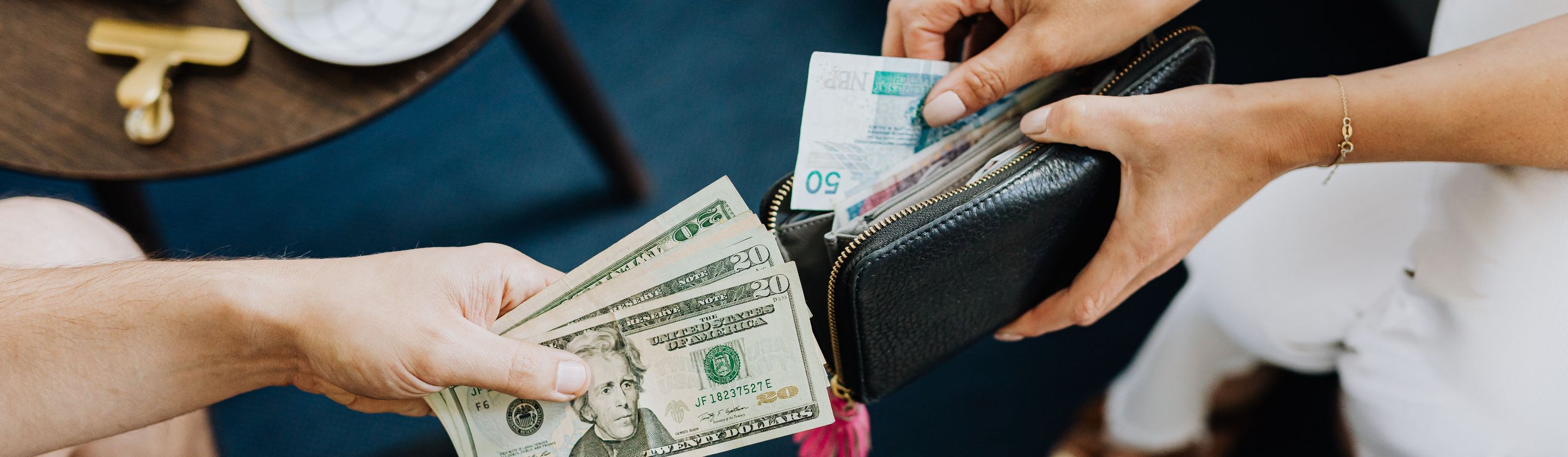

The conversation about what men want in a relationship has gotten louder, more polarized, and more confused. On one end, there's a contingent of men who insist women should be fully supported and never split a bill. On the other, there are men who resent women for expecting financial chivalry while also demanding total independence. What gets lost in that noise is a third, quieter group: men who want a woman with traditionally feminine energy and also want her to go in on the mortgage.
This isn't a contradiction, even if it can feel like one. The desire for a partner who is warm, nurturing, and relationship-focused doesn't cancel out the desire for a partner who is financially capable and willing to carry her share. For a lot of men, those two things belong in the same package, and the data suggests this combination is more common than the culture war framing of this conversation implies.
The Economics Have Changed, and Men Know It
The financial reality of modern relationships is hard to argue with. A 2023 Pew Research Center analysis found that equal-earning marriages grew from 11% in 1972 to 29% in 2022, and women now account for more than half of the college-educated labor force. Single women without children had a median wealth of $87,200 in 2022, edging out the $82,100 median for single men. The assumption that women need financial support from a male partner is increasingly disconnected from reality.
Men paying attention to those numbers aren't abandoning their appreciation for traditionally feminine qualities. What they are abandoning is the assumption that domestic warmth and financial contribution are mutually exclusive. A University of Connecticut study found that men who are the sole breadwinners have lower psychological well-being and worse health outcomes than men whose partners contribute equally to household income, which suggests that shared financial contribution is better for men in measurable ways.
This has shifted what men mean when they say they want a traditional woman. The version that appeals to them isn't someone who stays home while he handles everything outside it. It's a woman who brings feminine energy and financial participation to the same relationship, which feels less like a throwback and more like a sensible upgrade on arrangements that left both partners stretched thin.
Traditional Values Don't Mean Financial Helplessness
One of the more persistent misconceptions here is that femininity and financial capability are somehow in tension. A woman can prioritize her relationship, invest in creating a warm and stable home, and place real value on partnership without needing a man to subsidize her existence. These traits are not opposites, and men who want a traditionally feminine partner are not necessarily looking for someone economically dependent.
A 2025 Chime survey of 2,000 single or casually dating Americans found that nearly half of men (47%) believe the man should pay for all of a date, while only a third of women agreed. That gap coexists with a 2023 Institute for Family Studies and YouGov survey finding that 6 in 10 Gen Z adults of both genders say dating costs should be shared. The direction is clearly toward shared responsibility.
What men in this category describe is less about dollars and more about attitude. A woman who earns her own money and approaches a relationship as a genuine financial partner signals something beyond economic capability. It signals that she's there because she wants to be, not because she needs a provider, and that shift in dynamic is exactly what many find most attractive about the combination.
The Compatibility Problem Nobody Talks About Enough
The men who want this combination often run into a real compatibility problem: the cultural framing of traditional femininity and financial equality as opposites means that women who embody both can be hard to find in a dating landscape that sorts people into camps. Dating someone nurturing who still expects the man to cover everything creates a resentment that builds slowly. Dating someone financially independent who treats the relationship as an equality-audited arrangement creates a different problem.
About half of men (51%), compared with 37% of women, say men are doing worse today in finding a romantic partner, according to a 2024 Pew Research Center survey. Part of that gap likely reflects this mismatch between what men say they want and what they find. The combination of femininity and financial self-sufficiency exists, but it doesn't always surface early in dating, and men who want it often don't know how to ask without sounding like they're issuing a checklist.
The relationship model most men in this camp are reaching for is one where both partners bring something real to the table, where traditional emotional and domestic values coexist with modern economic ones, and where neither person is carrying the full weight alone. That's less of a contradiction than it sounds, and more of a description of what a functional partnership between two capable adults actually looks like.