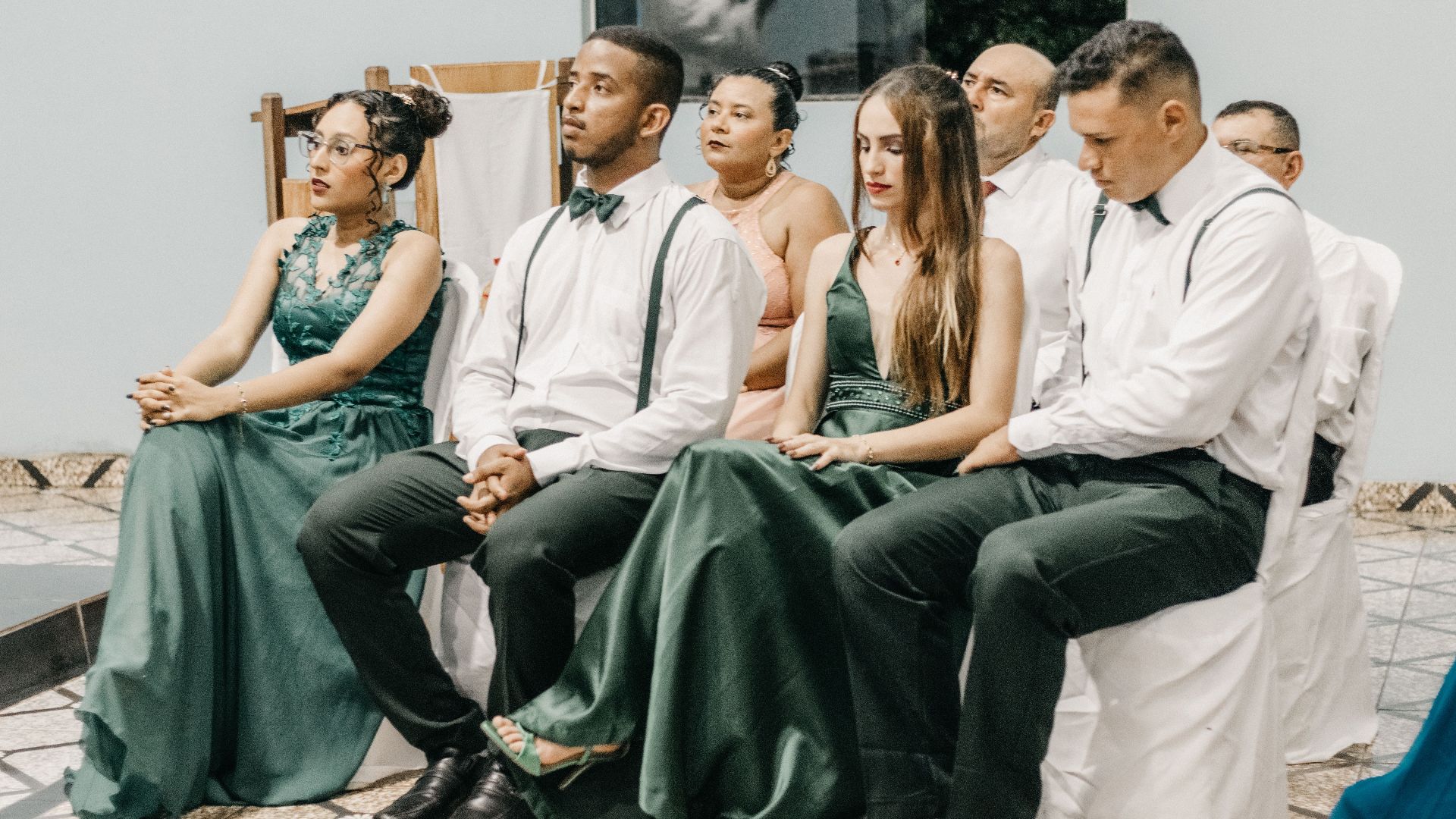
Nobody talks about the politics of where they were seated at a wedding. You find your name on a card, locate your table, and take your place without comment. The whole thing is designed to look effortless, like the couple simply matched people who might enjoy each other and left it at that. Most guests play along with this fiction, because calling it out would be rude, and because somewhere in the back of their minds, they know the truth.
The truth is that a seating chart is one of the most deliberate social documents two people will ever produce together. Every placement carries meaning, even the ones that feel casual. Where you put someone tells them exactly how you see them, how much thought you gave to their comfort, and how they rank relative to everyone else in the room. Nobody says any of this out loud. They don't have to.
Proximity to the Couple Is the Only Currency That Counts
The head table has existed in some form for centuries, originally placing the couple at an elevated position facing the room, a literal staging of hierarchy. By the time weddings formalized into the modern reception format, the spatial logic had calcified: the closer you sit to the couple, the more you matter. Everyone in attendance understands this arithmetic without being taught it, which is exactly what makes the front tables feel like an honor and the back corner feel like an afterthought.
Research backs up what most of us already sense. A 2022 study published in Frontiers in Psychology found that physical proximity consistently predicts the formation of new social bonds, with students seated near one another far more likely to develop friendships than those seated elsewhere, even when other social opportunities existed. The same principle governs a reception room. Guests seated near the couple interact with them more, get pulled into photographs more often, and leave with a stronger sense of having been part of the day. Distance is not neutral. Distance communicates.
This is why the back-of-the-room table, sometimes called the cousin table or the work colleague table, carries such a specific sting. The guests there often know the couple well enough to be invited but not well enough to be placed anywhere meaningful. They are present without being central, included without being prioritized. Whether or not the couple intended any message, those guests received one.
The Leftover Table Is the Most Honest Thing at the Reception
Every large wedding produces what event planners call the leftover table, a cluster of guests who share no obvious connection except that nobody knew quite where else to put them. The college roommate who stayed in touch but only just, the plus-one who knows no one, the distant relative from a branch of the family tree that stopped being close a generation ago. They end up together, which is its own kind of statement.
Wedding planning resources have increasingly acknowledged the damage this table can do. Research on social dynamics at events, cited by multiple event planning professionals, consistently shows that guests who feel isolated during a group gathering leave with a negative impression of the event overall, not just of their immediate experience. A person who spent the evening making strained small talk with strangers does not walk away thinking the wedding was beautiful. They walk away thinking about the table.
The more interesting question is what the leftover table reveals about how the couple navigated their own relationships. Grouping people by default, without intention, is itself a choice. It shows which connections the couple cared enough to think through and which ones they simply processed. Guests notice when they have been thought about. They also notice when they have not, even if they never say so.
Divorced Parents and Feuding Families Expose Everything
No part of the seating chart demands more diplomatic precision than managing families who do not get along. Divorced parents, estranged siblings, and long-running feuds between the two sides of the family all have to be placed in the same room, often for three or four hours, with open bars and raw emotion in close proximity. The couple's choices here are scrutinized more carefully than anywhere else on the chart, because everyone involved already knows the terrain.
The challenge is that any placement becomes a statement. Seating a divorced father too close to his ex-wife signals that the couple expects everyone to behave like adults, whether or not that expectation is realistic. Seating him too far in the periphery signals something else entirely. Wedding planners often recommend treating conflicting guests with what professionals describe as diplomatic distancing, placing them at different tables in the same general area of the room rather than dramatically separating them in a way that draws attention to the conflict. Subtlety is the goal, but subtlety is hard when every adult in the family has been watching these dynamics for decades.
What makes this section of the chart so revealing is that it forces the couple to decide whose comfort matters most. When there are not enough good seats for everyone who deserves one, someone gets deprioritized. The family members who drew the short end of that calculation will remember it. The seating chart is gone by the end of the night, but the memory of where you sat, and what it meant, tends to last considerably longer.