
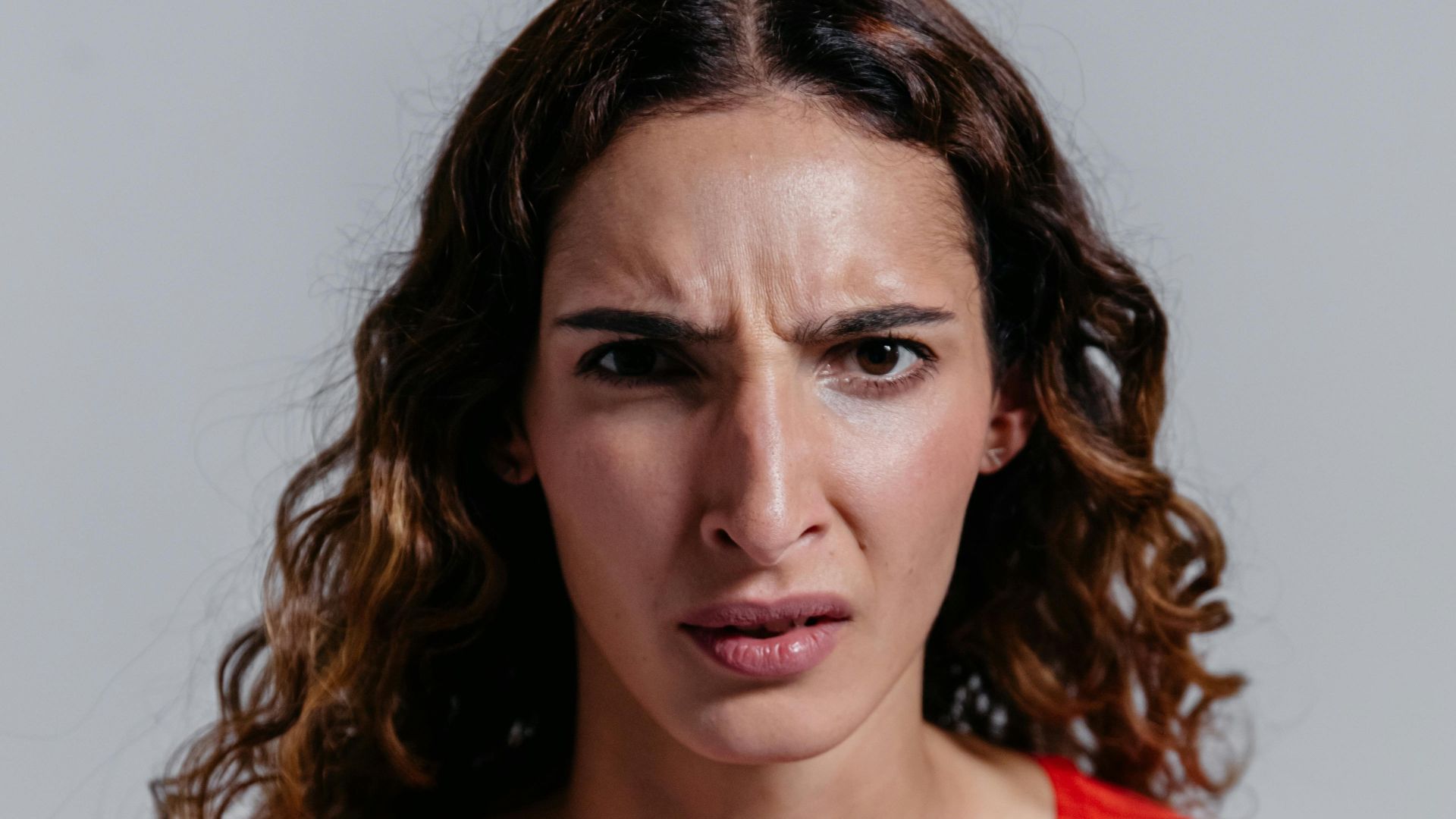
There's a particular kind of woman you've probably encountered. She's sharp, funny, and socially fluent, and she can hold a room or a conversation with complete ease. She shows up for the practical things, the logistics, the crisis calls, the group chat, but when anything edges toward real emotional territory, she goes quiet in a specific way. Not cold, exactly. More like a door that's technically open, just not wide enough to walk through.
What we're watching isn't a new personality type or a cultural wound unique to this moment. Women pulling back emotionally has a long and well-documented history rooted in something structural rather than individual. The pattern has simply become more visible, more named, and in certain circles, more openly celebrated. Understanding why requires going back to what emotional availability actually costs, and who has been expected to pay it.
The Weight That Teaches You to Go Quiet
Sociologist Arlie Hochschild coined the term emotional labor in her 1983 book The Managed Heart to describe the work of managing feelings as part of a job, but the concept expanded quickly to cover the unpaid relational work that happens in homes, friendships, and partnerships. Research has consistently shown that women carry a disproportionate share of this labor. A 2022 study analyzing U.S. couples found that in heterosexual relationships, women report substantially higher levels of emotion work—such as managing relational harmony and partner's moods—than men, often at greater psychological cost. When that imbalance goes unacknowledged for long enough, openness starts to feel less like intimacy and more like a resource being extracted.
The psychology here tracks. Researchers describe avoidant attachment as involving emotional withdrawal to manage distress from unresponsive or unreliable caregiving, despite underlying connection needs. Women who become emotionally unreachable are not, in most cases, women who never tried. They are women who tried consistently and eventually did the math. The nervous system learns from evidence, and if the evidence is that availability leads to depletion, it adapts accordingly.
This matters because the dominant cultural framing tends to locate the problem inside the woman. She gets described as guarded, damaged, or emotionally unavailable, as though the correct response is simply to coax her back to a more accessible state. That framing places responsibility for repair on the person who was already holding the most weight, which is a pattern that should be recognizable by now.
What Social Scripts Get Wrong
Women are socialized from early in childhood to treat emotional care as a core part of their identity. Developmental psychologist Carol Gilligan's foundational research, including her 1982 book In a Different Voice, documented how girls are consistently oriented toward relational harmony and the needs of others in ways that boys are not, and how this shapes everything from how they resolve conflict to how they understand their own worth. The woman who eventually stops performing that orientation has not failed at femininity. She has simply exhausted a script that was never asking anything of the other side.
Social media has complicated things further. Platforms that reward vulnerability as content have made emotional openness feel increasingly like exposure rather than connection. When you've watched enough women be publicly scrutinized for sharing too much, held to standards of emotional purity and consistency that men in equivalent situations rarely face, strategic withdrawal starts to look less like a wound and more like a reasonable read of the room. The performative intimacy that gets praised online has made it harder to distinguish between genuine openness and another kind of labor wearing a softer costume.
The script we've inherited tells us that emotionally available women are healthy and emotionally guarded women need fixing. That framing is too neat, and it's too convenient for everyone except the women it's meant to describe.
What Getting Through Actually Requires
Research on what psychologists call earned secure attachment, the process by which people with avoidant or anxious patterns can develop more secure relational styles, points consistently in one direction. The mechanism isn't pressure or patience performed as a virtue. It's new evidence. Specifically, sustained and credible evidence that availability will be met differently than it was before. Expecting a woman to open back up without changing the conditions that closed her down is not a gesture of love. It's a request for more of the same thing.
What we're watching is not a generation of women who have decided that closeness isn't worth wanting. We're watching a generation of women who got very good at protecting something that kept getting handled carelessly. The emotionally unreachable woman is, in most cases, a woman who paid close attention, updated her behavior based on what she learned, and decided that the math had to change before she did. Recognizing that doesn't dissolve the distance, but it does make it legible, and legibility is usually where things start to shift.