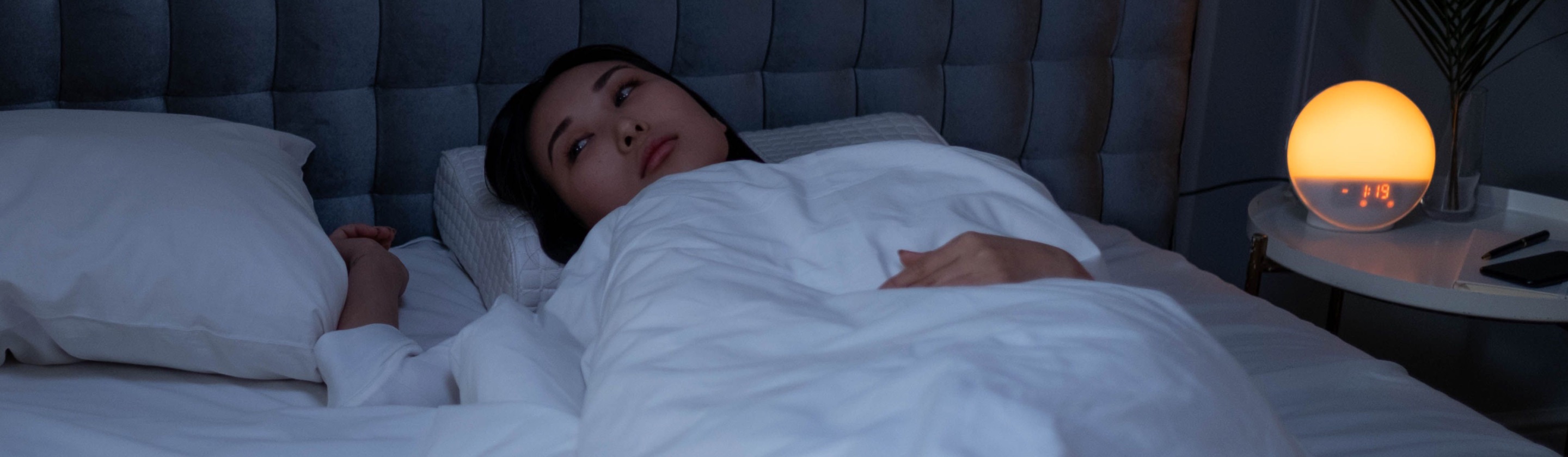

Spent way too many nights staring at the ceiling, unable to just drift off? You're far from alone. In fact, roughly 60 million Americans deal with insomnia every year, and many more experience occasional trouble falling or staying asleep, according to the National Sleep Foundation. It's a frustrating cycle: you're exhausted all day, but the moment your head hits the pillow, your brain somehow decides it's time to run through your entire to-do list.
But before you grab a prescription or an expensive gadget you don't need, you should know that some of the most effective changes come from simply rethinking your habits and mindsets. Assuming you need a strict bedtime or just need to try harder to fall asleep, for example, will actually only hinder your efforts. With that said, here are three tips that can make a real difference, backed by research from sleep experts and organizations that study this stuff for a living.
Don't Give Yourself a "Sleep Curfew"
We know: it's tempting to set a hard deadline for yourself, telling yourself you absolutely must be asleep by 10:30 p.m. or you'll ruin the whole next day. But as you're probably already aware yourself, this approach usually backfires. Sleep isn't something you can force to happen on command, and treating it like a curfew just adds a layer of stress that makes falling asleep even harder.
Instead of a rigid cutoff, what actually helps is consistency: pick a bedtime and wake-up time you can realistically stick with, follow that schedule every day (including weekends), and you'll see how your body adjusts over time. Your circadian rhythm thrives on predictability, after all, and a consistent timing of bedtimes and wake times is linked to better outcomes across alertness, cardiovascular health, and overall performance.
Notice the emphasis is on a schedule, not a countdown clock you're racing against every night. If you don't fall asleep right at your target time, that's okay. You'll be groggier and crankier the next day, but you'll probably drift right off as soon as your head hits the pillow come nighttime. So give yourself grace on sleepless nights and focus on the bigger picture instead.
It also helps to build in a buffer instead of a hard stop. Rather than telling yourself you need to be asleep by x time, aim for a wind-down window; start dimming the lights and stepping away from screens roughly 30 to 60 minutes before your target bedtime. This gives your body time to ease into sleep mode naturally, rather than expecting it to switch off instantly the second you decide it should.
Stop Caring So Much
Here's the frustrating irony of sleep: the more pressure you put on yourself to fall asleep, the less likely you are to actually do it. When you lie in bed thinking "I have to be asleep in the next twenty minutes or tomorrow is ruined," you're activating your body's stress response instead of winding it down. Your sympathetic nervous system ramps up, increasing your heart rate and sharpening your alertness, while your stress hormone system releases cortisol that keeps you wired and awake.
This phenomenon even has a name: sleep anxiety. It describes the heightened stress and worry that shows up when the outcome you're chasing, in this case falling asleep, feels critically important. The harder you try to control something involuntary, the more your effort gets in the way. As one sleep expert put it, sleep is an involuntary action that you can't force, and trying too hard to control it often interferes with the process.
One counterintuitive fix that researchers have studied is called paradoxical intention, which, in this context, would involve trying to stay awake rather than forcing yourself to sleep. The idea is that telling yourself to stay awake while lying comfortably removes the pressure and anxiety that's actually been keeping you up. And even if this technique doesn't work on the first night or even on the first several nights, remind yourself that it's okay; your body will eventually catch up on the sleep it needs.
Make Your Bedroom Work with You
Your environment plays a bigger role in how easily you fall asleep than you might realize. Ideally, your bedroom should function like a "cave": dark, cool, and quiet. Each of these elements addresses a different biological trigger your body relies on to wind down.
Temperature is one of the most overlooked factors. Most experts recommend keeping your thermostat between 65 and 68°F for the most comfortable sleep, since your body naturally needs to cool down as part of the process of falling and staying asleep. If your room runs warm, your body has to work against that natural drop instead of alongside it, which can leave you tossing and turning.
Darkness matters just as much. Light slows the production of melatonin, the hormone your body relies on to feel sleepy, so even small amounts of light leaking in from a hallway or a phone screen can interfere with that process. Lowering your shades, using blackout curtains, and dimming the lights as bedtime approaches all send a clear signal to your brain that it's time to wind down.
Noise is the final piece of the puzzle. Minimizing noise in your bedroom can increase the amount of deep sleep you get and make you less likely to wake up during the night. If you live somewhere loud, a white noise machine or a fan can help mask sudden sounds like car horns or slamming doors that would otherwise pull you out of deeper sleep stages without you fully realizing it.
Another thing: keep your workspace outside the bedroom. If you're used to bringing your job to your bed or have your home office set up in the same place you sleep, you'll likely have a harder time catching your ZZZs.
The Bottom Line
As you see, sleep doesn't come easy, and it definitely doesn't get easier just by wishing and hoping you'll drift off soon enough. The next time you experience trouble heading to dreamland, tell yourself that it's okay; don't put more stress and pressure on yourself. Pick up a book to read, keep the lights dim, and let your brain decide when it finally wants to switch off for the night.