
20 Professional Skills Women Tend to be Better Than Men at, According To Statistics
20 Professional Skills Women Tend to be Better Than Men at, According To Statistics
Some Skills Skew One Way
“Better” is a tricky word, because individuals vary a lot, and men and women overlap on basically every workplace trait you can name. Nobody’s saying every woman is automatically better at these things, and nobody’s saying men can’t crush them, too. This is just a look at big-picture patterns that show up in large datasets like 360-degree workplace ratings and major research reviews, where women often come out ahead in certain professional strengths. Here are 20 workplace skills that women tend to be better at than men, according to data.
 Christina @ wocintechchat.com M on Unsplash
1. Coaching & Developing Others
In large 360-degree datasets, women are often rated especially strong on people-development behaviors—things like coaching, feedback, and helping others grow. That matters because it shows up in team capability over time, not just short-term output. You can usually feel this skill in workplaces where people steadily improve instead of constantly burning out.

2. Inspiring & Motivating Teams
Many leadership studies find that women are frequently evaluated as more effective in “inspire and motivate” style behaviors. It’s not about being bubbly or “nice,” either; it’s about helping people see the point of the work and stay engaged. When you’ve had a leader who can lift morale without being annoying, you know how valuable that is.
3. Collaboration & Teamwork
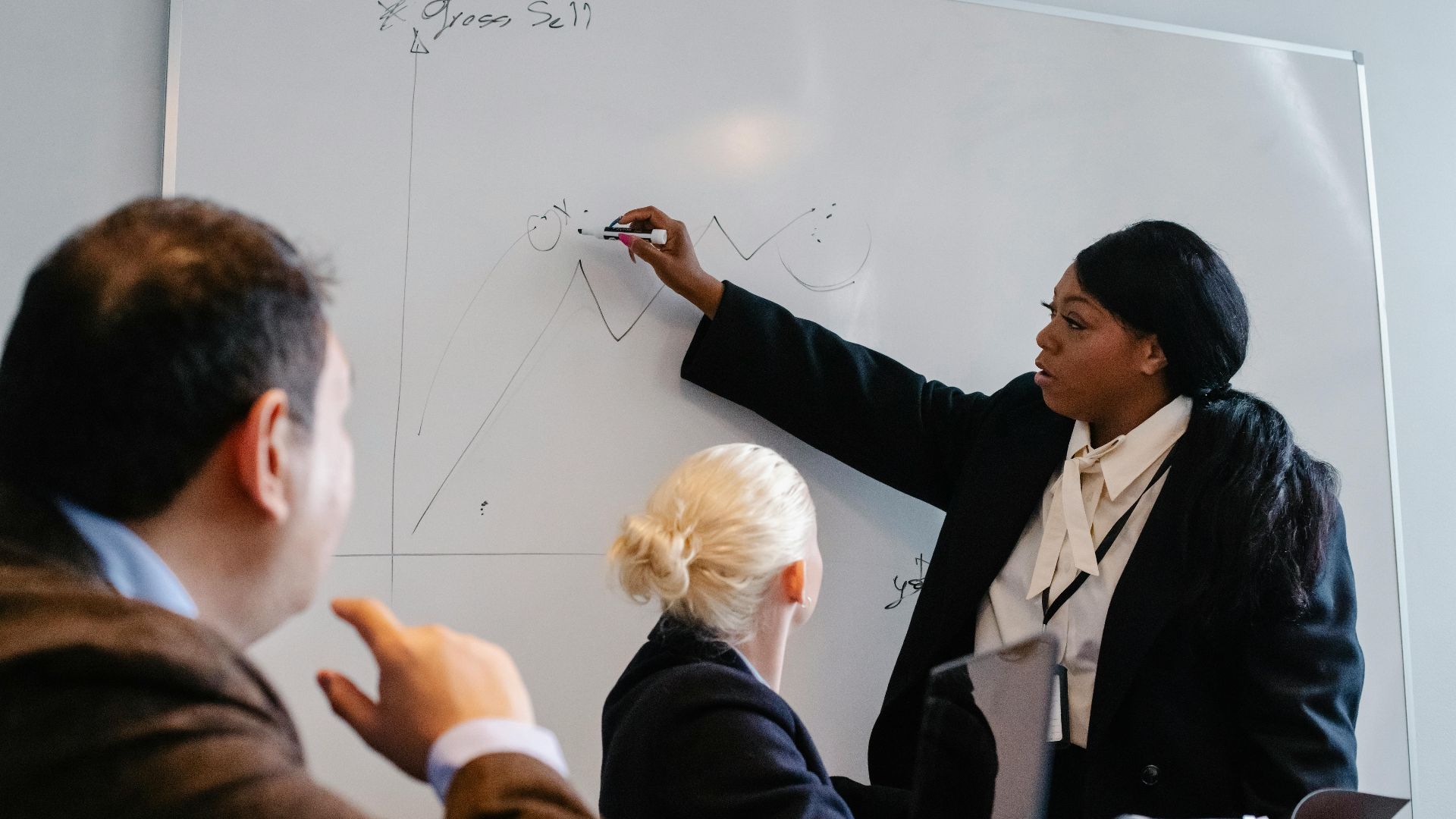
Research tied to 360-degree leadership assessments highlights collaboration/teamwork as an area where women are often rated higher. This skill shows up in how well someone shares credit, invites input, and avoids turning every meeting into a turf war. It’s also one of the easiest ways to raise performance without raising stress.

4. Relationship Building
Relationship-building is a classic “soft skill” that becomes very hard when it’s missing. In large leadership datasets, women are often rated higher on forming and maintaining strong working relationships. If you’ve ever relied on someone who can keep partnerships functional during tense moments, that’s this skill in action.

5. Communicating With Impact
In the same leadership research, communicating powerfully is frequently listed among the interpersonal competencies where women are rated higher. It isn’t about talking more; it’s about making the message clear, useful, and timed well. People tend to follow leaders whose communication lowers confusion rather than multiplying it.
 LinkedIn Sales Solutions on Unsplash
6. Leading Through Crisis With Steady People Skills
During the early COVID period, an analysis by Zenger Folkman found women rated higher on overall leadership effectiveness and on many competencies, especially the interpersonal ones employees said they needed most in a crisis. That doesn’t mean every woman is magically calm, but it does suggest a measurable advantage in keeping people functioning during times of trouble.

7. Sensitivity to Stress & Wellbeing Signals
In crisis-oriented leadership research, women leaders were described as showing more awareness of followers’ fears and concern for well-being, alongside confidence in plans. Teams often perform better when the leader can read strain early instead of reacting late.

8. Ethical Restraint in Negotiation Tactics
A preregistered meta-analysis on unethical choices in negotiations focuses on whether women negotiate more fairly than men, reflecting a serious research effort into measurable behavioral differences. While the findings can vary by context and experience, the pattern appears meaningful enough to study at scale. In practice, this can show up as fewer “win at any cost” moves that poison relationships afterward.

9. Transformational Leadership Behaviors
A well-known meta-analysis found that female leaders, on average, were more transformational and used more contingent reward behaviors than male leaders. Transformational leadership tends to involve motivating through vision, development, and values rather than pure command-and-control. Obviously, this is generally preferred and keeps morale and productivity higher.
 LinkedIn Sales Solutions on Unsplash
10. Building Rapport on Mixed-Gender Teams
Harvard Business School Working Knowledge highlights research suggesting female managers can be more adept at building rapport among mixed-gender teams. Rapport isn't just about being popular; it reduces miscommunication, lowers friction, and improves coordination.

11. Collaborative Problem Solving
In PISA’s collaborative problem-solving results, girls outperformed boys across many education systems, and the OECD has reported this as a consistent pattern in that assessment. You’re not hiring 15-year-olds to run your department, of course, but collaboration is a real workplace skill with measurable early differences.

12. Cooperative, Pro-Social Team Orientation
Personality research often finds that women score higher on Agreeableness on average, which is associated with cooperation, warmth, and conflict smoothing. That doesn’t mean women can’t be tough, and it doesn’t mean men can’t be considerate. It does help explain why some workplace behaviors linked to teamwork show small but reliable gender differences in large samples.
 Christina @ wocintechchat.com M on Unsplash
13. Conscientious Follow-Through
Some longitudinal findings show females scoring higher on Conscientiousness at certain ages, which relates to reliability, organization, and follow-through. In workplaces, this can look like fewer dropped balls and better tracking of details that keep projects moving. It’s not glamorous, but it prevents the kind of chaos that makes everyone’s job harder.
 LinkedIn Sales Solutions on Unsplash
14. Emotional Awareness & Social Perception
Recent meta-analyses in management research examine gender differences in emotional intelligence across a very large number of studies. Results can be nuanced by measure type, but the overall topic reflects a consistent interest in women’s advantage in certain emotional abilities. In a workplace, that can translate into better reads on group mood, conflict risk, and how messages will land.

15. Empathy Self-Reports & Interpersonal Concern
Large-sample studies often find women rate themselves higher on empathy measures, even when physiological measures sometimes show smaller or mixed differences. In professional settings, perceived empathy can still matter because it affects how people experience your leadership, coaching, and customer interactions. If colleagues feel understood, collaboration tends to get easier.

16. Mentoring That Actually Sticks
Plenty of people give advice; fewer people mentor in a way that changes outcomes. Leadership datasets that emphasize employee development point toward women being rated highly in these “build the bench” behaviors. If you’ve benefited from someone who invests in you without making it transactional, you’ve seen this skill done right.

17. Culture-Shaping Through Everyday Interactions
Culture isn’t a poster on a wall; it’s the daily pattern of how people treat each other. Research on rapport and interpersonal leadership advantages suggests women managers can influence team climate in subtle, compounding ways. That shows up as smoother coordination, fewer unnecessary blowups, and clearer social norms around respect.

18. Change Adoption With People in Mind
In times of disruption, employees often value leaders who can pivot while keeping the team supported and informed. Zenger Folkman’s crisis analysis notes people wanted leaders who could learn new skills and adapt while also keeping in mind how everyone is feeling—and women were described as displaying this unique mixture of traits more often in their data.
19. Integrity as a Trust Accelerator
In leadership research summaries, honesty and integrity repeatedly show up as high-value traits, especially during uncertainty. When those behaviors are visible, teams spend less energy on second-guessing and more energy on execution.

20. The “High Floor” Advantage in Many Leadership Competencies
In some large leadership-rating datasets, women don’t just produce standout top performers; they also show fewer extremely low scores across a range of skills. In other words, the average ratings for women cluster more in the “solid to strong” zone, which raises the baseline level you can expect. That doesn’t mean every woman outperforms every man, and it doesn’t claim women always have the highest “ceiling.”