
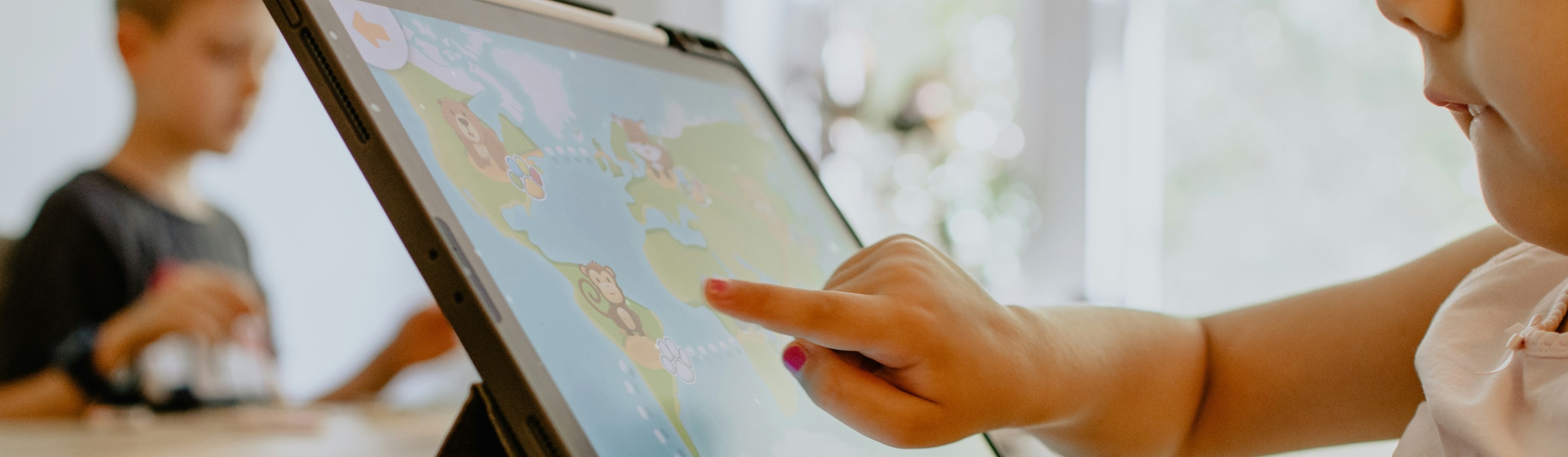
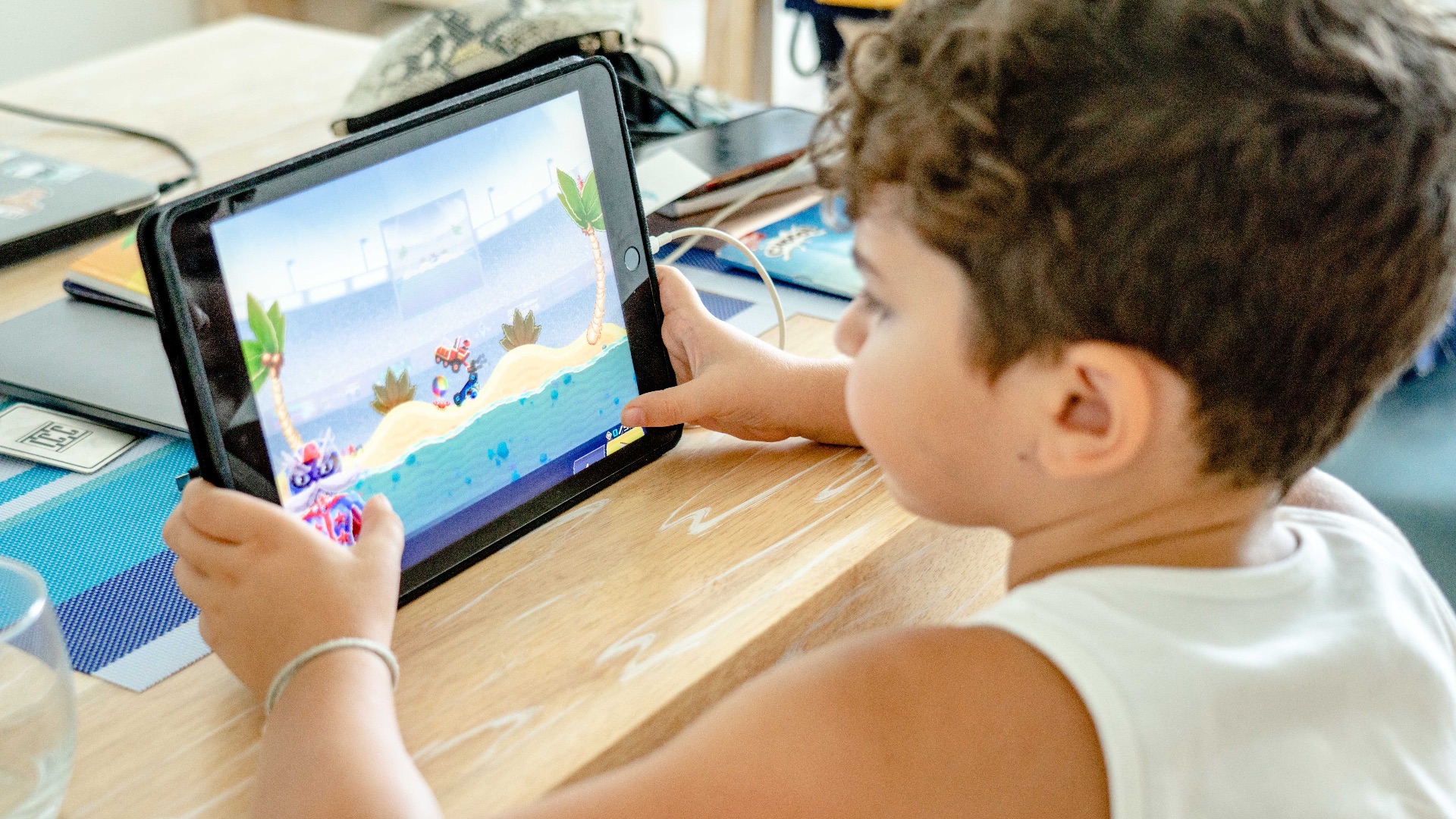
You probably don't need us to tell you what an iPad kid is. You've seen it before: a child sitting at a restaurant, completely absorbed in their tablet while their parents scold them. Maybe you've even handed your own child an iPad to keep them entertained during a long car ride, only to realize your mistake. After all, with technology becoming such a regular part of childhood, it's understandable why parents sometimes rely on screens to make everyday life easier—but still regret doing so.
That said, kids can't be blamed. Parents are often obsessed with their phones, so what's the difference? Still, there is a fine line between occasionally enjoying digital entertainment and becoming overly dependent on it. Unfortunately, hand a kid an iPad, and they're likely going to spend excessive amounts of time on it, then whine and cry when it's taken away. So: how can you tell whether your child's screen habits are becoming a problem?
What the Heck Is an "iPad Kid"?
As we've said, you probably don't need us to explain what an iPad kid is, but the short answer is: it's a term that's commonly used to describe children who are far too attached to their tablets. Dinner? Homework? TV? Nope. These kids don't need anything else but their iPads. Heck, without strict rules enforced, they'd spend hours glued to the screen, watching YouTube videos, playing games, or forcing their parents to spend money. Over time, they become so accustomed to it that ordinary activities feel less appealing without one.
The increasing popularity of tablets among young children helps explain why this behavior has attracted attention. According to a 2025 Common Sense Media report, 40% of children have a tablet by age two (age two!), while children eight and younger average roughly two and a half hours of screen media daily. Let that sink in. By age two, kids don't already have a screen in their face, but they're already spending ample time on it. And though these figures don't necessarily mean every child is developing unhealthy habits, they do demonstrate how digital devices have become pretty much ingrained into their lives early on. Thus: iPad kid.
That said, there are plenty of kids out there who aren't just playing Toca Boca on their iPads. Some may actually use their tablets to do educational things or connect with family members. If, at least, the content they're consuming and how they're engaging with their tablet is still within healthy limits, that might mean they won't develop as obsessive a relationship with technology. Keyword: might.
Signs Your Child Is Too Attached to Their Tablet
So, how can you tell if your child is an iPad kid? Well, take the tablet away and see what happens. Do they cry and scream? Throw a fit? Refuse to do what you asked? Sure, occasional frustration and emotional outbursts are totally normal for young children, but you might want to pay closer attention when these meltdowns happen almost every time you pluck the iPad from their hands.
Another concerning pattern is a growing inability to tolerate boredom without digital entertainment. If your kid immediately asks for their iPad whenever they're required to sit still for more than a minute, that's a pretty telling sign—and a bad one. After all, when screens become their primary source of entertainment, they may have fewer opportunities to practice other ways of occupying themselves or just learning to stay patient.
You should also be wary if you notice your child losing interest in activities they previously enjoyed, including outdoor games, reading, or spending time with friends. If they'd much rather stay on the couch with their iPad now, all that excessive screen use can spiral deeper, and it might even interfere with sleep, physical activity, or school responsibilities.
How Can Parents Encourage Healthier Screen Habits?
Okay, so what should you do if your child is an iPad kid? Well, establishing reasonable boundaries is one of the first things you should do—this helps children develop a balanced relationship with technology. Keep screens away from children under two, apart from activities such as video chatting, and for those ages two to five, limit routine sedentary screen use to approximately one hour (yep, 60 minutes only) daily. For older children, parents should consider their individual needs while ensuring digital entertainment doesn't interfere with essential activities.
Don't just suddenly remove every device, though, as this could backfire. Instead, consider introducing consistent rules. You could, for one, designate mealtimes and bedrooms as screen-free spaces, establish specific periods for entertainment, and give advance warnings before sessions end. Providing enjoyable alternatives is equally important, especially if your child has grown accustomed to reaching for their tablet whenever they're bored.
Unfortunately, many kids in this era are iPad kids. But that doesn't have to be a bad thing if you take control! As long as you ensure your child's screen habits aren't interfering with their development or everyday responsibilities, you'll be able to find a balance that works. Set consistent boundaries and encourage offline experiences as much as you can, and you can help your child develop a healthier relationship with technology without eliminating its benefits entirely.