
As society continues to evolve, so too do our ideas of marriage and wedding ceremonies. The image of a father walking his daughter down the aisle is now interpreted as a symbol of family connection rather than a man giving over his property. Vows are frequently personalized to allow more meaningful promises than "obeying" your spouse.
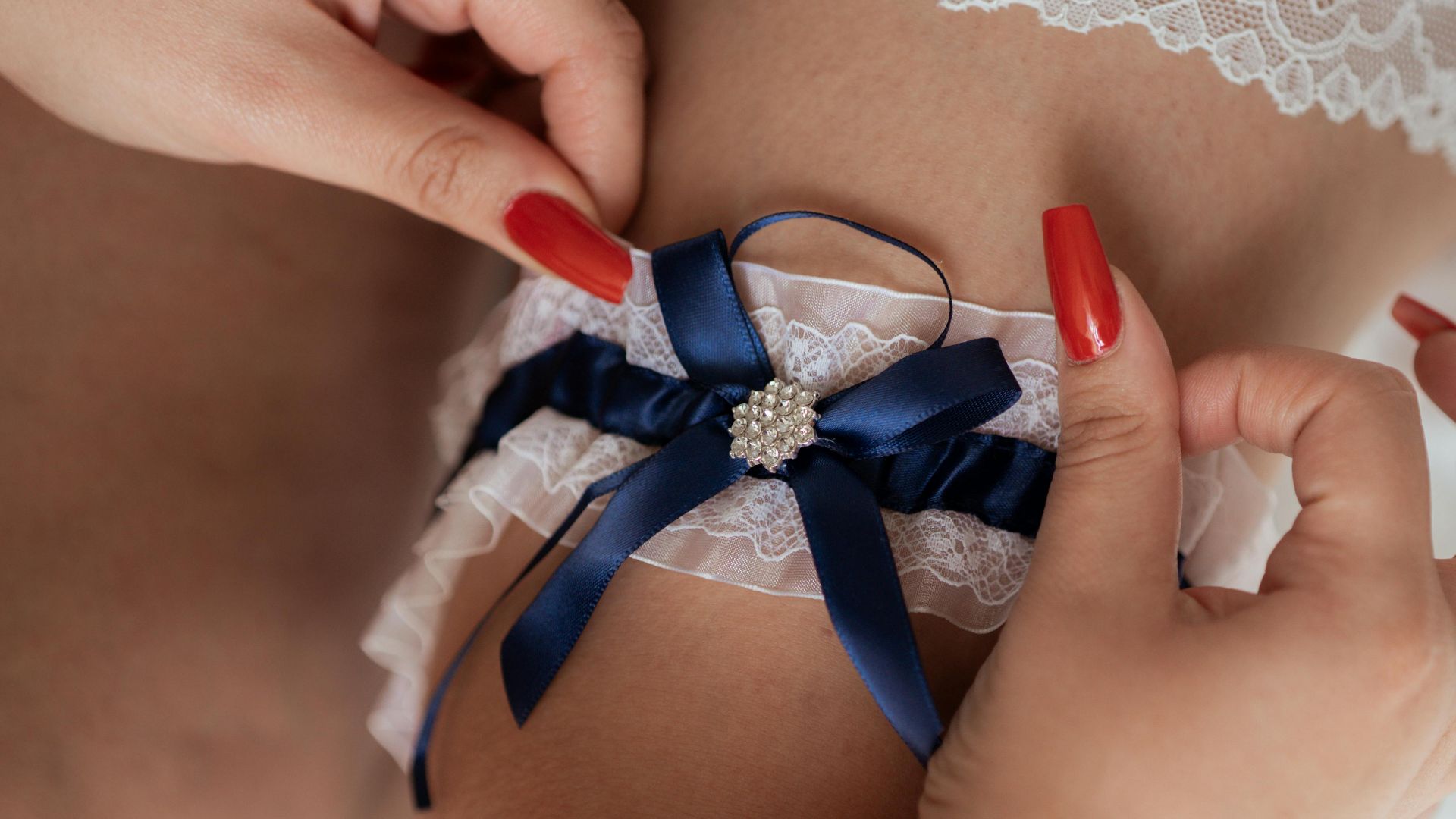
However, there is one tradition that has mostly flown under the radar as far as marriage milestones go: the garter toss. While the bride will throw her bouquet for unmarried female guests to catch, the bridegroom throws his new wife's garter to unmarried male guests. Whoever catches each token will be next to marry, and the lucky two often share a dance.
There are several arguments for toss this tradition in the bin. Some find it uncomfortable for family and friends to witness—especially if the garter-catcher is expected to adorn the leg of the bouquet-catcher. Other concerns are more practical; after all, a garter without stockings to hold up is essentially a headband for your leg!
To get into the nitty-gritty of whether this tradition is outdated or iconic, we first must get into the history behind it. There are a lot of myths surrounding the garter toss's connections to Medieval times. Let's clear some of those up.
Garter Toss History & Misconceptions

For starters, a garter is worn around the thigh to hold up stockings or socks. They are worn as a set (after all, you wouldn't just wear one sock), often with a garter belt. Since the introduction of pantyhose in 1959, garters have been associated with burlesque performers rather than everyday women.
The association with the Middle Ages is due to a widespread game of historical telephone rather than reality. A millennium ago, couples—especially royal ones—were expected to consummate their union pretty much immediately after leaving the altar. Sometimes the consummation was even witnessed, publicly or privately no ensure only the right kind of funny business was happening.
That fact is true. So is the idea that touching the bride's outfit would bring good luck, which allegedly led to rowdy guests tearing off a piece of the bride's outfit as she passed. These ideas became fused into the image of a groom tossing his bride's garter to onlookers on his way to the marital bed.
Like most western wedding traditions, the garter toss is much younger than you would assume. After all, white wedding dresses only became a trend in the 1840s, after Queen Victoria wore a white gown to wed Prince Albert. Diamonds became the go-to for wedding bands in the 1940s thanks to some clever marketing by the De Beers Group.
Garter Toss Substitutions
In short, the garter toss isn't as old as traditionalists would have you believe. If anything, it likely originated during WWII when overseas GIs were entertained by USO troops and burlesque performers like Marlene Dietrich. By the 1960s, it was already being sold as an ancient ritual.
So, if this isn't a tradition dating back over a thousand years, what's the problem with forgoing it? Some couples find it uncomfortable, no matter whether the groom removes the garter with his hand or teeth. Others think it slows down the reception itself.
There are other logistical questions. What if you're both wearing dresses? What if you're both wearing suits? If you aren't tossing the garter, what can you toss instead to make sure the fellas don't get left out of the matrimonial luck?
Well, the groom could toss his boutonniere (that's the flower in his buttonhole) or a garter that isn't attached to his new spouse's leg instead. A novelty item could be another choice if you still want the fun of the ritual without the sexist significance. But whatever object you choose...maybe don't force whomever catches it to dance with the recipient of the bouquet.