
The Unspoken Rules That Keep Things Civil
How good are your manners? How often do you say "please" and "thank you," greet others when you enter a room, or wait until everyone's food arrives before digging into your plate? Believe it or not, despite how basic the manners on this list are, you might be surprised at how often you (or the people around you) don't follow them. Whether you're navigating a crowded office, catching up with a friend, or simply running errands, these 20 everyday courtesies are the ones people definitely notice when they're missing.

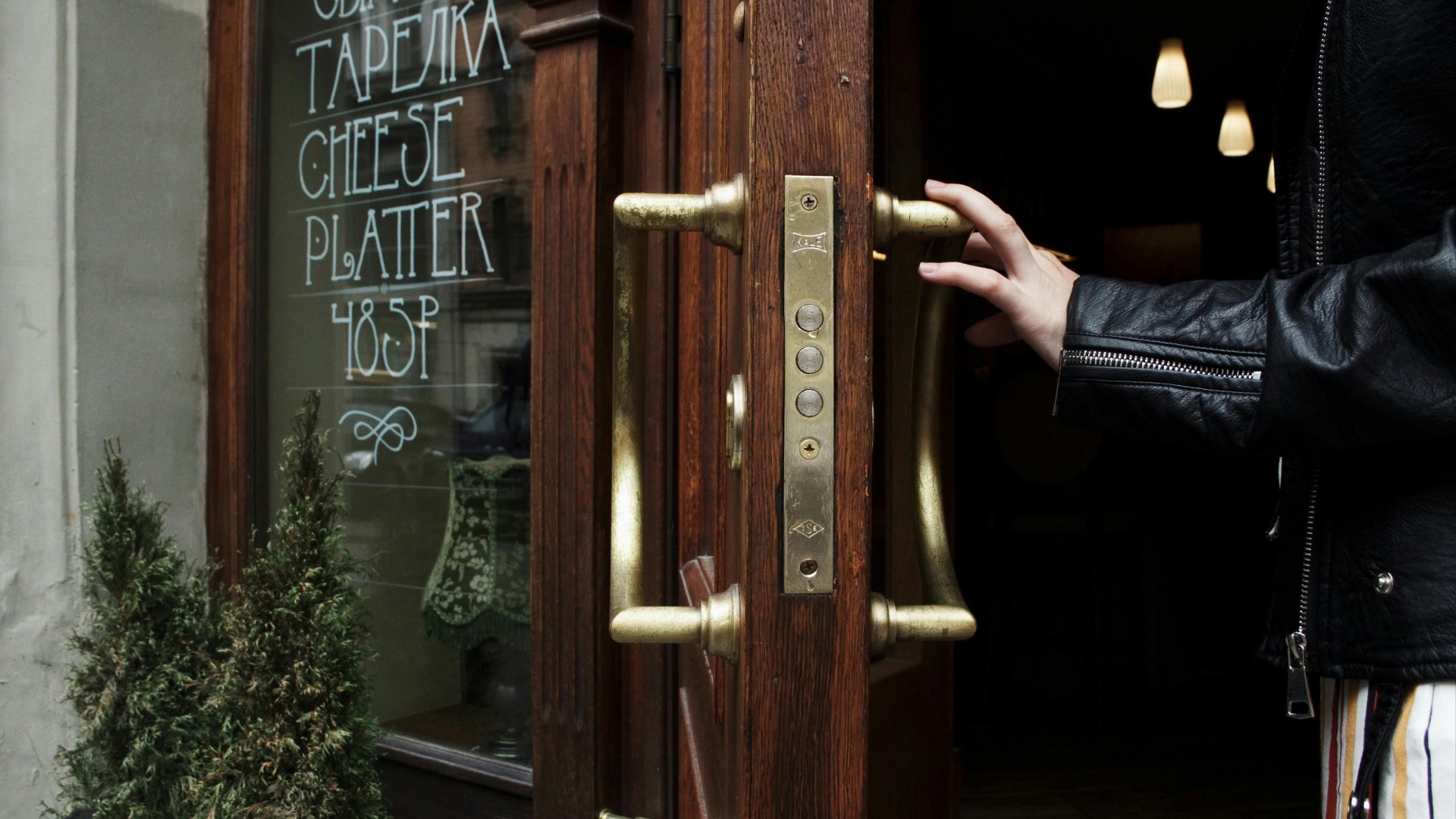
1. Hold the Door for the Person Behind You
If someone is within a few steps of a door you've just opened, hold it—don't have it swing shut in their face. Sure, you might decide against it if they're more than a few feet away, but it's still a common courtesy that everyone will appreciate. You wouldn't want others to let a door slam in your face, either, right?
2. Say Please and Thank You
These two phrases do way more social heavy lifting than almost anything else in your vocabulary, and they should be the two expressions you use the most. After all, if you want others to respect you, you have to be respectful to others, so always say please and thank you.

3. Put Your Phone Away During Conversations
When someone is talking to you, your phone should be face down or out of sight entirely. Glancing at your screen mid-conversation (or even blatantly scrolling on it) sends a clear message that whatever's on it matters more than the person in front of you.

4. Don't Interrupt When Someone Is Speaking
Cutting someone off mid-sentence, even when you're excited to contribute, disrupts the flow of conversation and makes the other person feel dismissed. If you have something you want to add, take a mental note and wait for a natural pause before jumping in. It takes patience, but it's a habit that makes you a noticeably better conversationalist.
 Christina @ wocintechchat.com M on Unsplash
5. Greet People When You Enter a Room
Walking into a space without acknowledging anyone already there can come across as standoffish, even if you don't mean to. A simple "good morning," a nod, or a wave takes almost no effort and sets a positive tone for whatever interaction follows. It's especially important in workplace settings, where a basic greeting helps maintain a respectful atmosphere.

6. Chew with Your Mouth Closed
This one appears on every etiquette list for a reason: it genuinely affects the experience of everyone eating near you. No matter how casual the setting, keeping your mouth closed while chewing is a non-negotiable baseline at any table. If you're unsure whether you do it, ask a friend, or pay close attention during your next meal.
 Pablo Merchán Montes on Unsplash
7. RSVP on Time
When someone takes the time to plan an event and asks for a headcount, responding promptly is a basic form of respect for their effort. Leaving an invitation unanswered can throw off seating, catering, and logistics, which can create real stress for the host. If your plans change after you've responded, let them know as soon as possible.

8. Keep Your Voice Down in Shared Spaces
Libraries, waiting rooms, public transport, and open offices all require an inside voice that, surprisingly, not everyone follows. But think about it: your conversation, no matter what it's about, doesn't need to be broadcast to the entire room. Keeping your voice at a considerate level shows you're mindful of the fact that others share the space.

9. Clean Up After Yourself
Leaving a mess for someone else to deal with is very disrespectful. It only takes a minute to wipe down a table you sat at, push in your chair, or throw away your trash; you don't want to be seen as an inconsiderate slob to others, and you definitely shouldn't strive for that image. Put yourself in other people's shoes: would you like it if someone left their garbage lying around for you to clean up?

10. Offer Your Seat to Someone Who Needs It
On public transit or in a waiting area, if you see an elderly person, a pregnant woman, or someone with a physical difficulty standing nearby, always offer your seat. Don't assume that others around you will do it first; oftentimes, it's because of that very assumption that no one takes initiative at all.

11. Respond to Messages in a Reasonable Time Frame
You don't need to reply to every text within minutes, especially when you're actually busy, but leaving messages unanswered for days without explanation is inconsiderate, not least when someone is waiting on confirmation from you. A quick acknowledgment, even just to say you'll follow up later, takes seconds and prevents unnecessary confusion and resentment. People notice when you're reliably responsive, and they also notice when you're not.

12. Don't Show Up Empty-Handed to Someone's Home
When you're invited to a dinner, a party, or even a casual gathering at someone's house, arriving with a small gesture, like a bottle of wine, a box of dessert, or a bouquet of flowers, acknowledges the effort your host has put in. It's the thought that counts, too, so don't worry about spending too much. Showing up with nothing when someone has prepared their home and cooked for you, on the other hand, can be a pretty bad look.

13. Introduce People Who Don't Know Each Other
If you're standing with two people who haven't met, don't leave them in awkward silence while you talk—take a moment to introduce them. A brief context clue alongside the name ("This is Jamie, we work together") gives them something to start a conversation with. It's a small act of social facilitation that takes five seconds and makes everyone much more comfortable.

14. Lower Your Voice or Step Away for Phone Calls
Taking a loud personal call in a restaurant, a shared office, or any confined public space forces everyone nearby into an unwanted audience. If you need to take a call, it's better to step outside or into a quieter area where you won't overlap with other people's conversations. The same applies to speakerphone: unless you're alone, don't put it on.

15. Acknowledge Mistakes and Apologize
When you've done something that affected someone else negatively, a direct and sincere apology goes considerably further than deflecting or minimizing what happened. The willingness to own an error is one of the more telling indicators of someone's character, and people will appreciate your honesty and maturity.

16. Don't Cancel Plans at the Last Minute Without Good Reason
Canceling on someone an hour before you're supposed to meet wastes their time and often leaves them with no alternative plans. Emergencies happen, of course, but making a habit of late cancellations signals that other people's schedules aren't a priority for you. Committing to plans (and following through on them) is one of the best ways you can show someone their time is valued.

17. Mind Your Table Manners in Group Settings
Beyond chewing with your mouth closed, dining in company involves a broader set of considerations: waiting until everyone is served before eating, not reaching across others, making sure the entire table has had a chance to try a dish before reaching for seconds, and keeping your phone out of sight during a meal. Remember: the more attentive you are to the people around you, the more enjoyable the meal tends to be for everyone.

18. Be Punctual
Showing up late consistently isn't just an inconvenience; in fact, it sends a message to the people waiting that your time is more important than theirs. While minor delays happen to everyone, making a genuine effort to arrive on time demonstrates basic respect for other people's schedules. If you know you're going to be late, a heads-up is always appreciated.

19. Listen Without Waiting for Your Turn to Speak
There's a difference between hearing someone out and simply waiting for a gap in the conversation so you can talk about yourself. Active listening means actually taking in what the other person is saying, asking follow-up questions, and responding to what they've shared rather than redirecting to your own experience, not about turning the spotlight back on you. It's one of the most underrated social skills there is, and people can tell when you have it.

20. Respect People's Personal Space
Standing too close to someone during a conversation, hovering over a colleague at their desk, or touching someone without their consent can make people deeply uncomfortable. Most people have an instinctive sense of their own boundaries but don't always feel comfortable voicing them. Paying attention to body language and giving people room to breathe is a good way to make interactions feel more comfortable and respectful for everyone involved.
 The Jopwell Collection on Unsplash