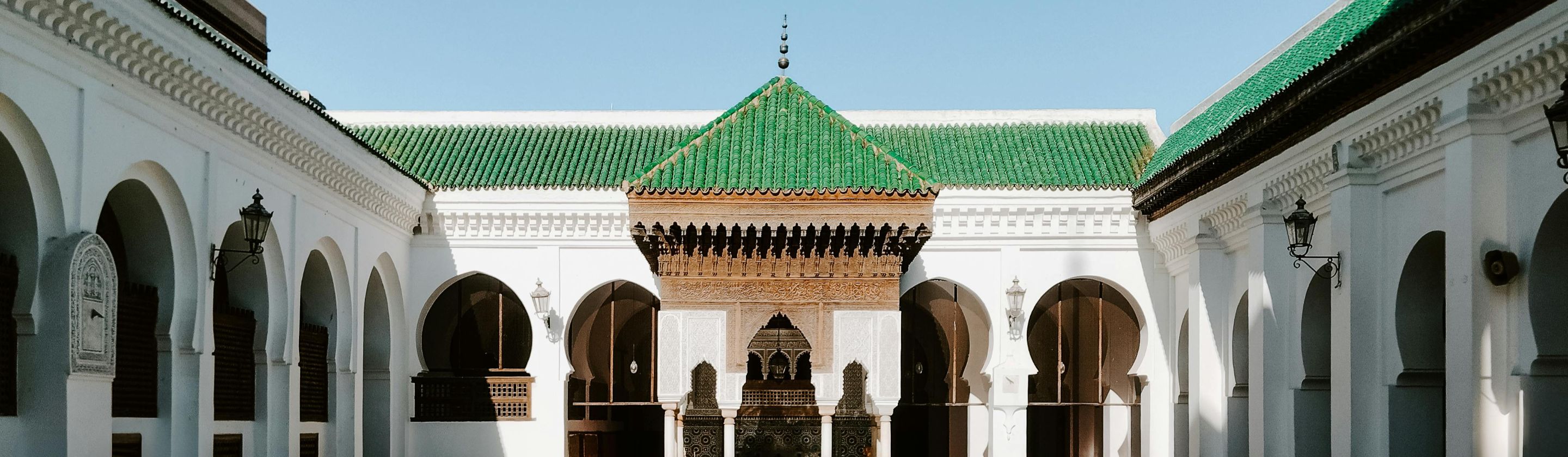
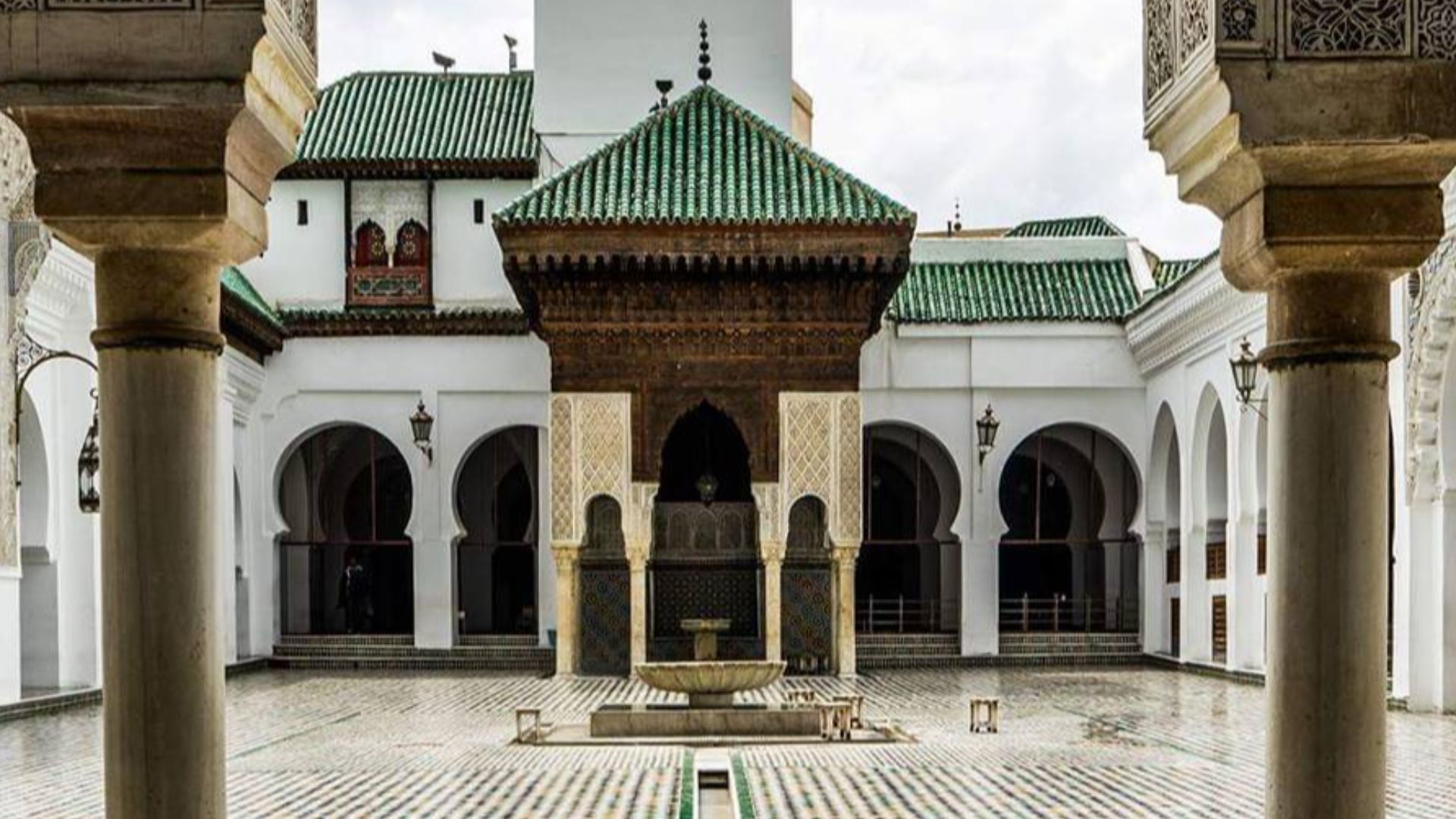
The oldest university in the world doesn’t really fit the campus picture most people have in their heads. You’re probably not imagining a place without wide lawns, loud student unions, or a glowing stadium on a fall weekend. The University of Al Quaraouiyine, also widely written as Al-Qarawiyyin, sits in Fez, Morocco, where the idea of school feels tied to something much older than a modern college brochure.
That history is the obvious draw, but the story has more texture than one record-book line. Guinness World Records lists the University of Karueein as the oldest existing and continually operating educational institution in the world, founded in 859 in Fez. UNESCO’s Medina of Fez page also describes the city as home to the world’s oldest university.
The Oldest University
Calling Al Quaraouiyine the oldest university in the world is well supported, but does have a caveat. The institution grew out of a mosque and Islamic center of learning, not the later European university model many readers may picture first. Britannica describes Qarawīyīn as a mosque and Islamic university in Fez, with a date running from 859 to the present. This helps explain why the school’s identity feels different from a newer, campus-style institution.
The University of Bologna usually enters the same conversation, and for good reason. Bologna’s official history calls it the oldest university in the Western world and says 1088 is conventionally referred to as the year its Studium was founded. So the cleanest way to frame it is this: Al Quaraouiyine holds the remarkable record as the oldest existing, continually operating institution of higher learning, while Bologna anchors the Western medieval university tradition.
The founding story gives Al Quaraouiyine even more pull. Fatima al-Fihri, a Muslim woman whose family migrated from Kairouan to Fez, is credited with founding Al-Qarawiyyin in the ninth century. The World History Encyclopedia says she used inherited wealth to support the mosque complex and educational institution.
The City
To picture what attending Al-Qarawiyyin might feel like, you have to start with Fez itself. The university’s historic home is in the old medina, a UNESCO World Heritage Site known for its medieval urban fabric, religious buildings, homes, fountains, and dense traditional architecture. This isn’t the kind of school that sits apart from daily life behind a clean campus edge. The city sits close around it.
That setting gives the university a rhythm that feels very different from a typical modern college town. Students move through a place where markets, mosques, homes, workshops, and scholarship have shared space for centuries. This is education inside a living historic city, not education placed neatly beside one.
The library adds another layer to that feeling. Africanews reported that the university hosts one of the world’s oldest libraries, with a manuscript collection that includes works connected to Ibn Khaldun, a ninth-century Quran written in Kufic calligraphy, and a manuscript on the Maliki school of Islamic jurisprudence by Ibn Rochd, also known as Averroes. For students and scholars, being near that kind of material would make research feel all the more special.
The Academic Focus
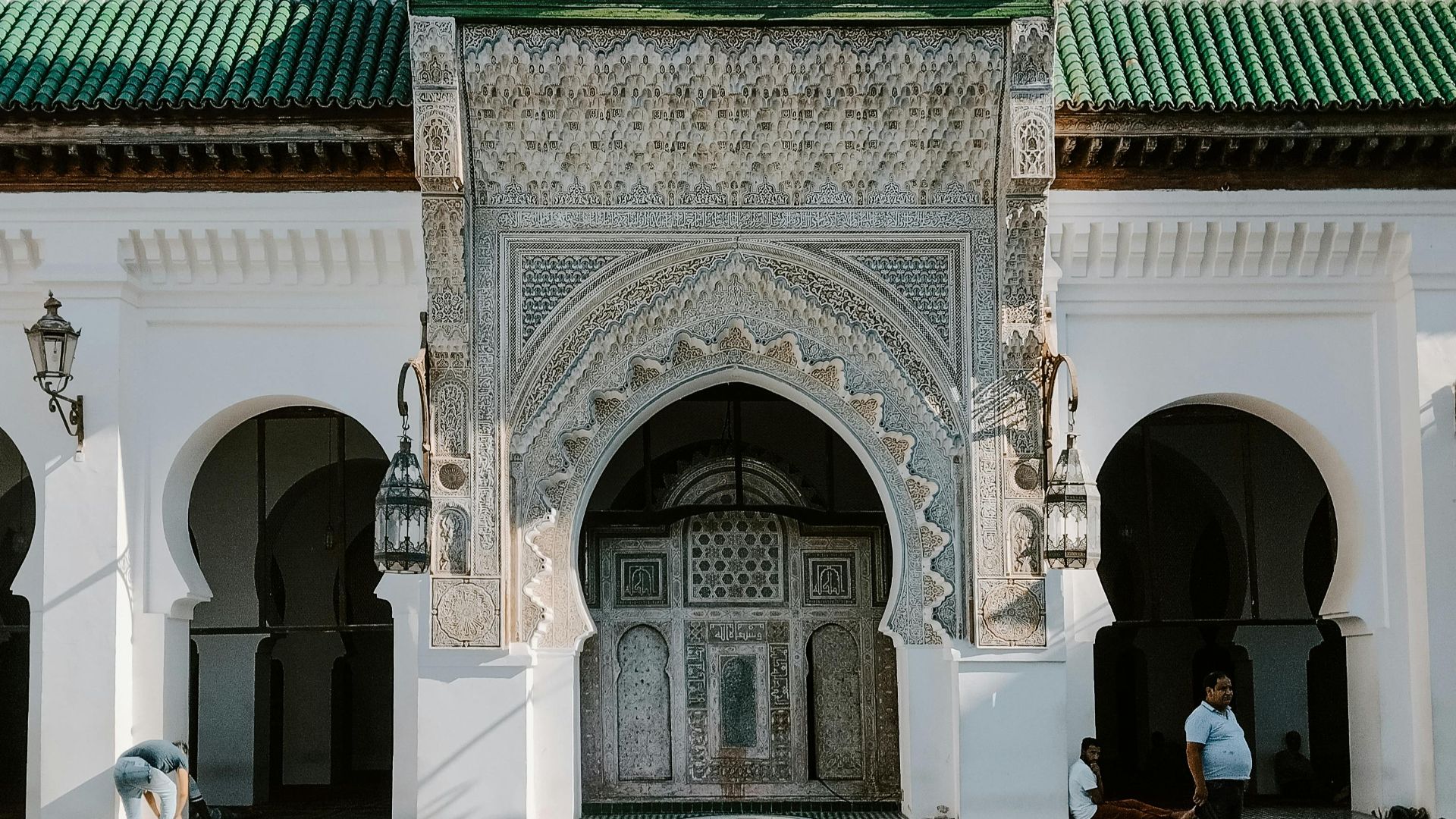
Al Quaraouiyine today is not a broad university. The Mohammed VI Foundation of African Oulema describes it as a public institution focused on higher education and scientific research in Shari’a sciences, Islamic studies, thought, and civilization. Its listed missions include training religious scholars, imams, and preachers, along with developing research in Qur’anic studies, Hadith, dogma, fiqh, and contemporary Islamic thought. That gives the school a much narrower, more serious academic center of gravity than many readers might expect.
That focus changes the whole idea of attending the university. This isn’t a place built around the casual trial-and-error of picking a major, switching tracks, and finding yourself somewhere between psychology and communications. The work centers on religious scholarship, careful reading, interpretation, and continuity with a long intellectual tradition. For the right student, that depth is not a limitation; it’s the reason to go.
The university’s modern structure also shows that it is not just a famous old name attached to a historic building. The Mohammed VI Foundation page cites Dahir No. 1.15.71, dated June 24, 2015, as the decree establishing the university’s reorganization. It lists affiliated institutions including Dar Hadith El Hassania, the Mohammed VI Institute of Quranic Readings and Studies, the Mohammed VI Institute for Training Imams Morchidines and Morchidates, and the Islamic Civilization and Thought Institute. In other words, Al Quaraouiyine has a present-day administrative life as well as a very long memory.
That mix of old and current is probably the most interesting part of the story. Students are connected to an institution that began in the ninth century, while still being part of a modern education and religious framework in Morocco. There’s history everywhere, a working institution with roots so deep that the usual college comparisons start to feel a little flimsy.
The name still carries global weight, too. Africanews reported in 2024 that Indonesian student Kamel Tahdhib traveled thousands of miles to study there and said he chose Al-Qarawiyyin because of its “widespread fame around the world.” One student’s comment cannot speak for everyone who attends, of course. It does, however, capture why the school still draws attention far beyond Fez.
So what is it like to attend the oldest university in the world? Based on the public record, it seems quieter, more focused, and more tradition-bound than the glossy college experience many people imagine. The appeal isn’t endless campus extras or a shiny lifestyle built around school spirit. It’s the chance to study somewhere that’s really, truly ingrained in history.