
The summer you think of as the best one probably contained a lot of standing around being bored. Nostalgia doesn't lie about what happened so much as it redistributes the impact. The bad parts are still in there, filed and retrievable, available to anyone who asks a specific enough question. They've simply lost their grip, which is a different thing from being gone. What remains is the happy version, and it loads first every time.
Psychologists have been measuring this for decades, and the editing happens at more than one stage. Some of it sets in while the memory sits. The rest arrives at the moment you pull the memory back out, which is nowhere near as passive an act as it feels.
The Unpleasant Parts Fade Faster
Negative emotion drains out of a memory faster than positive emotion does. Researchers reviewed the evidence in Review of General Psychology in 2003 and found the pattern holding across study after study. Seven of those studies tested the timing directly, alongside diary research covering 229 participants. They named it the fading affect bias. You still remember the argument in the car on the way home. You just don't feel much about it now.
This pattern doesn't apply to everyone, a detail that often gets lost in popular explanations. The researchers found that people with higher depression scores were less likely to experience it. Among those with mild depression, positive and negative memories lost their emotional intensity at roughly the same rate. The authors describe the usual pattern as a way of coping, not a failure of memory or an attempt to suppress unpleasant experiences. People still remember what happened, but the bad feelings become less intense.
Some of the rewriting runs on a faster clock than you'd expect. In another study, followed students through a three-week bicycle trip in California and compared the ratings people gave during the trip against the ratings they gave a month afterward. The later ratings were more positive. Nothing about the trip had changed.
Remembering Is Not Playback
Recalling a memory can briefly make it vulnerable to change. In a 2000 experiment, Karim Nader and Joseph LeDoux found that when rats were reminded of a learned fear, blocking the production of certain proteins afterward disrupted their ability to remember it. The finding suggested that retrieved memories need to be stabilized again, a process known as reconsolidation. Later research found a similar effect in the hippocampus, even for memories formed 45 days earlier.
That gives every retelling a chance to leave fingerprints. Human autobiographical memory is much harder to test than a rat's fear response, so the extrapolation deserves some caution, but the direction is consistent. Your version of a childhood house is a copy assembled most recently the last time somebody asked you about it, and details that fit the story you were telling that day come through the rebuild in better shape than the ones that didn't.
Our memories also give some moments more weight than others. In one randomized trial, researchers kept a colonoscope in place for an extra three minutes, making the end of the procedure less uncomfortable. Although those patients experienced a longer procedure, they remembered it as less unpleasant. The final moments mattered more to their overall impression than the extra time spent undergoing it.
The Edit Has a Job
Loneliness can make the past feel especially inviting. Researchers at the University of Southampton found that people who felt lonelier were also more nostalgic. When participants were encouraged to recall nostalgic experiences, they reported feeling more socially supported afterward. Remembering happier times appeared to provide some comfort when companionship was lacking.
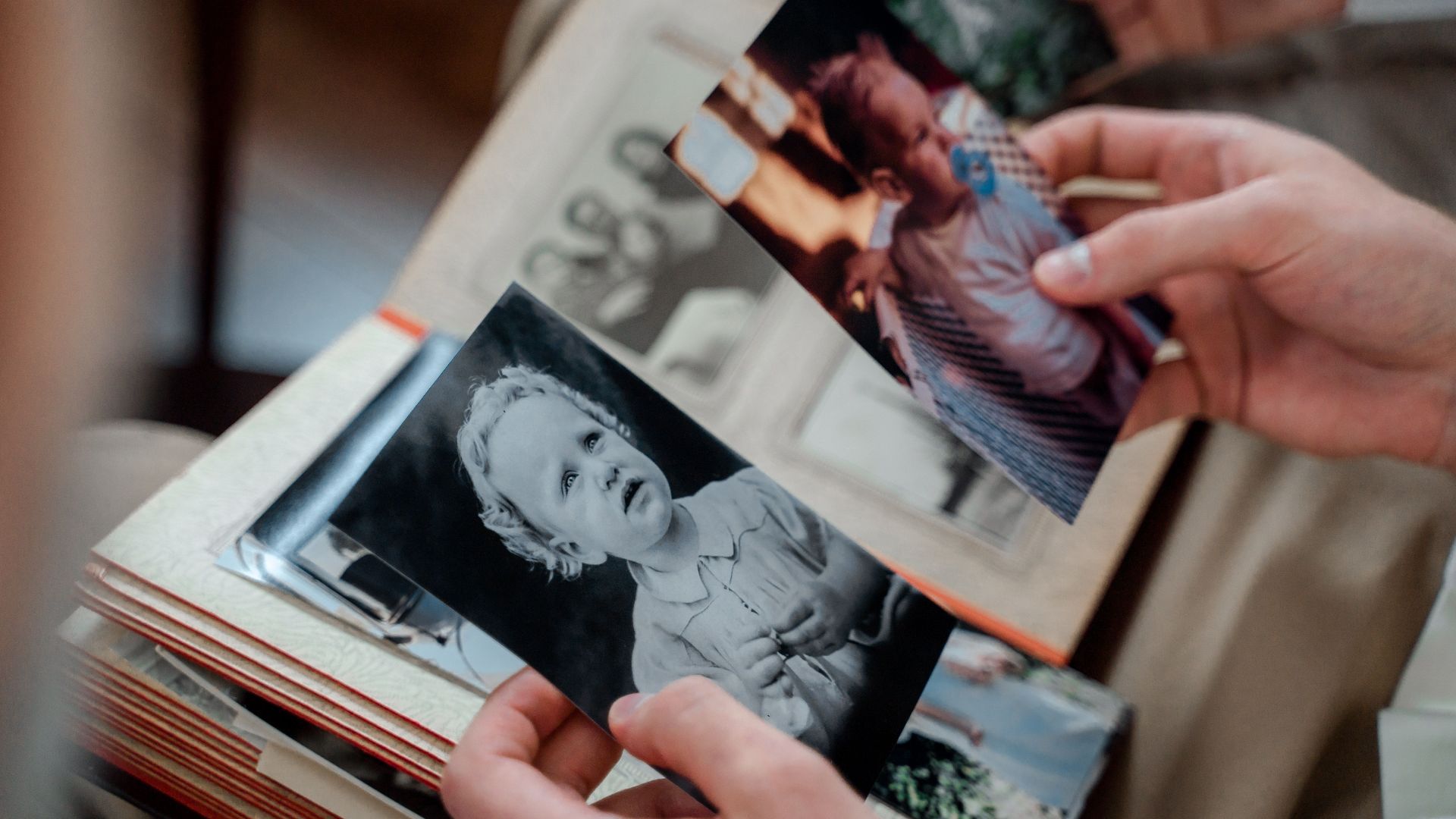
That helps explain why an old photograph or a familiar song can feel so reassuring during a lonely period. Nostalgia brings back the feeling of belonging, even when the people involved are far away or no longer part of everyday life. The researchers suggested that it could serve as a useful way of coping with social isolation.
There's an important distinction, though. Participants felt more supported, but their actual circumstances hadn't changed. Nostalgia can also make the past seem more pleasant than it was, leaving out disagreements that once mattered. Sometimes it takes someone else who was there to remind you of what you've forgotten.