
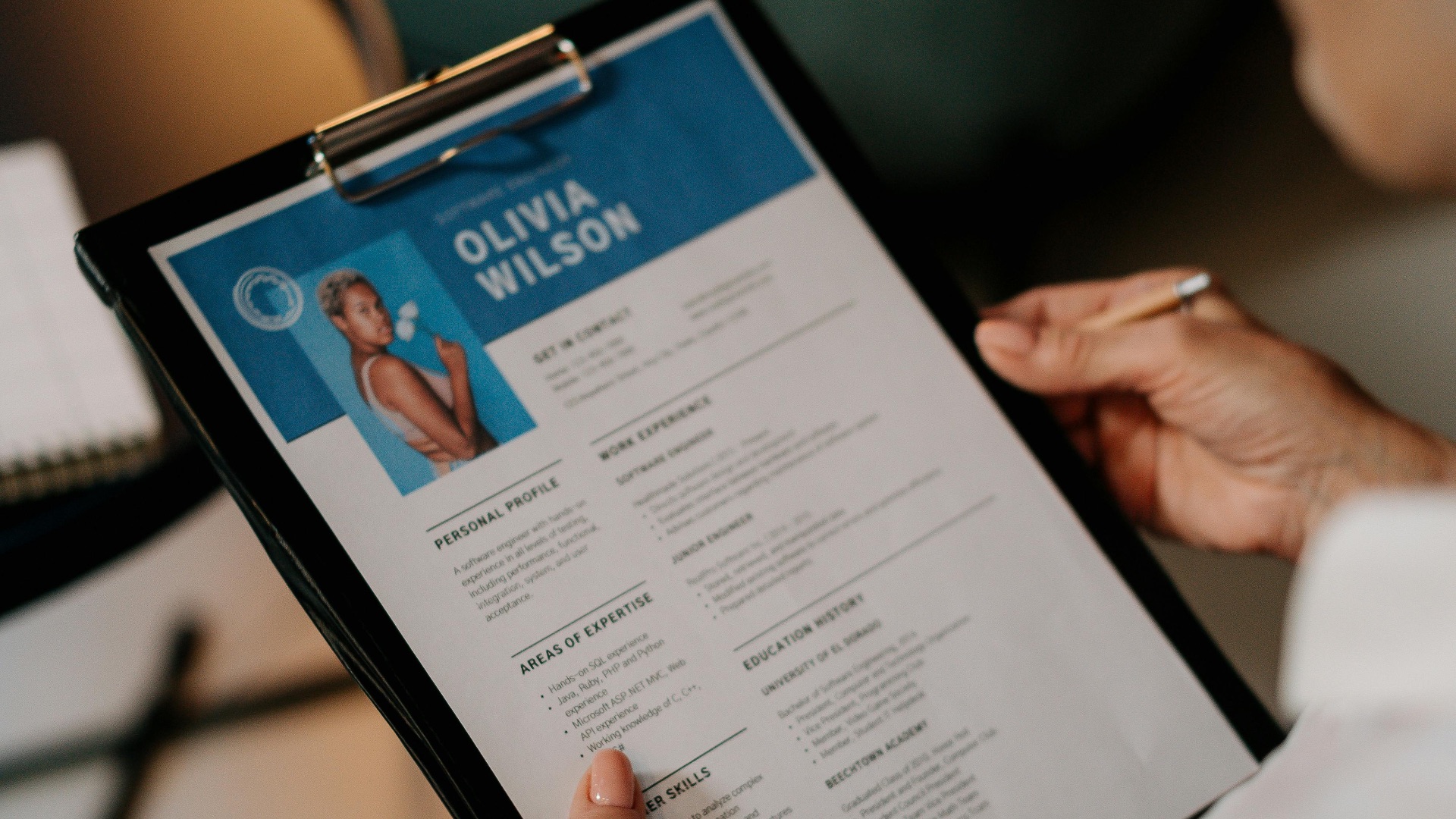
You've finished polishing your resume and you're all set to start applying to different job openings. You've included all the relevant experience you have that you believe will help you stand out to employers. But wait... Is it a good idea to include a headshot on your resume so employers have a face to put all the words to, or is it wiser to leave it out?
It can be hard to decide which is the better choice, especially in our current highly digital era. Different people may suggest different advice as well, which doesn't help you settle on a decision. So, what should you do? Let's break down the pros and cons of including a headshot on your resume.
A Headshot Helps You Stand Out
Recruiters and hiring managers see hundreds of resumes every day for an active opening, and they don't spend a whole lot of time scrutinizing each one. In fact, a 2018 eye-tracking study by Ladders Inc. found that it only took recruiters, on average, 7.4 seconds to skim through a resume. A more recent internal study conducted in August 2025 by InterviewPal, an interview preparation platform, found that recruiters took 11.2 seconds—slightly higher than what older statistics suggest. The bottom line is: you have at most a few seconds to impress a recruiter on the first pass, so you definitely want your resume to stand out.
Of course, your skills, work experience, and any relevant keywords will typically be what matter most on your resume, but when you and 20 other candidates all share similar highlights, you risk becoming a dime a dozen. That's where a headshot might help break the white space and catch recruiters' eyes. Not only does a professional photo of you show them that you're serious about your career, but it also gives them a first impression of what you might be like. In other words, it gives them a face to put your resume to, and that can help positively influence their snap judgments.
LinkedIn profiles, for example, are incredibly important. According to studies, recruiters place more value on candidates who include a headshot on their profiles than those who don't. These headshots must be professionally taken, too; they can't be poorly lit, grainy selfies. Profiles with photos often receive more views from potential employers than those that don't include a photo as well.
And Yet, It Could Introduce Bias

Still, some people are adamant that including a headshot on your resume could introduce unnecessary bias. Just as they can help recruiters form a good first impression of you, they can also quickly deduce your race, gender, age, and emotion from a single glance, and these factors may influence their ultimate decision on whether you move on in the application process.
Unfortunately, no matter how inclusive a company says it is, the snap judgments recruiters and hiring managers make mean that sometimes, it opens doors for unconscious (or even conscious) bias. They might reject you based on traits you can't control—the color of your skin or the dip of a smile—without even taking your qualifications into account, and this can lead to unfair decisions.
Final Verdict
So, what's the final verdict? Should you or should you not include a headshot on your resume? At the end of the day, it seems that it might still be best to give recruiters and hiring managers a face to put your words to, as a photo helps them gain a better first impression of you.
Indeed suggests putting a professional headshot when the role you're applying for warrants it, such as for public-facing roles. If you want to avoid bias, have limited space on your resume, or want to make an in-person first impression instead, it may be best go without a headshot.
Not including a headshot on your resume isn't a bad thing; if recruiters are interested, they can always search for your digital profile to gain a better sense of who you are. Perhaps, then, the most important thing isn't to tack on a photo to your resume, but to have a professional shot of you on LinkedIn or other professional networking sites.