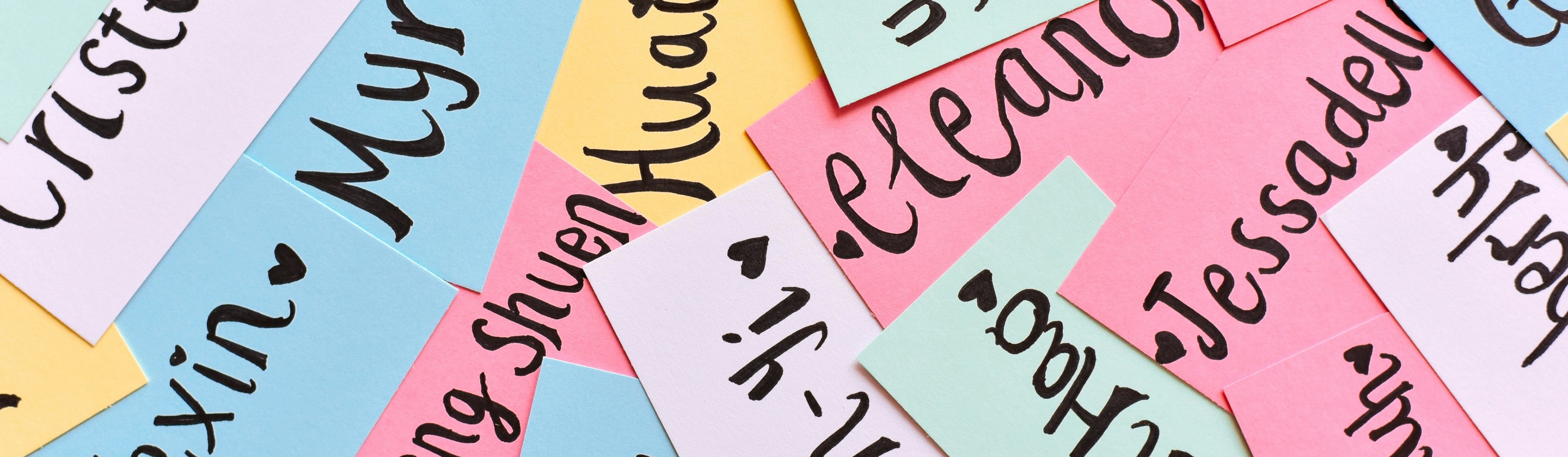
Your Name Is What?
What's in a name? Well, hopefully none of the ones on this list. Sure, you shouldn't judge a book by its cover, but some names just don't do their owners any favors when it comes to first impressions. For example, what comes to mind when you hear Gertrude? What about Helga? Or Reginald? Probably someone pretty old-fashioned, right? Sorry to anyone whose name is on this list, but here are 20 names that just sound downright unattractive.

1. Bertha
Bertha was perfectly respectable generations ago, but modern ears tend to hear it as heavy and distinctly old-fashioned. The hard opening consonant followed by the blunt “tha” ending doesn’t give it much softness, either. It also appears so frequently in jokes and exaggerated character names that it can be difficult to hear Bertha without picturing someone from another century.
2. Gertrude
Gertrude has history and literary credentials, but its sound is undeniably severe by current naming standards. Both halves contain strong consonants, giving the name a somewhat rigid pronunciation that contrasts sharply with contemporary favorites like Olivia or Mia. Even the traditional nickname “Gertie” has a distinctly grandmotherly quality that hasn’t experienced much of a comeback.
3. Mildred
There was once a time when Mildred sounded entirely ordinary, but that period has largely passed. The combination of “mild” and the abrupt “dred” ending gives the name a dated feel that younger parents rarely gravitate toward. Millie can make it considerably cuter, although many people would probably skip Mildred altogether and put Millie directly on the birth certificate.
4. Mortimer
Mortimer has the misfortune of beginning with “mort,” a sound many English speakers associate with death. Beyond that, the full three syllables feel formal in a rather antiquated way, as though the name belongs to someone in an old novel rather than a modern classroom. “Mort” isn’t exactly the most flattering nickname waiting in the wings, either.

5. Helga
Helga is short, recognizable, and easy to spell, yet its pronunciation can strike English-speaking ears as unusually forceful. The hard “H” and “g” give it a sturdier sound than many fashionable girls’ names currently have. Decades of movies and television casting Helga as stern, intimidating, or unfashionable characters haven’t exactly improved its image.
 Gantas Vaičiulėnas on Unsplash
6. Agatha
Agatha opens with a hard "ag" sound that feels abrupt and slightly harsh compared to softer name options. The "atha" ending trails off in a way that doesn't leave much of a lasting impression. Despite its literary connections to a famous mystery writer, the name itself still struggles to shake its old-fashioned, awkward reputation.
7. Gladys
Gladys once ranked comfortably among popular girls’ names, yet today it instantly suggests an earlier generation. Its clipped ending makes it sound somewhat abrupt compared with the flowing vowel-heavy names that dominate modern birth announcements. A revival could always happen, but Gladys still feels several steps removed from fashionable vintage choices like Hazel or Violet.
8. Herbert
Herbert sounds formal enough, but its most obvious nickname is where things get difficult. “Herb” is also an everyday word, while “Herbie” can sound childish well into adulthood. Add the name’s strong association with older generations, and it’s easy to understand why relatively few parents are rushing to bring Herbert back.

9. Brunhilda
Brunhilda makes an impression immediately, although perhaps not the one most parents are hoping for. The cluster of hard consonants gives it a dramatic, imposing sound, and its associations with legendary Germanic figures make it feel especially theatrical. You’re unlikely to forget meeting a Brunhilda, but subtle certainly isn’t the word for it.
10. Elmer
Elmer has a friendly quality, yet decades of cultural baggage have made it difficult to hear as sophisticated. Elmer Fudd immediately comes to mind for many people, while Elmer’s Glue gives the name another association that has nothing to do with personal glamour. Those connections have helped turn a once-common name into something that now feels almost deliberately retro.
11. Ethel
Vintage names routinely return to fashion, but Ethel has struggled to join the revival. Its pronunciation is compact and slightly awkward, with the “th” sound sitting right in the middle where it can feel less melodic than current favorites. Famous Ethels certainly exist (like the one who's currently aged 117 and considered the world's oldest living person), but the name still carries an unmistakable early-20th-century stamp.
12. Horace
Horace has ancient roots and plenty of history behind it, yet neither fact necessarily makes it attractive to modern ears. The opening syllable sounds unusually close to “horse,” which is an unfortunate similarity children are unlikely to overlook. Its serious, scholarly tone can also make the name seem much older than the baby receiving it.

13. Phyllis
Phyllis has a soft beginning, but the overall sound has become strongly associated with older generations (ex. Phyllis from The Office, which, fun fact, happens to be the actress's real name). The spelling also looks more complicated than the pronunciation suggests, which gives it an additional dated quality. Unlike some vintage names that have been rediscovered, Phyllis hasn’t yet managed to shake its mid-century reputation.
14. Reginald
Reginald has a formal, buttoned-up quality that makes it feel overly serious for casual settings. The "reg" and "inald" syllables don't flow together with much ease, creating a slightly bumpy cadence. Shortened to Reggie, the name gains some approachability, but the full version remains a tough one to warm up to.

15. Myrtle
Myrtle has the botanical credentials that should theoretically place it alongside Rose, Lily, and Ivy, but it never received the same glamorous treatment. The “murt” sound can feel heavy, and Harry Potter’s Moaning Myrtle gave the name an especially gloomy pop-culture association. As vintage plant names go, this one has had a much harder road back.
16. Ebenezer
Eben-what? Eben-geezer? Well, that pronunciation is probably not that far off, since, thanks to the fictional character Ebenezer Scrooge, the name is almost inseparable from images of a cranky, miserly old man. “Eben” is considerably more wearable, but using the full version means accepting that someone will eventually make a Scrooge joke.
 yerling villalobos on Unsplash
17. Agnes
Agnes has actually enjoyed pockets of renewed interest, yet it remains divisive for a reason. The “gn” sound gives it a firm, slightly nasal pronunciation that some people find elegant and others find decidedly unappealing. It has more vintage credibility than many names on this list, but nobody is likely to call Agnes airy or delicate.
 Rodrigo Rodrigues | WOLF Λ R T on Unsplash
18. Lester
Lester is straightforward until you start considering the nicknames and rhymes that schoolchildren might discover. Its sound is also closely tied to an older generation of American men, making it difficult to picture on a newborn today. While similar vintage names have returned, Lester continues to sit firmly outside the current mainstream.

19. Dorcas
Dorcas has legitimate biblical origins, but modern English has not been especially kind to it. The first syllable sounds uncomfortably close to “dork,” an association that can overshadow everything else about the name. No amount of historical pedigree can completely prevent the playground jokes that would probably follow.
20. Cornelius
Cornelius packs in a lot of hard consonants that make it feel stiff and overly formal for everyday use. The "corn" opening doesn't help matters, since it immediately calls to mind the vegetable. Shortened to Corny, the name takes on an entirely different problem that most people would rather avoid altogether.