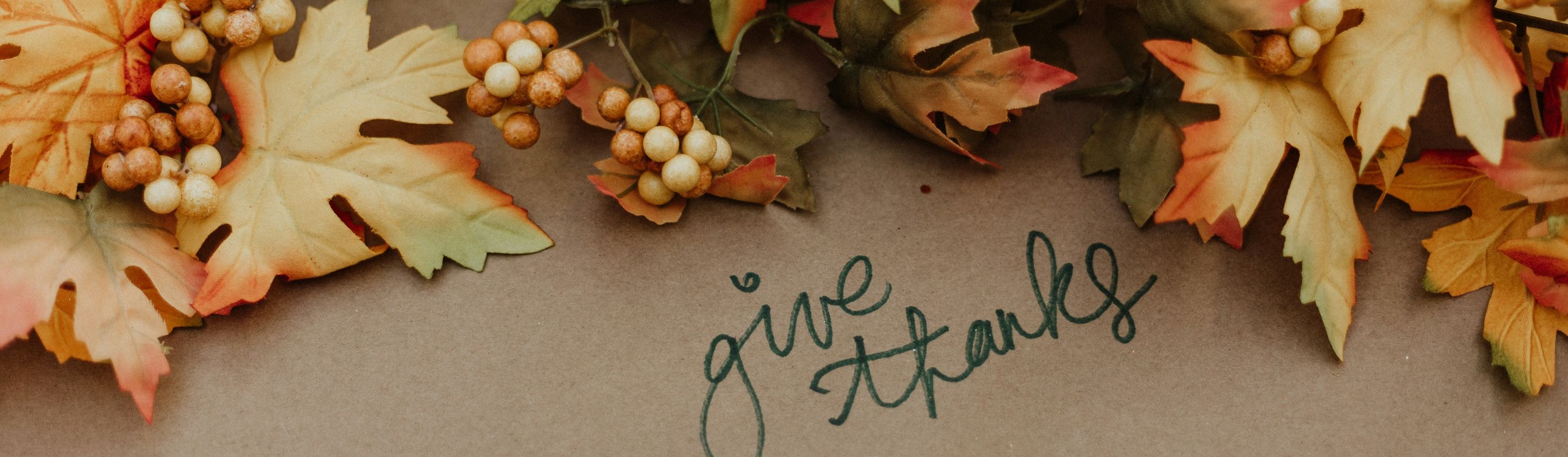
Thanksgiving Is About More Than Good Food—Why You Shouldn’t Forget To Express Gratitude
Thanksgiving Is About More Than Good Food—Why You Shouldn’t Forget To Express Gratitude

Every year, Thanksgiving arrives with the same familiar comforts: the smell of roasting turkey, the glow of a warm kitchen, and the joyful chaos of family gathering around the table. It's a holiday based around food, but it was never meant to be all about indulgence. This year, when you're surrounded by good company, feasting on special dishes that only show up once a year, don't forget about what's at the core of this holiday: gratitude.
Gratitude is easy to overlook. We’re conditioned to focus on what’s next—what we want, what went wrong, and what we need to fix. Life moves quickly, leaving little room to pause and acknowledge the good. However, science continuously proves how important it is to slow down and be thankful.
What is gratitude?
Gratitude is actively appreciating what you have and acknowledging the good all around you, big and small. It's more than just saying "thank you;" it's letting the emotion of thankfulness fill you up. Psychologist Robert Emmons divides gratitude into two stages. The first is an affirmation that life is good, and the second is the recognition that the sources of goodness are often external. These two stages allow us to recognize first the goodness in our lives and then how it came to us.
The science of gratitude
Studies have found that practicing gratitude for 15 minutes a day over six weeks can support mental health and even completely transform your perspective on life. These mental changes can have a positive impact on your physical health, too. Gratitude has a positive effect on life satisfaction, forgiveness, and outgoingness, and reduces depression, anxiety, substance abuse, and neuroticism, according to research. Gratitude isn't just about internal benefits; your "thank you" is more meaningful than you know. Gratitude has been shown to have a domino effect, with those who are thanked or helped more likely to pay it forward through kind acts or words later.
How to practice gratitude

Despite its proven benefits for mental health, researchers suggest that gratitude has unfortunately diminished in society as people increasingly take things like possessions and health for granted. For many, appreciation for life's "blessings," like having a roof above your head and people who love you, has been replaced by feelings of resentment and frustration.
Thanksgiving may be a day dedicated to giving thanks, but you should practice gratitude every day to reap the benefits. There are a multitude of ways to express thankfulness, including:
- Keeping a gratitude journal and dedicating time to write down people, places, objects, and memories that you're thankful for
- Tell someone in person that you're grateful they're in your life
- Do something helpful for someone you're thankful for
- Go for a walk with the intention of taking in the things around you
- Use guided meditation to reconnect with a focus on things you're grateful for
- Set an alarm to remind yourself to stop and acknowledge the positive aspects of your day
As 20th-century motivational writer William Arthur Ward once said, "Feeling gratitude and not expressing it is like wrapping a present and not giving it." So, this Thanksgiving, enjoy your feast, savor it, but don't forget the most essential part of this holiday. Express your thanks out loud, take a moment to breathe in the warmth of the season, and recognize the beauty in simply being together.