Powering Through Insomnia
Ever had a night when your brain just won't seem to shut off, no matter what you do? You're not alone. Whether it's anxiety before a big day or you're simply wide awake for no reason, insomnia can hit anyone at any time. And if you're wondering how to overcome and power through it, we've got you covered. Here are 10 tricks to beat insomnia—and 10 tips for how to function after a sleepless night.

1. Create a Consistent Sleep Schedule
It might sound obvious, but an easy trick that can help you overcome insomnia is to create a consistent sleeping schedule. This means going to bed and waking up at the same time every day, and avoiding staying up later than your usual bedtime on the weekends, which confuses your sleep-wake cycle.
 Acharaporn Kamornboonyarush on Pexels
2. Avoid Screens Before Bed
Another tip you probably already know? Putting down your phone at least an hour before bedtime. The same goes for any digital screen—laptops, TVs, tablets. You want to avoid blue light as much as possible as you prep your body for rest, or else it'll mess with your melatonin production (the hormone that makes you sleepy), and your brain will think it needs to stay awake.

3. Make Your Sleeping Environment Comfortable
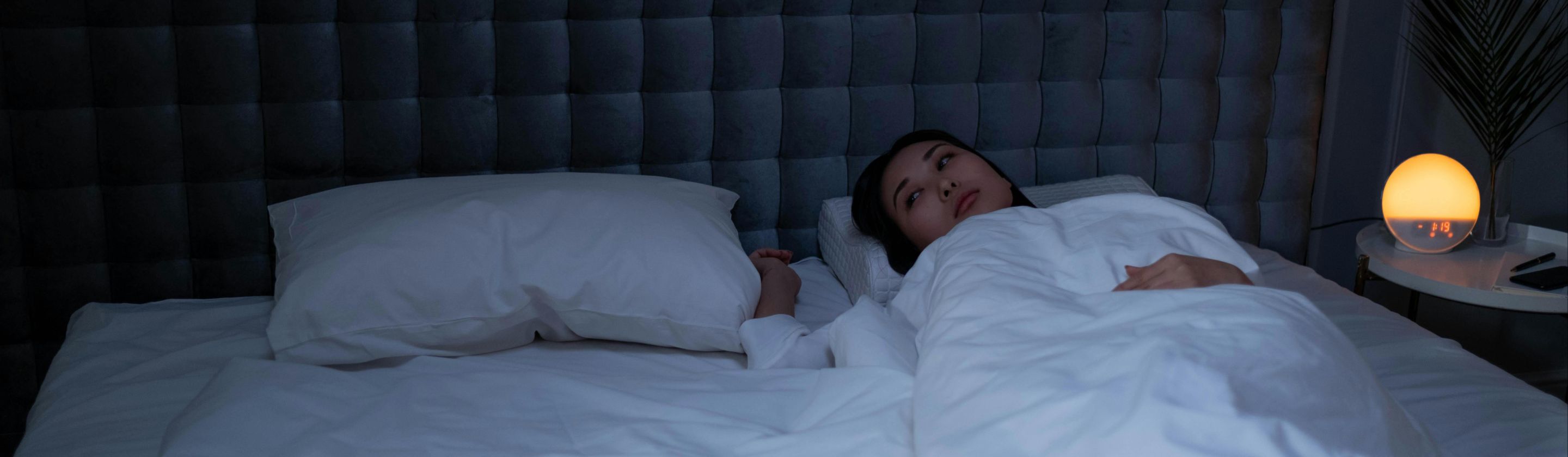
Most people find that they're most comfortable sleeping in dark rooms that are slightly cool. Whether it's switching on a fan, opening the window a crack, wearing a sleeping mask, or having white noise play in the background, find out what environment makes you fall asleep best and stick with it.

4. Focus on Your Breath
When your mind spirals and starts to overthink, or when you get frustrated that you can't seem to fall asleep, the more you let these thoughts fester the harder it'll be to shut your brain off and actually sleep. To combat this, focus on your breath and try relaxation techniques that help calm your mind. For example, try going through a few iterations of the box breathing method, or relax your muscles progressively, starting from your toes all the way up to your head.

5. Limit What You Do in Bed
Your bed should only be for sleeping and intimacy, so avoid doing other activities on it during the day. If you watch TV, eat, or do work in bed, your brain will associate it as not a place for rest, but a place to be awake, which will make it harder for you to fall asleep at night.

6. Put Your Imagination to Good Use
When your brain just won't seem to shut off for the night, put your imagination to good use. Think of yourself walking through a place you know really well, such as a library, your local grocery store, or your friend's home, and take note of every small detail. If you're feeling nostalgic, you can also reminisce about your most recent travel destination, flipping through your favorite memories. The key is: the more you distract your brain, the easier it'll be to drift off.

7. Take the Pressure Off
Sometimes, you might not be able to sleep because you're putting too much pressure on yourself. Maybe you have a job interview, an important flight to catch, or a busy day at work tomorrow. But when you force it and tell your brain you have to sleep, the more your brain will want to stay anxious and awake. Instead of pressuring yourself, say: "I'm going to rest my eyes. If I fall asleep, that's great. If I don't, that's okay." You'll find that when you stop putting so much effort into it (and monitoring yourself), you'll be able to drift off easier.

8. Limit Caffeine, Alcohol, & Daytime Naps
This might be another obvious tip, but even after a sleepless night, you'll want to avoid drinking too much caffeine to stay awake. Have your cup of Joe too late in the day (say, after 2PM), or take too many daytime naps to make up for your lack of sleep, and you just might trap yourself in the same cycle. Alcohol should also be avoided as it may lead to frequent awakenings during the night.

9. Sip on Herbal Tea
What should you sip on before bed to fall asleep better? Herbal tea. Think: chamomile, lavender, magnolia, and valerian teas. These types of teas have long been used as sleep remedies, given their ability to soothe an anxious mind and help it drift off to dreamland faster.

10. Try Melatonin
Melatonin is already naturally produced by our bodies to promote sleepiness, but if you've missed the window on your sleep-wake cycle, you might find yourself lying fully awake in bed at night. Talk to your doctor if you've been experiencing frequent episodes of insomnia, and ask whether taking melatonin supplements might help.
But what can you do if you couldn't catch a wink? Read on for 10 tips on how to function after a sleepless night:

1. Caffeine—in Moderation
As mentioned earlier, you don't want to be chugging coffee the entire day to make up for your lack of sleep; you might only trap yourself in the same cycle. Instead, have your cup(s) of Joe in moderation, and make sure to stop caffeine altogether after 2PM, or at least six to eight hours before bedtime.

2. Take Frequent Breaks
Unsurprisingly, your attention span and focus won't be as great when you're sleep deprived, so take it easy on yourself. Make sure to take frequent breaks throughout the day by going out for a stroll, doing some light exercise, or taking quick power naps.
 Photo By: Kaboompics.com on Pexels
3. Steer Clear of Sugar
You might be tempted to reach for sugary snacks after a sleepless night, but the quick energy boost these treats give you will only last a short moment. When your blood sugar comes crashing back down, you'll feel even worse. Do yourself (and your groggy brain) a favor and choose smarter, protein-rich snacks.

4. Avoid Driving
You'll definitely want to avoid driving the day after getting no sleep. Getting behind the wheel when you're drowsy is extremely dangerous and puts you and others at risk. If you need to commute to school or work, take public transit or carpool with a friend or colleague.

5. Simplify Your Routine
Again, be kind to yourself after a sleepless night. Instead of setting up a difficult day ahead, lighten up your workload so you don't stress yourself out even more. Split complicated tasks into smaller, manageable steps, and remember to take frequent breaks.

6. Get Some Exercise In
Exercise not only makes you feel good, but it also keeps you awake and alert. Whenever you have time in your day, go for a walk or jog around your neighborhood, or do some light stretches on a yoga mat. And if you can, stick to the outdoors so you can get as much sun as possible.

7. Take a Quick Power Nap
It's no surprise that you'll feel drowsy after a night of no sleep, so if you need to, take a power nap. Make sure not to drift off too much, though, or you'll only wake up feeling groggier than you started. An ideal range is between 15-30 minutes long.

8. Soak Up Natural Sunlight
Remember how we said to stick to the outdoors if you can to get your exercise in? This is because soaking up natural sunlight will increase alertness and tell the body that it's time to be awake. Plus, being out in the sun can boost your energy and mood, too.

9. Eat Healthy, Energy-Boosting Meals
Instead of reaching for sugary treats or high-carb meals, choose healthier options that will boost your energy and keep you satiated. Stick to lean meats and protein-rich snacks, like nuts and seeds, and don't forget to eat plenty of veggies, fruits, and whole grains.

10. Sleep in Just a Little Tonight
Considering you just survived an entire day on no sleep, go to bed a little earlier than usual tonight—but not too early. You don't want to sleep binge; doing so will only mess up your circadian rhythm and sleep schedule more. Instead, hit the hay an hour before you usually do, and try not to sleep more than two hours extra (for example, if you normally get six hours, go for nine, not 10). If you still have trouble falling asleep despite being exhausted, count backwards from 500 or try naming all the countries you know, along with their capital cities.