I Found My Front Door Lock Changed Without My Permission—Then I Discovered Who Did It
I Found My Front Door Lock Changed Without My Permission—Then I Discovered Who Did It
The Lock That Wasn't Mine
I pulled into my driveway that Tuesday afternoon just like I had a thousand times before, groceries in the backseat, my mind already running through what I'd make for dinner. The first thing I noticed was the little yellow sticky note on my front door. I parked, walked up the steps, and read it: 'Lock change completed per request. New key inside. —Miller's Locksmith Services.' I stood there for what felt like a full minute, just staring at those words. Per request. My request? I set my purse down on the concrete step and tried my key in the deadbolt. It didn't turn. I tried it again, jiggling it the way you do when a lock is stubborn, but nothing happened. The key didn't even slide in properly. Someone had changed my lock. I felt this odd flutter in my chest—not quite panic, more like the sensation you get when you walk into a room and forget why you're there. Confusion, I guess. I looked up and down the street like maybe there'd be some explanation waiting on the sidewalk, but everything looked completely normal. The Henderson's sprinkler was going. Mrs. Kowalski's cat sat in her window. Everything ordinary except this. The note said the new key was left inside—but I had never requested the lock change.
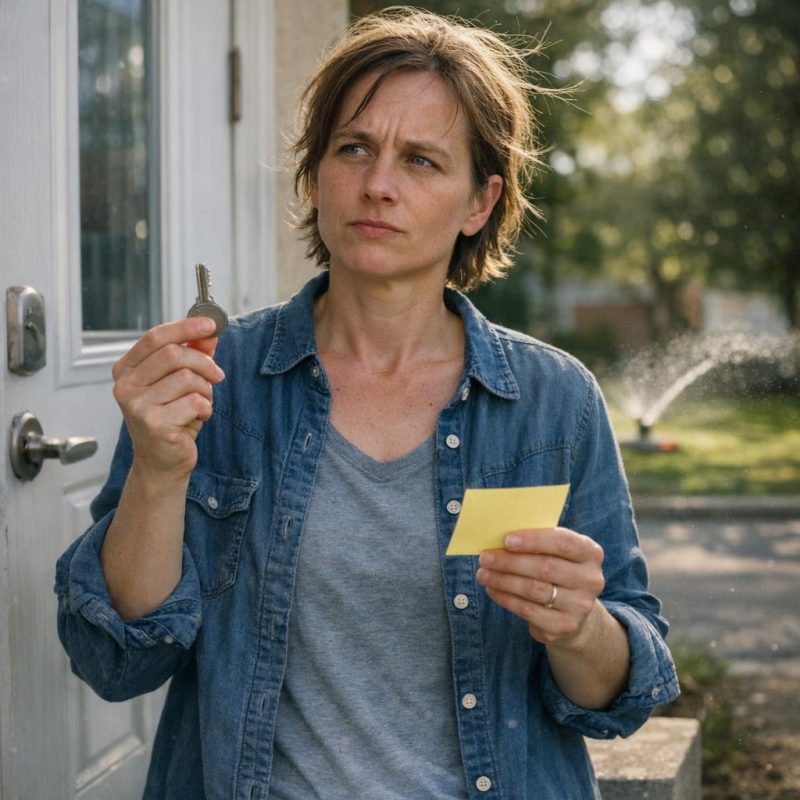 Image by RM AI
The Spare Key Rescue
I stood on my front porch for another moment, just holding my old key, before it occurred to me that I could use the back door. I keep a spare tucked in the ceramic flower pot on the back patio—one of those hiding spots that's probably not as clever as I think it is, but it's always been there. I walked around the side of the house, the gravel crunching under my shoes, and retrieved the spare from under the dusty fake geranium. My hand was shaking a little, though I'm not sure why. The back door opened fine, same old lock, same old sticky handle that catches if you don't lift it just right. I stepped into my kitchen and immediately felt it. Something was off. The house was too quiet, too still, like the air itself had been rearranged. You know that feeling when you come home and you just know someone's been there? It wasn't anything I could point to right away. The lights were off like I'd left them. The blinds were drawn the same way. My coffee mug still sat in the sink from that morning. But the silence felt heavy, expectant, like the house was holding its breath. I stood in my own kitchen and felt like a stranger. Inside, the house felt wrong—too quiet, too still—like someone had been there.
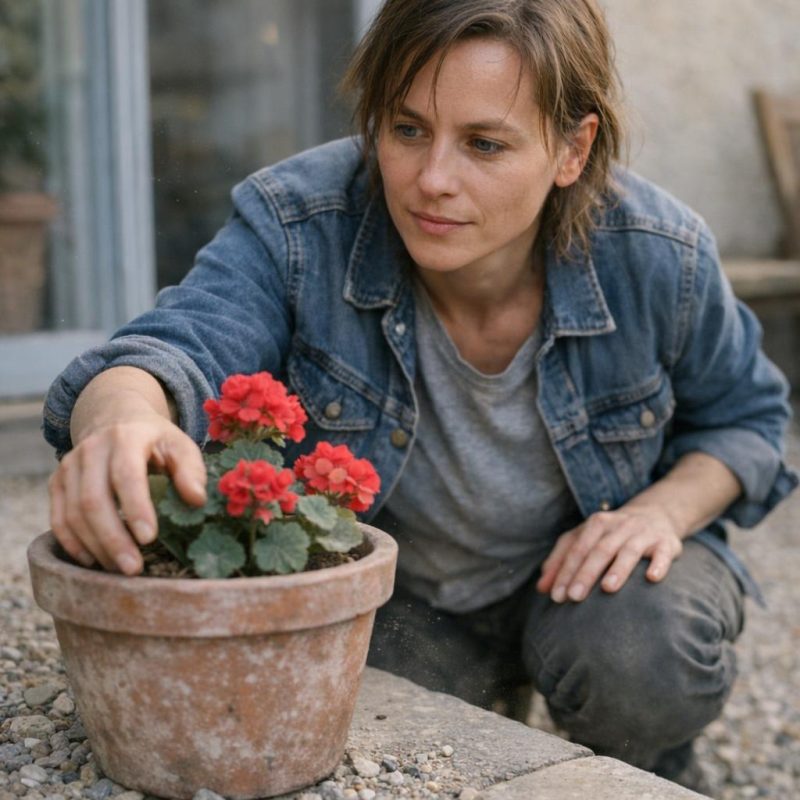 Image by RM AI
The Envelope on the Counter
I walked slowly through the kitchen, listening for anything out of place, but heard only the hum of the refrigerator. That's when I saw it: a white envelope on the counter, right next to the fruit bowl, with my name written on it in block letters. DIANE. I picked it up, turned it over. It wasn't sealed. Inside was a shiny new brass key and a receipt printed on that thin thermal paper that locksmith companies use. The receipt listed the service: 'Deadbolt replacement, front door,' along with a date and time stamp—today, 12:47 PM. Below that was a line for authorization, and there was a signature on it. My signature. I'm a careful person, always have been. I know my own handwriting, the way I loop my capital D, the little tail on my final 'e.' This looked exactly like that. The pen pressure, the slant, everything. But I stared at that signature and felt my stomach drop because I knew, with absolute certainty, that I hadn't written it. I had never called a locksmith. I had never authorized this work. I had never signed this receipt. Someone else had. Someone who could forge my signature well enough to fool a professional. The signature looked exactly like mine, but I knew with absolute certainty I hadn't signed it.
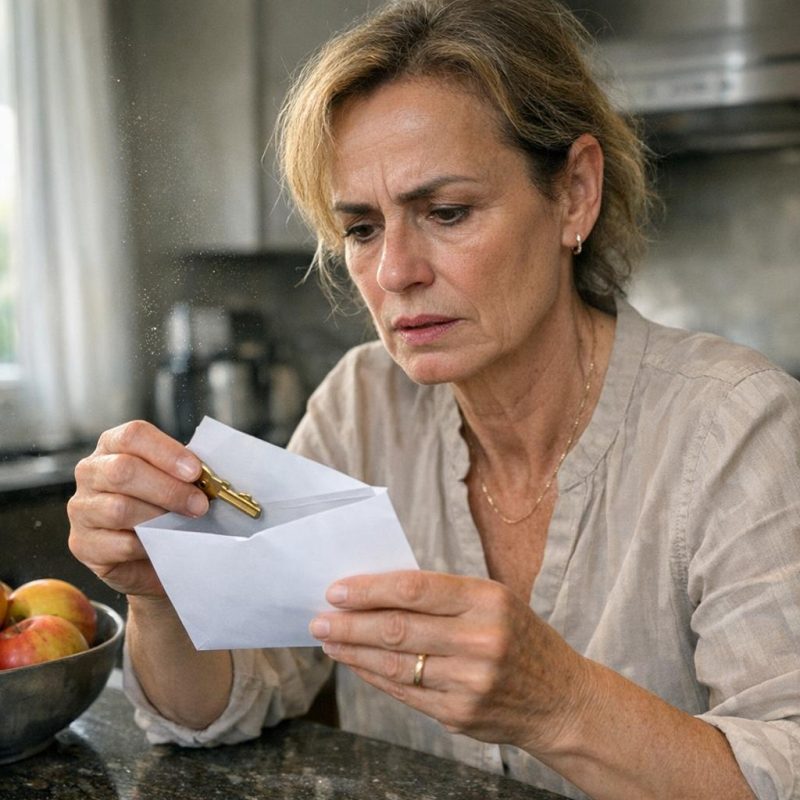 Image by RM AI
The Alibi Lunch
I looked at the timestamp again: 12:47 PM. I pulled out my phone and scrolled back through my day, even though I already knew what I'd find. At 12:47 that afternoon, I had been sitting across from my sister Karen at Rosemary's Bistro on the other side of town, picking at a Cobb salad and listening to her complain about her new manager. We'd met at noon. I remembered checking my phone when the waiter brought the check—it had been 1:15. I called Karen immediately. 'Hey, what time did we meet for lunch today?' I asked, trying to keep my voice level. 'Noon,' she said. 'Like we planned. Why?' 'And I was with you the whole time? Until after one?' There was a pause. 'Diane, what's going on? Yes, you were with me. You're freaking me out a little.' I thanked her and hung up. So at 12:47, I had been twenty minutes across town with a witness, eating overpriced salad. Which meant I physically could not have been at my house, letting a locksmith in, signing a receipt, authorizing work. But according to this paper in my hand, I had. Someone had authorized work on my home while pretending to be me—and they had an alibi for me.
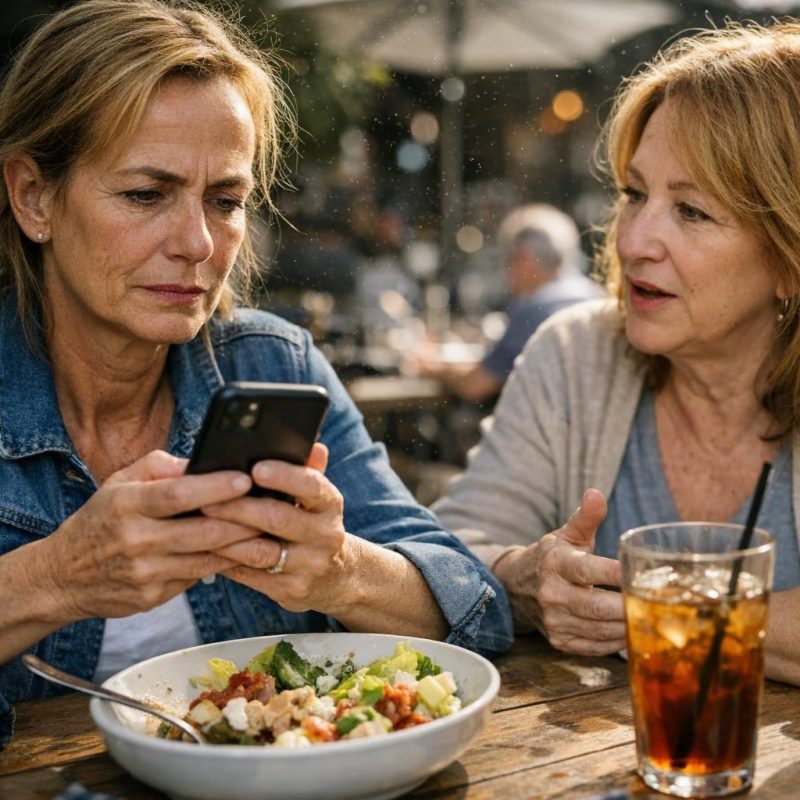 Image by RM AI
The First Call to the Locksmith
I found the phone number for Miller's Locksmith printed at the top of the receipt and dialed before I could second-guess myself. A woman answered on the third ring, friendly and efficient. 'Miller's Locksmith, this is Brenda.' I swallowed and tried to sound normal. 'Hi, yes, I'm calling about a service that was done at my home today. A lock replacement?' I gave her my address. 'Oh sure, let me pull that up,' she said, and I heard the clicking of a keyboard. 'Yep, deadbolt replacement, completed this afternoon. Is there a problem with the installation?' 'No, I just... I wanted to confirm some details. Can you tell me how the appointment was made?' More clicking. 'Looks like it was a walk-in request this morning. The client said it was urgent, needed it done same-day.' The client. Me, supposedly. 'And when your technician arrived, who let him in?' I asked, and I could hear the strain creeping into my voice now despite my best efforts. There was a brief pause. 'Let me check the work notes,' Brenda said. After some back-and-forth, the woman confirmed: yes, the technician had been let inside by 'the homeowner.'
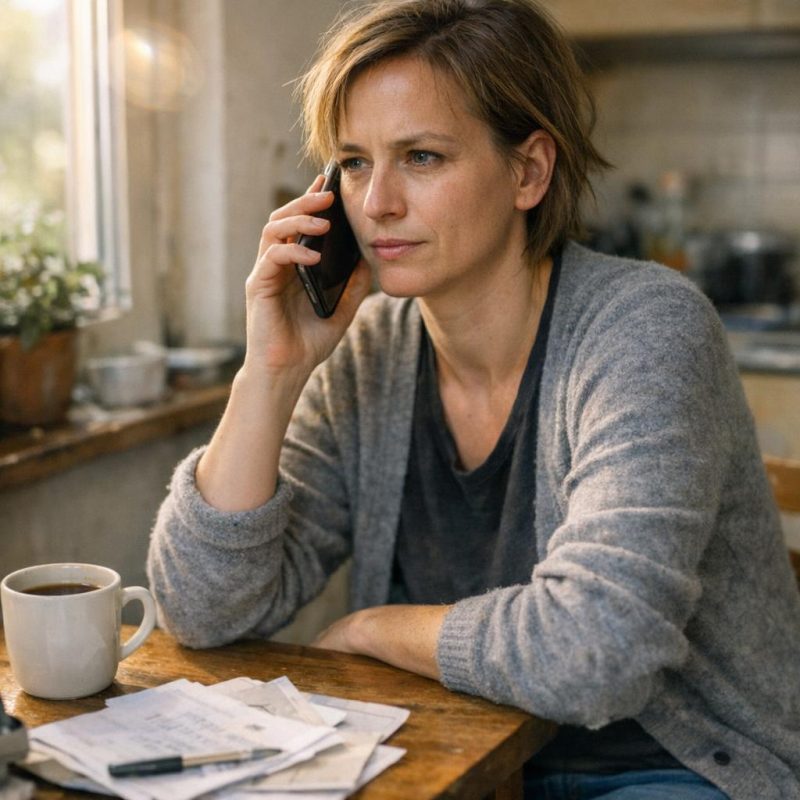 Image by RM AI
She Looked Like You
My hands had gone cold. I pressed the phone tighter to my ear. 'Can you describe her?' I asked. 'The person who let your technician inside?' Brenda hesitated. 'Ma'am, is everything okay? Because if there's been some kind of mistake—' 'Please,' I interrupted. 'I just need to know what she looked like.' Another pause, longer this time. I heard papers rustling. 'Hold on, let me call Danny—he's the tech who did the job. He's actually just got back.' She put me on hold. The muzak that played was some instrumental version of a song I should have recognized, but my brain couldn't process it. I stood in my kitchen, staring at that forged signature, waiting. When Brenda came back on the line, her voice had changed, become more cautious. 'Okay, so Danny says the homeowner was a woman, late fifties, your height according to our records here, dark blonde hair. He said she seemed perfectly nice, knew right where she wanted the new lock installed.' I couldn't breathe properly. 'Did he say anything else?' 'Well,' Brenda said slowly, and I could tell she was reading from notes now. 'He said she looked like you, ma'am. Based on the ID he saw.' Not just someone using my name—someone who could pass for me in person.
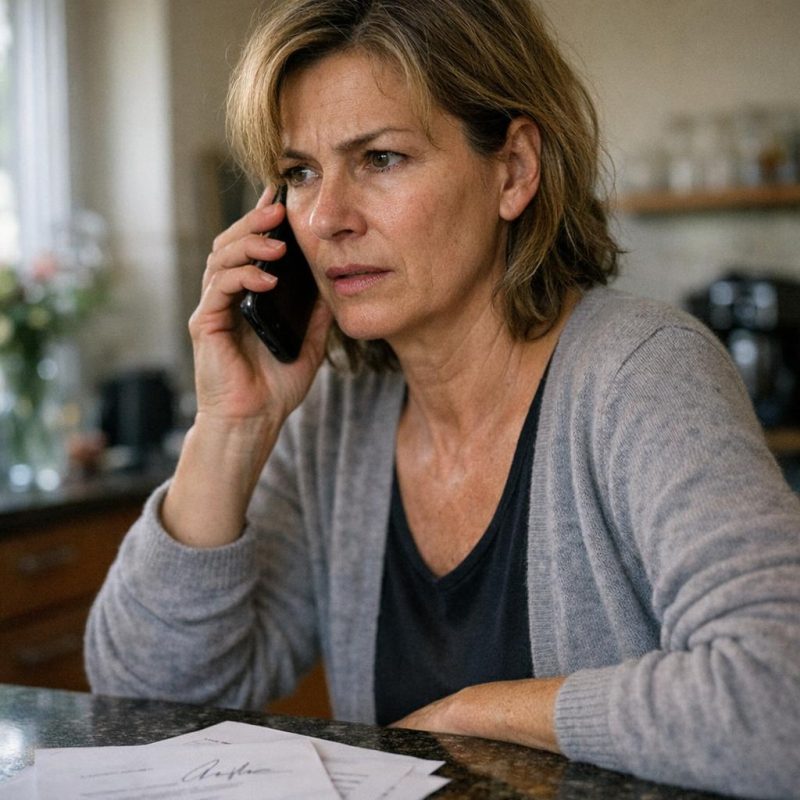 Image by RM AI
Checking My ID
I hung up and immediately dumped my purse out on the kitchen counter. My wallet tumbled out along with receipts, loose change, a lipstick, my reading glasses case. I flipped the wallet open with shaking hands and checked the plastic sleeves: driver's license, still there. Credit cards, all present. Insurance card, library card, the grocery store rewards card I never remember to use. Everything exactly where it should be. I checked again, counting them this time, as if maybe I'd missed something the first time. But no. Nothing was missing. Not a single thing. Which meant whoever had impersonated me hadn't stolen my identification. They hadn't needed to. They had their own, or they'd made their own, or—I didn't even know what the options were. How do you look like someone else well enough to fool a locksmith who's standing three feet away from you? My mind was racing through possibilities, none of them making sense. A sister I didn't know about? A doppelgänger? That's ridiculous, I told myself, but what else explained it? I gathered my cards back into my wallet with trembling fingers and looked around my kitchen again. Everything was there—which somehow made it worse, because it meant they had another way.
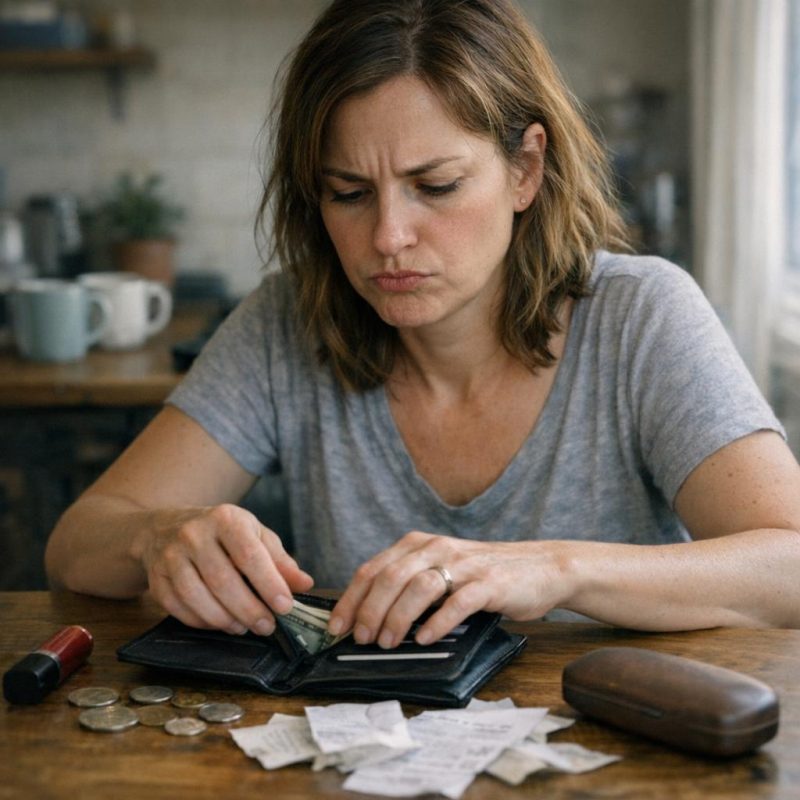 Image by RM AI
The Shifted Mail
I needed to see if anything else had been disturbed. I walked through the living room—nothing obviously wrong—and into my home office, a converted bedroom where I keep my desk and filing cabinet. The room looked normal at first glance, but as I stepped closer to the desk, something caught my eye. The stack of mail I'd left there that morning had been moved. Not dramatically, just shifted about six inches to the left, away from the edge where I always put it. I'm particular about these things, always have been. And one of the envelopes, a statement from my homeowner's insurance, had been opened. The flap was tucked back inside, like someone had tried to make it look untouched, but I could see the tear along the top edge. I picked it up carefully, as if it might burn me. I remembered that envelope arriving three days ago. I remembered setting it on the desk, telling myself I'd open it when I had time to file it properly. I remembered it being sealed. I was certain of it. Someone had been in my house, gone through my mail, read my insurance information. They'd touched my things, invaded my space, and I hadn't known. The insurance statement had been sealed when I left—I was certain of it.
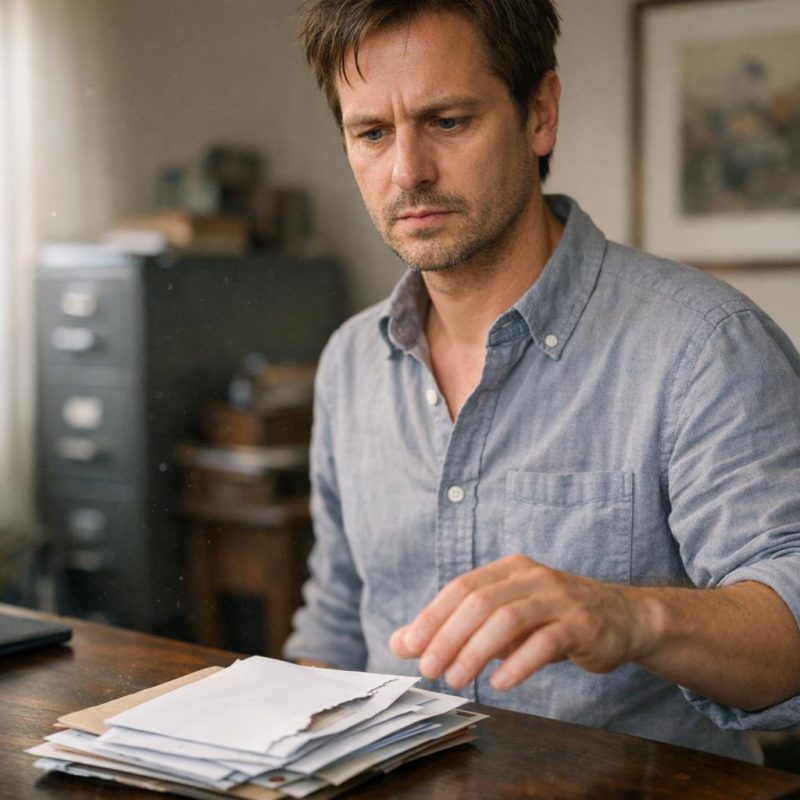 Image by RM AI
What Were They Looking For
I stood there holding that insurance statement, trying to work backward through what someone could do with this information. The document had my full name, my home address, my policy number, and the estimated replacement value of my house. It wasn't just numbers on a page—it was a blueprint of my financial life. I set it down carefully and started going through the rest of the mail stack, piece by piece. A utility bill. A credit card offer I'd meant to shred. A statement from my investment account. My hands were actually shaking as I realized what I was looking at. This wasn't someone looking for cash or jewelry. They weren't after things they could grab and sell. They wanted information. Documentation. The kind of details you'd need to open accounts, to prove you owned property, to convince someone you were me. I thought about all the times I'd heard stories on the news about identity theft, always feeling a vague sympathy for the victims but never really understanding how it happened. Now I could see it clearly. Someone had stood in this exact spot, touching these exact papers, collecting the pieces they needed. Financial records, insurance details, account numbers—the kind of information that could unlock everything.
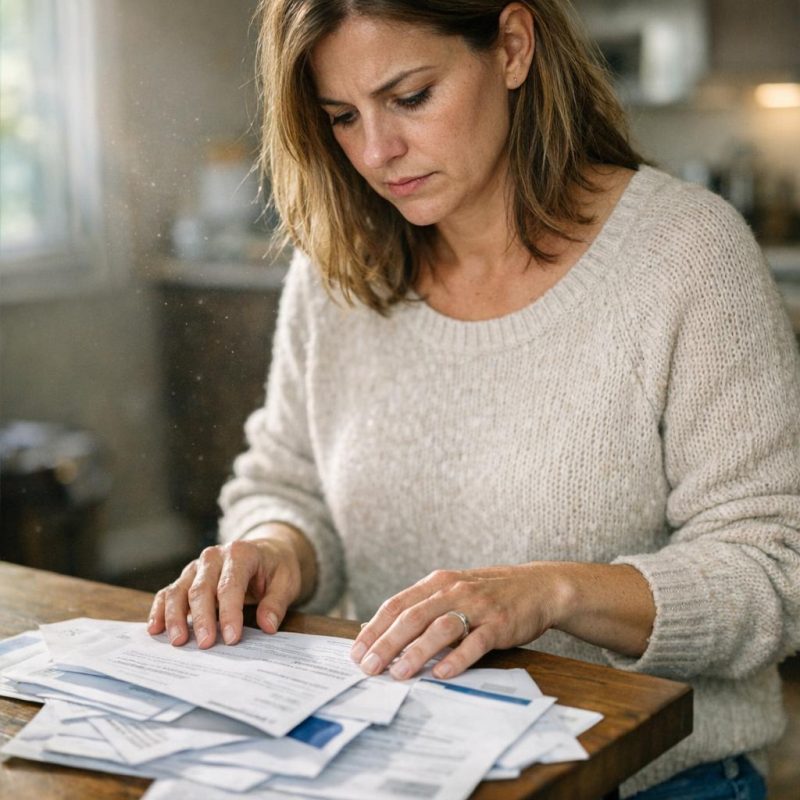 Image by RM AI
The Sleepless Night
I didn't sleep that night. I'm not exaggerating for effect—I literally did not sleep. I lay in my bed staring at the ceiling, listening to every sound the house made. You know how your home has its own language of creaks and settling noises? Sounds you normally don't even register? That night, every single one of them felt like a warning. The refrigerator humming in the kitchen sounded like footsteps. The furnace clicking on made me sit bolt upright, heart pounding. Around two in the morning, I got up and checked all the locks again, then wedged a chair under my bedroom doorknob like I was in some thriller movie. I felt ridiculous doing it, but I felt more ridiculous lying there defenseless. I kept thinking about the fact that someone had walked through these rooms while I was out. They'd touched my desk, opened my mail, stood in my office. Had they gone into my bedroom too? Had they opened my closet, looked through my dresser drawers? I couldn't stop my mind from spinning through the possibilities. Around four a.m., I heard a car door slam outside and nearly jumped out of my skin. It was just my neighbor leaving early for a flight, something I'd seen him do a dozen times before. But that night, it felt sinister. Every creak in the house felt like a warning—someone had been here, and I didn't know if they were coming back.
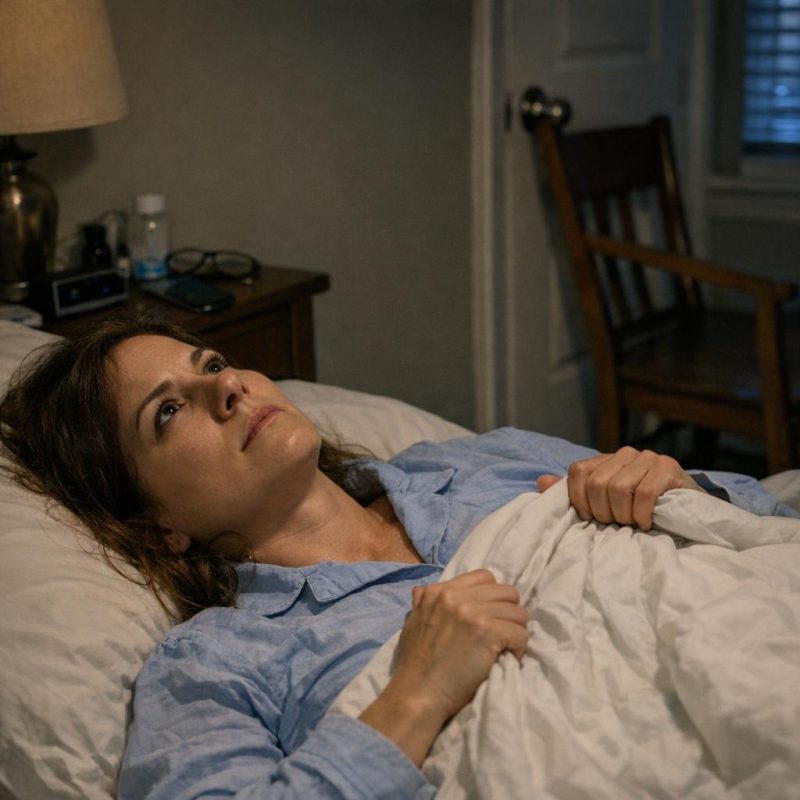 Image by RM AI
Morning Inventory
When the sun finally came up, I was already dressed and making coffee. I couldn't just sit there wondering anymore. I needed to know the full extent of what had happened, needed to take some kind of action, even if it was just checking. I started in my bedroom, going through every drawer methodically. My jewelry box—still there, everything in place. The envelope of emergency cash I kept in my sock drawer—untouched. I moved to the bathroom, the guest room, the linen closet. Nothing seemed wrong. In the kitchen, I checked the junk drawer where I sometimes threw bills and receipts. It looked normal, but then again, would I even notice if someone had photographed the contents and put everything back? I went through my filing cabinet in the office, pulling out each folder, looking for signs that papers had been removed or reordered. Tax returns, mortgage documents, medical records—all there. The process took me almost three hours. By the time I finished, I was exhausted and frustrated in equal measure. I'd found that one opened envelope, that one moved stack of mail, and nothing else. No smoking gun, no obvious theft, no clear evidence I could point to. Nothing else seemed disturbed, but I couldn't shake the feeling I was missing something obvious.
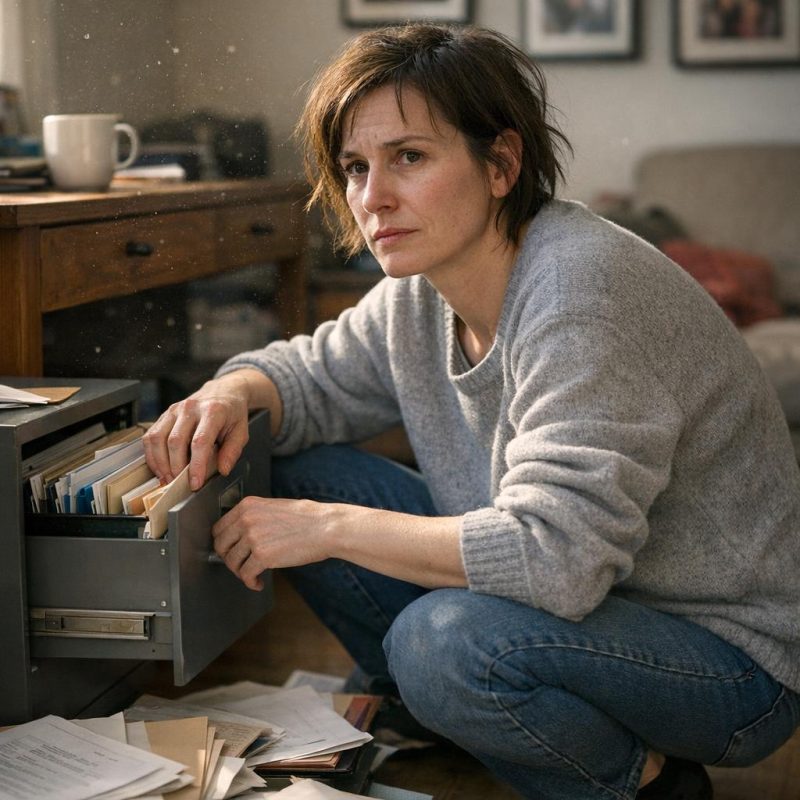 Image by RM AI
The Bank's Call
I spent the next two days in a fog of anxiety, jumping every time my phone rang, checking the locks obsessively. Then on Wednesday afternoon, I got a call from a number I didn't recognize. Normally I'd let it go to voicemail, but something made me answer. 'Ms. Thornton?' the woman's voice said. 'This is Sarah from First National Bank, fraud prevention department. We're calling to verify a recent request on your checking account.' My stomach dropped. I told her I hadn't made any recent requests. There was a pause, the sound of typing. 'We have a request here from yesterday,' she said, 'to add an authorized user to your account. You didn't submit this?' I gripped the phone tighter. No, I told her, definitely not. What kind of request? Who tried to add themselves? She explained that someone had called claiming to be me, asking to add a secondary account holder who could access the account and make transactions. They'd provided my full name, address, and the last four digits of my Social Security number. The bank had started processing it but flagged it for verification as a precaution. 'That's our standard procedure for this type of change,' she said, and I could hear her trying to sound reassuring. But I felt like the floor had disappeared beneath me. I hadn't made any request—and suddenly the lock change felt like just the beginning.
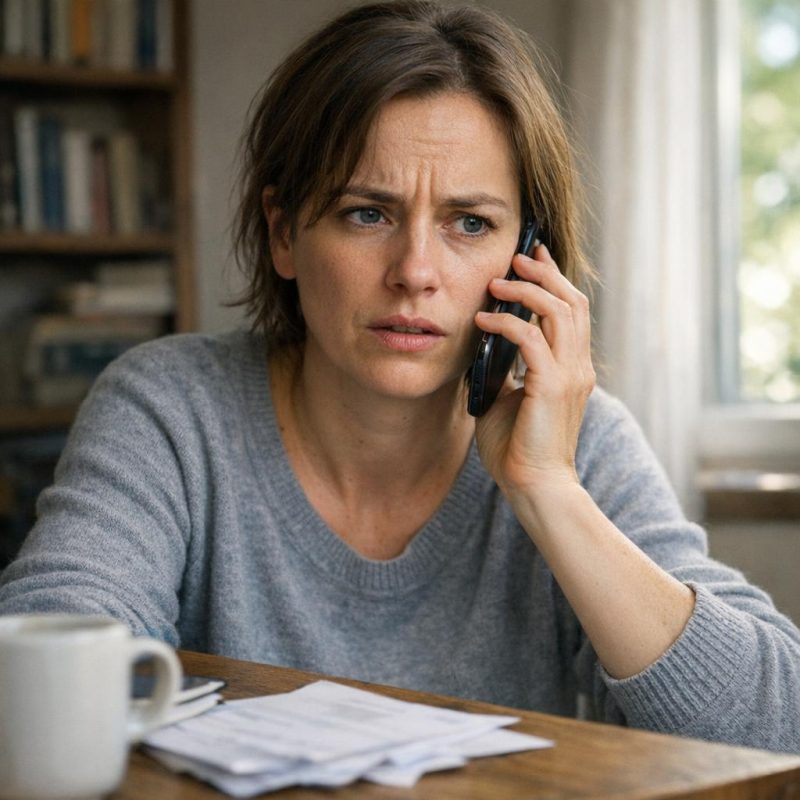 Image by RM AI
The Discrepancy
I asked Sarah to tell me everything about the request, every detail she could share. My voice sounded strange to my own ears, too high and tight. She put me on hold for a moment, then came back with more information. The request had come in through the bank's phone system, she said. The caller had answered the security questions correctly—my mother's maiden name, the city where I was born. Those are things you can find online if you know where to look, I thought. But then she mentioned something else. 'There was a minor discrepancy that flagged our system,' she said. 'The caller provided your date of birth as March fifteenth, but our records show March fourteenth. That's why it got kicked to fraud prevention instead of going through automatically.' I felt my breath catch. One day off. A single day was the only thing that had stopped this from succeeding. If they'd gotten that one detail right, someone would have had full access to my checking account right now. They could have withdrawn money, written checks, transferred funds, and I wouldn't have known until I checked my statement. 'We've frozen any changes to the account pending your verification,' Sarah continued, but I barely heard her. A discrepancy—which meant whoever tried had come terrifyingly close to succeeding.
 Image by RM AI
The Pattern Emerges
After I hung up with the bank, I sat at my kitchen table with a notepad and wrote everything down. On the left side: Lock changed without authorization. Someone had my signature, my phone number, enough information to convince a locksmith. In the middle: Mail opened, insurance documents accessed. Someone had been inside my house, going through my personal papers. On the right: Bank account authorization attempt. Someone had my Social Security number, my security question answers, nearly every piece of my identity. I drew lines connecting them, staring at the pattern. These weren't random incidents. They weren't even opportunistic crimes. This was methodical. Someone was moving through my life systematically, gathering information, testing access points, building their way toward something bigger. The lock change gave them physical access to my home. The mail gave them documentation and account numbers. The bank attempt was them trying to use what they'd collected. I thought about the timing—the lock changed while I was at my book club, the bank call just two days later. What would have been next if the birthday hadn't been wrong? What other accounts were they planning to access? I drew a circle around all three incidents and wrote one word at the top of the page: TARGETED. This wasn't random—someone was building access to my life piece by piece.
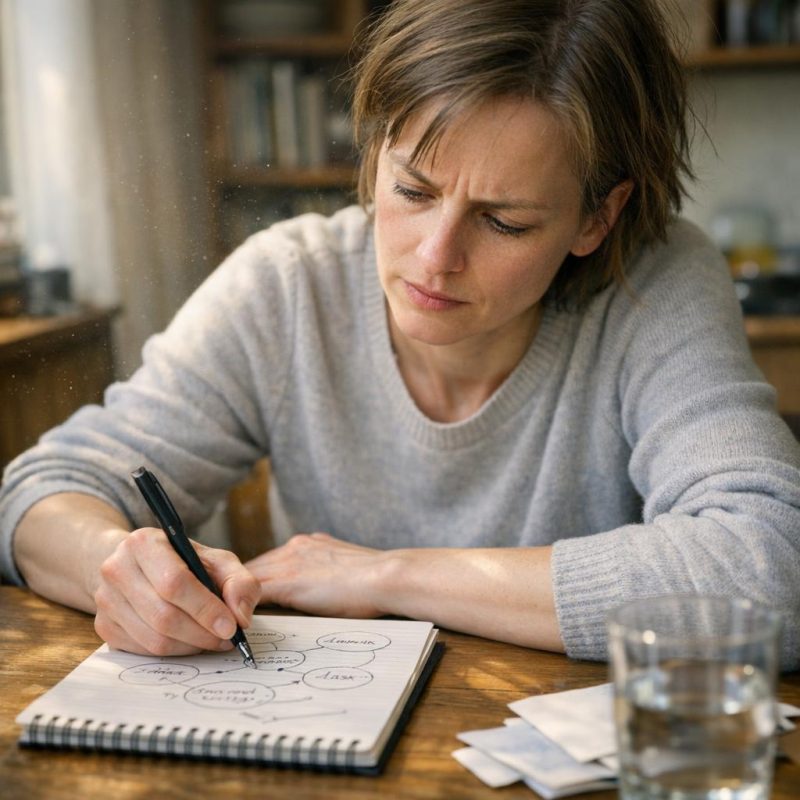 Image by RM AI
The Authorization Form
I needed to see that authorization form. I called the locksmith company and asked if I could come in to review the documentation for my lock change. The woman who answered sounded confused—apparently people don't usually make that request—but she said she'd have the manager pull the file. I drove over that afternoon, my hands gripping the steering wheel too tightly. The manager, a guy named Tom with a thick mustache, brought out a manila folder. 'This is everything we have,' he said, spreading the papers across the counter. There was the work order, the payment receipt, and a single page authorization form. I pulled it closer, my heart pounding. The signature at the bottom looked exactly like mine—I mean exactly, the same loops and slant I'd been making for forty years. But above it, in the section where the customer fills in their contact information, the handwriting was different. Still neat, still controlled, but not mine. I stared at the printed letters spelling out my name and phone number. The slant was subtle, just a slight tilt to the right that my own handwriting didn't have. And there was something else, something about the way the letters were formed—too careful, too deliberate. I'd seen handwriting like this before. Recent handwriting. The signature was perfect, but the handwriting on the rest of the form had a tilt I recognized immediately.
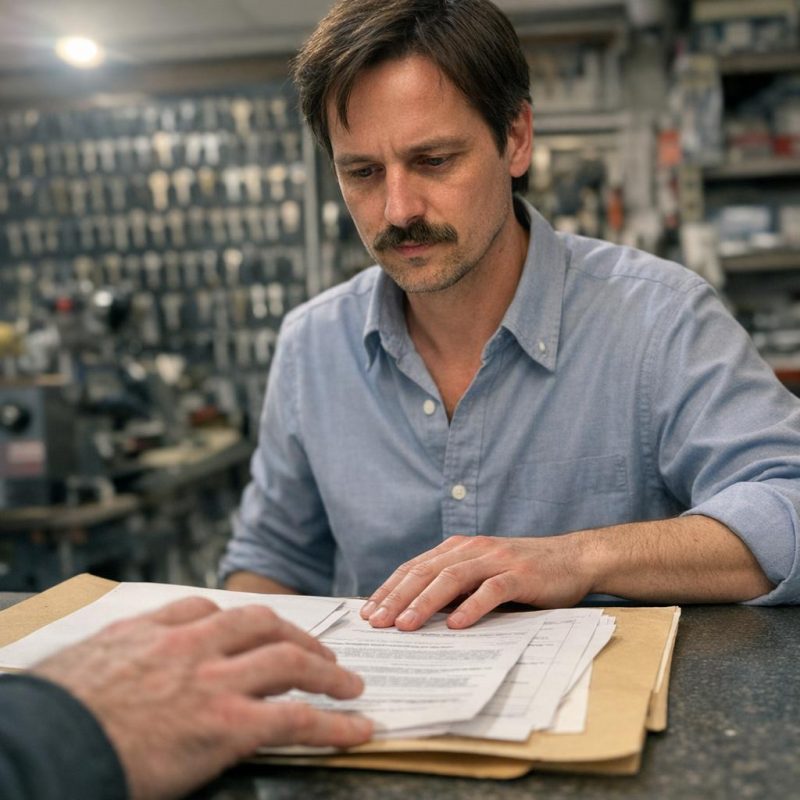 Image by RM AI
The Handwriting Match
I stood there staring at that form, my mind racing backward through the past few months. That tilt. That particular slant to the right, with the overly precise letter formations. I'd seen it on sticky notes left on my refrigerator. I'd seen it on shopping lists placed on my counter. I'd seen it on a birthday card I'd received just two months ago. Rachel's handwriting. Rachel, who'd been my neighbor for three years, who helped me with my groceries and borrowed my ladder. Rachel, who'd checked in on me when I had the flu last winter and watered my plants when I visited my sister. I actually felt dizzy for a second, had to put my hand on the counter to steady myself. Tom asked if I was okay, and I nodded automatically, not really hearing him. It couldn't be Rachel. There had to be some mistake, some other explanation. Maybe someone had mimicked her handwriting? Maybe I was wrong about the tilt? But even as I tried to convince myself, I could picture her handwriting so clearly. Those grocery lists she'd leave when she picked things up for me—'eggs, milk, bread'—written in that same careful, right-slanting script. I thanked Tom and walked out to my car in a daze, the form's image burned into my mind. I didn't want to believe it—Rachel had never given me reason to suspect her of anything.
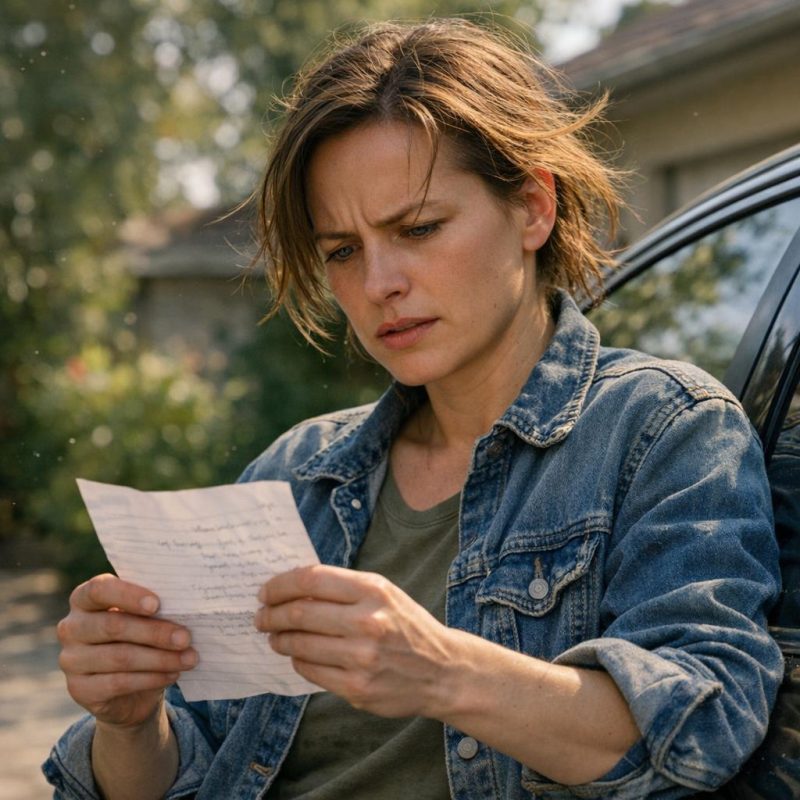 Image by RM AI
Remembering the Questions
I sat in my car in the parking lot for a good ten minutes, just trying to process what I'd seen. And once the thought was there—once I'd connected Rachel's handwriting to that fake service order—it was like a door opened in my memory. I started remembering conversations we'd had over the past few months. How she'd asked about my bank, seemingly out of nowhere, saying she was thinking of switching and wanted recommendations. How she'd inquired about my retirement accounts when we were discussing investment strategies at a neighborhood barbecue. How she'd wanted to know if I had a will, if I'd done any estate planning, framing it all as concern for my wellbeing as I got older. At the time, I'd thought she was just being thoughtful, maybe a little nosy but well-intentioned. She'd positioned herself as someone who cared, someone looking out for me since I lived alone. But now, sitting there replaying those conversations in my head, I felt something cold settle in my stomach. Those weren't casual questions. They were targeted, specific, designed to extract information. She'd asked about my mortgage status, my property taxes, even my monthly expenses when she'd helped me organize some paperwork after my computer crashed. Questions I had taken as concern now felt like something else entirely—reconnaissance.
 Image by RM AI
Calling David
When I got home, I went straight to my phone and called David. My son had been dating Rachel for almost eight months now, which was how she and I had gotten so close in the first place. I kept my voice light, casual, like this was just a random thought that had occurred to me. 'Hey sweetie,' I said when he picked up. 'Quick question—was Rachel with you the afternoon my lock got changed? That Tuesday?' I could hear him shifting around, maybe sitting down. 'Uh, that Tuesday?' he repeated, clearly trying to remember. 'No, I was at work. Why?' I gripped the phone a little tighter. 'Just wondering if she might have seen anything, that's all. The locksmith company is trying to figure out what happened.' I heard him take a breath. 'Oh. Well, Rachel wasn't with me that day. She said she was running errands in the afternoon, I think. Yeah, she mentioned stopping by the pharmacy and maybe Target.' My heart started pounding harder. 'Did you talk to her that afternoon?' I asked, trying to sound merely curious. 'No, just later that evening. She told me about her day.' There was a pause on the line—just long enough to tell me everything I needed to know.
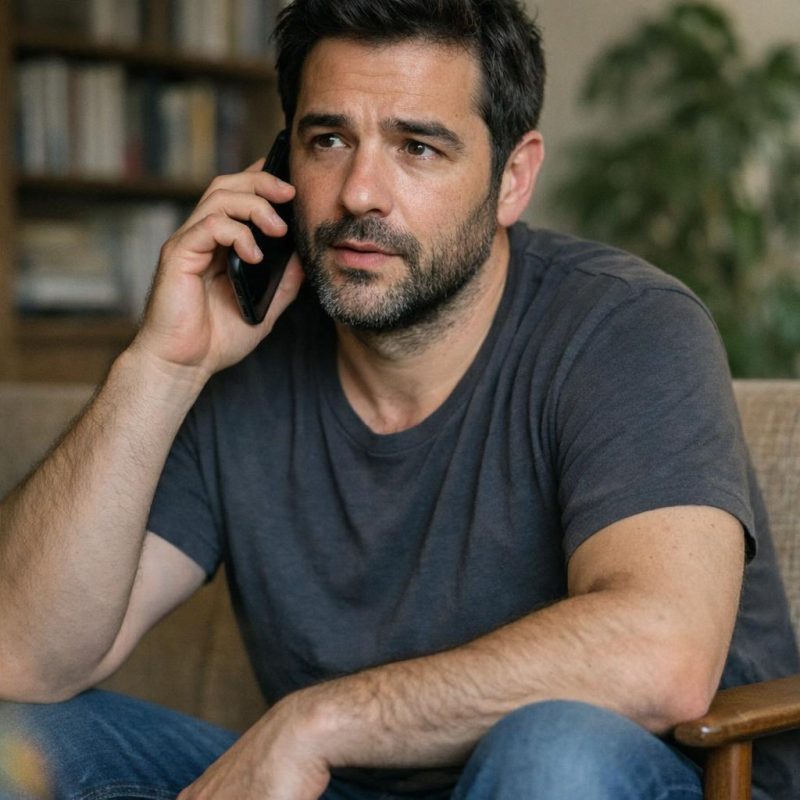 Image by RM AI
She Was Running Errands
David didn't seem to notice anything odd about my questions, thank God. He just kept talking, completely oblivious to the significance of what he was telling me. 'Yeah, she said it was just a regular errand day. Boring stuff, you know. Why, did something happen that day I should know about?' I forced myself to sound normal. 'No, no, nothing like that. Just trying to piece together the timeline for the locksmith investigation. You know how I am with details.' He laughed. 'That's my mom. Always organized.' We chatted for another minute about his work, and I let him go, my mind racing the entire time. Errands. Running errands. It was the perfect non-answer, wasn't it? Vague enough that she couldn't be caught in a lie if someone checked, but specific enough that it sounded like a real day. The pharmacy and Target—places with no receipts to verify, no timestamps to confirm. And she'd told David about it later that evening, establishing an alibi without him even realizing he was providing one. I sat there holding my phone after we'd hung up, feeling sick. If she'd really been running innocent errands, why hadn't she mentioned seeing anything unusual at my house? She lived close enough that she drove past my place regularly. Errands—vague enough to mean anything, specific enough to sound believable.
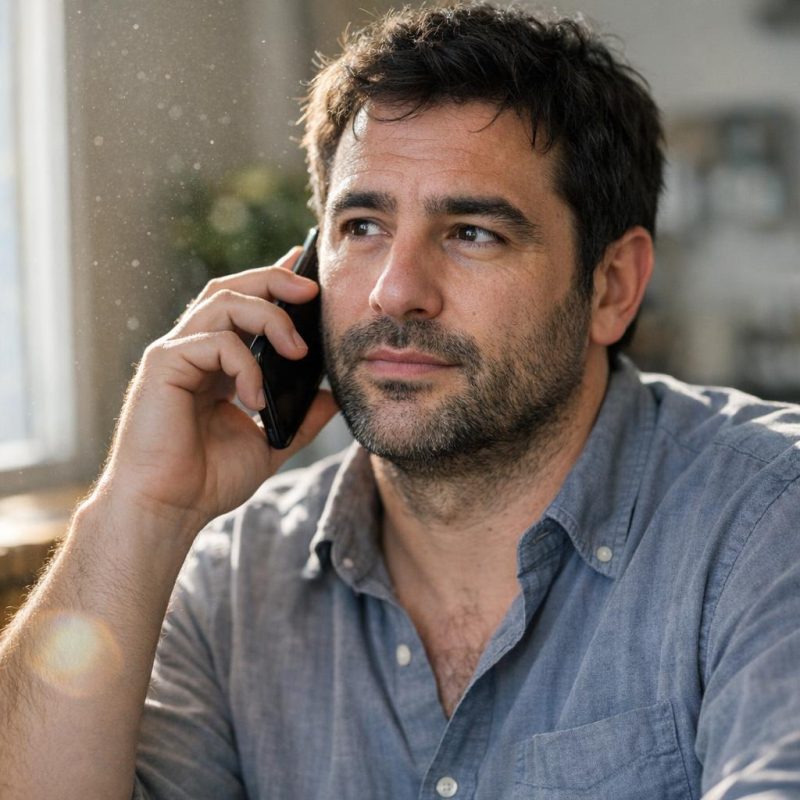 Image by RM AI
The Decision Not to Confront
Every instinct in my body wanted to march over to Rachel's apartment right then and confront her. To demand answers, to ask her why she'd done this, to tell her I knew about the fake service order. But I forced myself to stop and think it through. What actual proof did I have? A handwriting match that I couldn't prove in court. A vague alibi from a day weeks ago. Suspicious questions that could be explained away as friendly concern. If I confronted her now, she'd deny everything. She'd say I was mistaken about the handwriting, that I was being paranoid, that I was imagining patterns where none existed. And worse—she was dating my son. If I accused her without concrete evidence and turned out to be wrong, I'd destroy David's relationship and damage my connection with him. He'd think I was jealous or controlling or losing my grip on reality. Even if I was right, without proof, it would turn into a he-said-she-said situation that would tear my family apart. No, I needed more than suspicions and uncomfortable feelings. I needed documentation, evidence, something that couldn't be denied or explained away. I needed proof—something undeniable—before I tore my family apart with this accusation.
 Image by RM AI
Reviewing Financial Records
I spent the rest of that afternoon at my dining room table with every bank statement, credit card bill, and financial document I could find spread out in front of me. I went through six months of records line by line, looking for anything unusual. Charges I didn't recognize. Withdrawals I hadn't made. Address changes or account modifications I hadn't authorized. I checked my credit reports from all three bureaus, looking for new accounts opened in my name or inquiries I hadn't initiated. I reviewed my utility bills, my insurance statements, even my medical records portal to see if anyone had accessed them. Nothing. Everything looked normal, legitimate, exactly as it should be. Just my regular expenses, my regular patterns. But somehow that made me feel worse, not better. Because if the lock change and the bank inquiry were real—and I knew they were—then what was I missing? What was happening that I couldn't see yet? I kept thinking about those questions Rachel had asked, all that information she'd gathered about my finances, my property, my life. Information like that isn't collected for no reason. It's collected for a purpose. Nothing else stood out yet, but I couldn't shake the feeling I was looking at the tip of something larger.
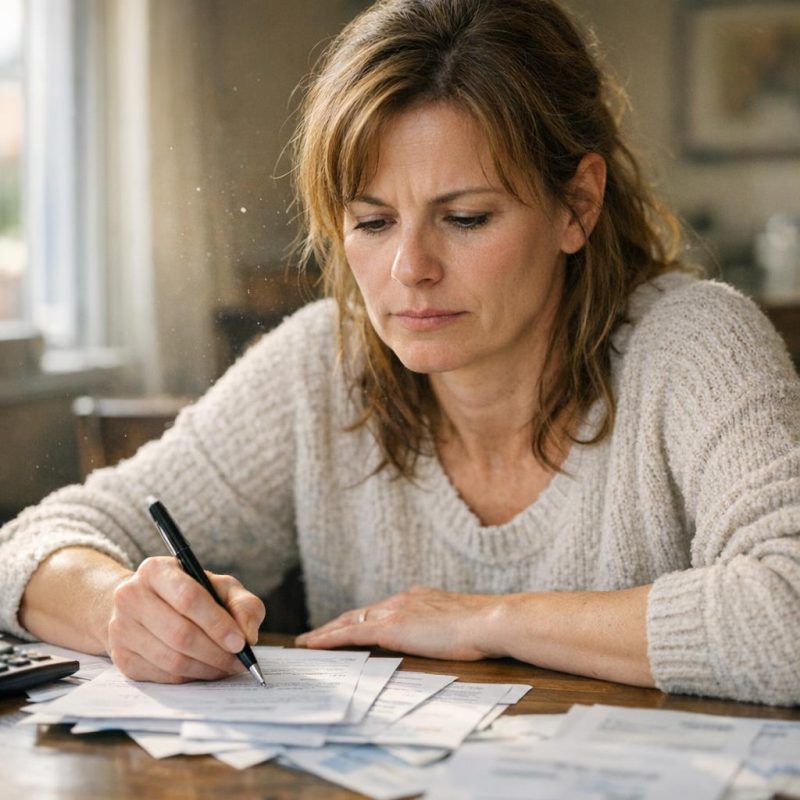 Image by RM AI
The Security Footage Question
That evening, I thought about calling the locksmith company back. Tom had mentioned they had cameras, security footage of their shop and parking area. If Rachel had gone there in person to place that fake service order, there might be video of her. That would be real proof, something concrete I could point to. I even picked up my phone twice, started to dial. But each time I stopped myself before completing the call. Because what would I say? 'Can I see your security footage from three weeks ago because I think my son's girlfriend impersonated your company to change my locks without permission?' They'd want to know why I suspected her. They'd probably want to involve the police at that point, maybe file a report. And once that happened, everything would become official, public, irreversible. David would find out. Rachel would find out. The whole investigation I was trying to conduct quietly would explode into the open before I'd gathered enough information to understand what was really happening. Plus, security footage usually got overwritten after thirty days. If I waited much longer, it might be gone anyway. But I wasn't ready. I needed to understand more first, needed to see the bigger picture before I made any moves that couldn't be undone. If I asked to see footage, I'd have to explain why—and I wasn't ready to make that accusation official.
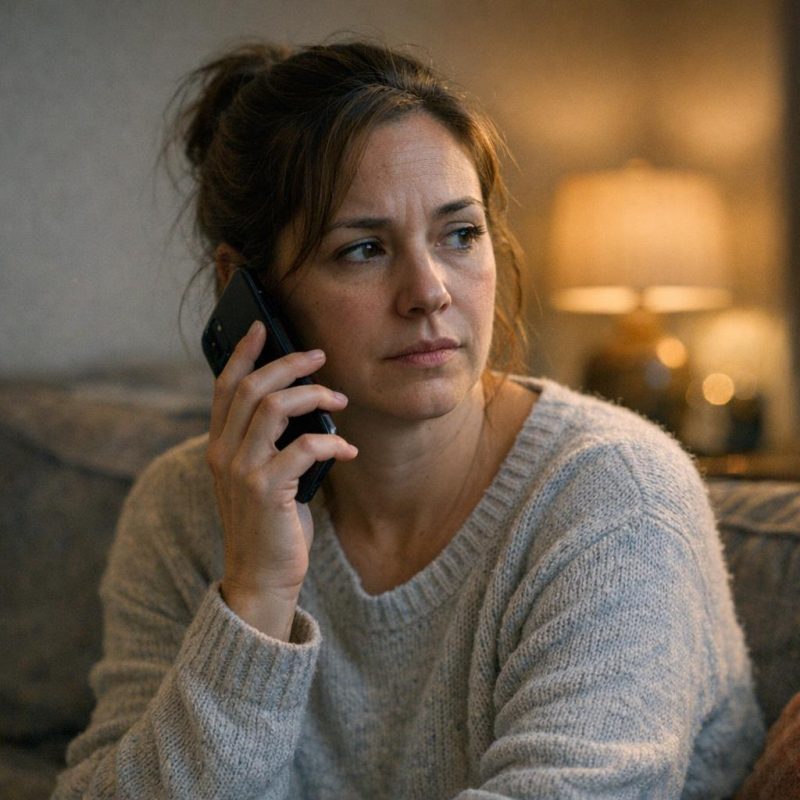 Image by RM AI
The Family Dinner Invitation
By the next morning, I'd come up with a plan. If I couldn't gather evidence through official channels without tipping my hand, I'd have to gather it through observation. I needed to see Rachel, to watch her interact with me now that I knew what to look for. To see if she'd slip up, reveal something, show some sign of guilt or awareness. But I couldn't just show up at her apartment or suggest coffee out of the blue—that would seem strange given our recent pattern of more casual interactions. Then it hit me: a family dinner. I could invite David and Rachel over for Sunday dinner, something I did periodically anyway. It would seem completely normal, just a nice gesture from a mother who wanted to spend time with her son and his girlfriend. Rachel would have no reason to suspect anything. She'd be in my home, in the space she'd violated, and I could watch her. See how she behaved, what she looked at, whether she seemed nervous or guilty or too comfortable. I could ask casual questions and observe her reactions. Maybe even leave the room at some point and see if she went through anything or acted suspiciously when she thought she was alone. I needed to see her face, watch how she moved in my space, look for any sign of guilt.
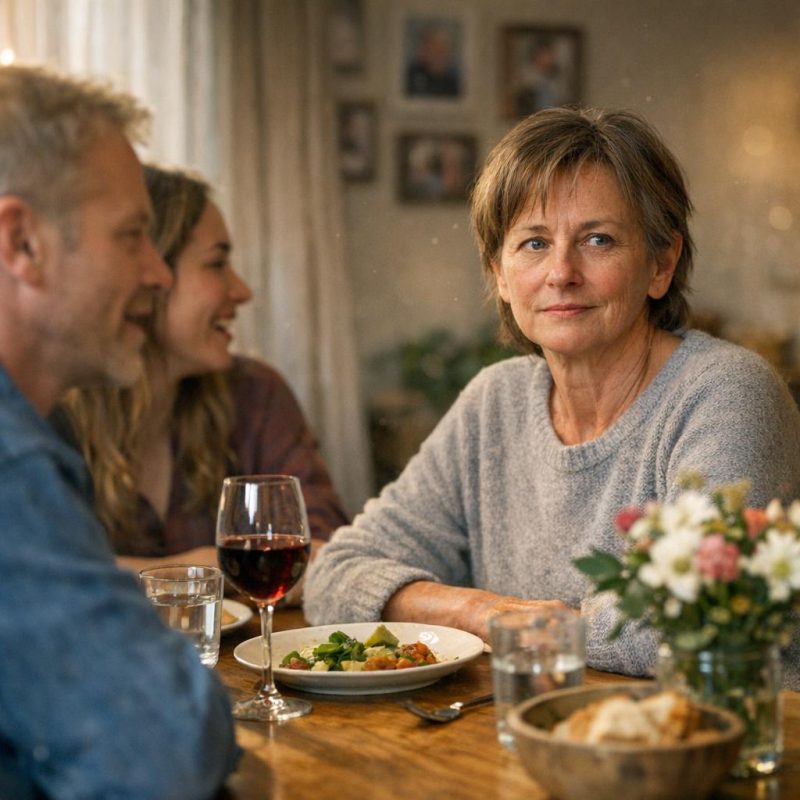 Image by RM AI
Rachel's Enthusiastic Response
I called David first to extend the invitation, and he immediately accepted. 'Mom, that sounds great. I'll check with Rachel, but I'm sure she'll be excited.' About twenty minutes later, my phone rang. Rachel. 'Diane! David just told me about Sunday dinner. I'd absolutely love to come!' Her voice was warm, enthusiastic, with that familiar tone that used to make me smile. 'I've been meaning to ask if we could get together actually. I feel like I haven't seen you in forever!' It had been less than two weeks. 'That would be wonderful,' I said, keeping my own voice light and friendly. 'I thought I'd make that pot roast you liked last time.' 'Oh my God, yes! That was delicious. Can I bring anything? Wine? Dessert? I could make those brownies you said you enjoyed.' She was offering to contribute, being helpful, playing the role of the considerate girlfriend. And maybe before, I would have found it sweet. But now I noticed the slight edge of eagerness in her voice, the way she was almost too ready to engage, too willing to insert herself into my home and my plans. Her voice had that bright, helpful quality that used to seem kind—now it just sounded practiced.
 Image by RM AI
Consulting Karen
I needed to talk to someone who wouldn't judge me for what I was thinking. Someone who knew me well enough to tell me if I was being paranoid or reasonable. That meant Karen. My sister lived three hours away in Portland, so we mostly kept in touch by phone anyway. I called her that evening, after I'd had time to organize my thoughts. 'Hey, stranger,' she answered, and I could hear the smile in her voice. 'What's going on?' I took a breath. 'I need to run something by you. Something weird has been happening.' I told her everything—the lock change, the bank incident, the pattern of someone knowing too much about my life. I carefully didn't mention Rachel by name. I described the situation in terms of 'someone close to me' and 'a person who has access to my house.' Karen listened without interrupting, which was unusual for her. When I finished, there was a pause. Then she spoke, and her voice had changed completely—it was sharp, serious, almost urgent. Karen's response was immediate: 'You need to call the police—this is identity theft.'
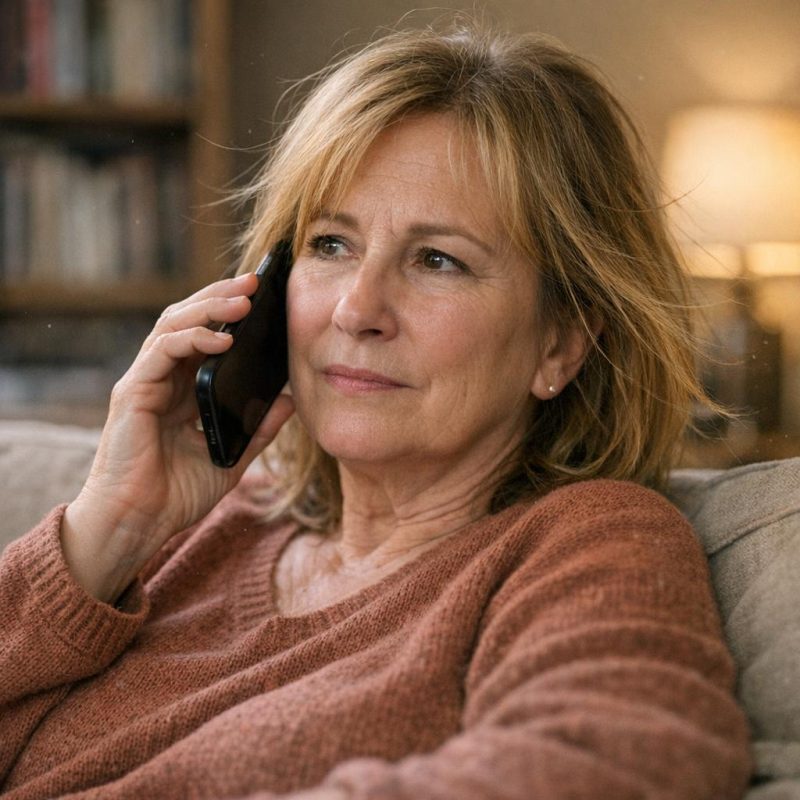 Image by RM AI
The Police Report
I spent two days thinking about Karen's advice before I actually did it. The police. It felt like such a dramatic escalation, turning a family matter into an official criminal investigation. But Karen was right—someone had tried to access my bank account using my identity. That wasn't just suspicious behavior. It was a crime. I drove to the local police station on a Tuesday morning and asked to file a report about identity theft. They directed me to Detective Morrison, a thin man in his late forties with graying hair and careful eyes. He listened as I explained about the bank incident, the fake ID, the unauthorized account access attempt. He asked questions in a measured, professional tone. How did I discover it? What information had been used? Had I noticed any other unusual activity? I answered everything as clearly as I could. He took notes carefully, writing in a small notebook with precise handwriting. Then he looked up at me and asked the question I'd been dreading: 'Do you have any idea who might have done this? Anyone with access to your personal information?' I opened my mouth, then closed it. He took notes carefully, but when he asked if I had any suspects, I hesitated—family changes everything.
 Image by RM AI
The Detective's Question
Detective Morrison watched me with those careful eyes, waiting for my answer. He didn't rush me. Just sat there, pen poised above his notebook, giving me space to respond. 'Let me ask it differently,' he said after a moment. 'Who has regular access to your home? Who knows your routines, your personal information, your daily habits?' That was easier to answer, somehow. More factual, less accusatory. 'My sister Karen,' I said. 'Though she lives in Portland. A cleaning service comes twice a month—the same two women for three years now. My neighbors on both sides have spare keys in case of emergency. I've known them for over a decade.' He wrote it all down. 'Anyone else?' I thought about Rachel sitting at my kitchen table, admiring my countertops. Rachel offering to help organize my paperwork. Rachel asking questions about my mother's maiden name while we talked about family history. Rachel suggesting I should really set up online banking for convenience. 'No,' I said. 'That's everyone.' Detective Morrison looked at me for a long moment, and I saw something flicker in his expression—he knew I was holding back. I listed Karen, a cleaning service, the neighbors with spare keys—and stopped before saying Rachel's name.
 Image by RM AI
Waiting for the Dinner
The dinner was scheduled for Sunday. It was Wednesday. Four days felt like both an eternity and no time at all. I went through my normal routines—grocery shopping, a dental cleaning appointment, my Tuesday book club meeting—but everything felt mechanical, rehearsed. My mind was always on Sunday. What would I say? How would I approach it? I couldn't just accuse her outright at the dinner table. That would be confrontational, explosive, exactly the wrong approach. But I also couldn't pretend nothing was wrong and just serve pot roast like everything was normal. I needed to observe her. Watch her reactions. Maybe bring up the lock change casually and see how she responded. Maybe mention the bank incident and gauge whether she seemed surprised or concerned or defensive. I practiced different conversation openers in my head. 'You know, the strangest thing happened at my bank...' Too obvious. 'I've been thinking about home security lately...' Too vague. I bought ingredients for the pot roast, the side dishes, a chocolate cake for dessert. I ironed the tablecloth. I polished the silverware. I planned the menu, set the table, and prepared myself for a performance where I couldn't let my suspicion show.
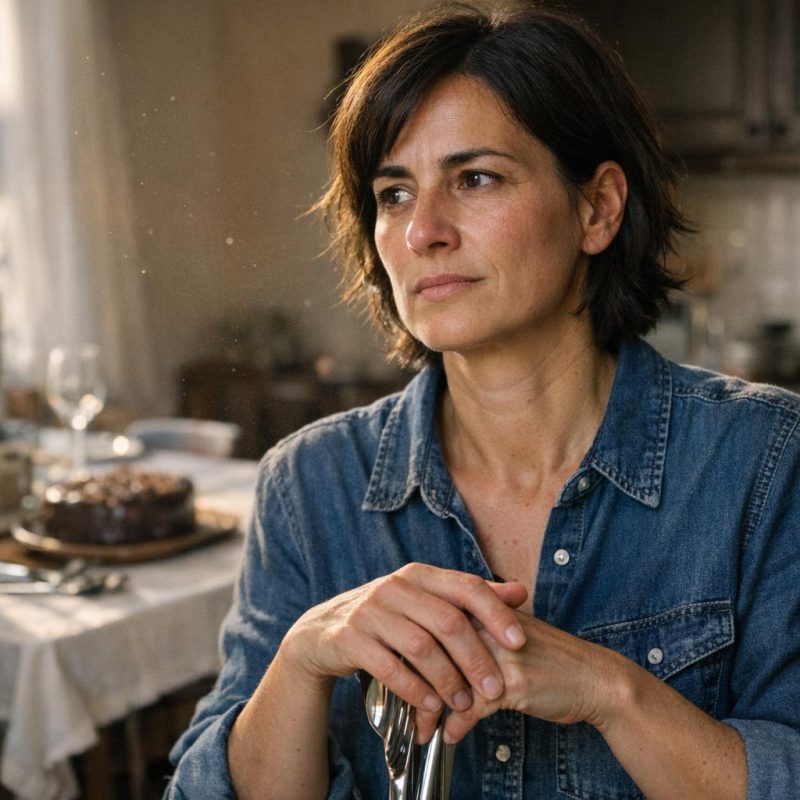 Image by RM AI
The Bank Follow-Up
On Thursday, I called the bank again. I asked to speak with the manager I'd talked to before, the one who had first alerted me to the unauthorized access attempt. 'I wanted to follow up about the incident we discussed,' I said when he came on the line. 'Can you tell me more about the person who tried to add themselves to my account?' There was a pause while he presumably pulled up my file. 'Yes, Mrs. Chen. The individual presented what appeared to be valid identification and demonstrated knowledge of several account details. That's why our system initially flagged it for review rather than outright denial.' 'What kind of details?' I asked. My hand was gripping the phone too tightly. 'Your account number, your date of birth, your mother's maiden name—which is one of your security questions—and the approximate opening date of the account. Also some recent transaction amounts that would only be known to someone with access to your statements.' My stomach turned over. 'I see.' 'The level of knowledge was concerning,' he continued. 'That's precisely why I contacted you immediately. This wasn't a random scammer.' The manager said the person had presented identification and knew account details only a close family member would know.
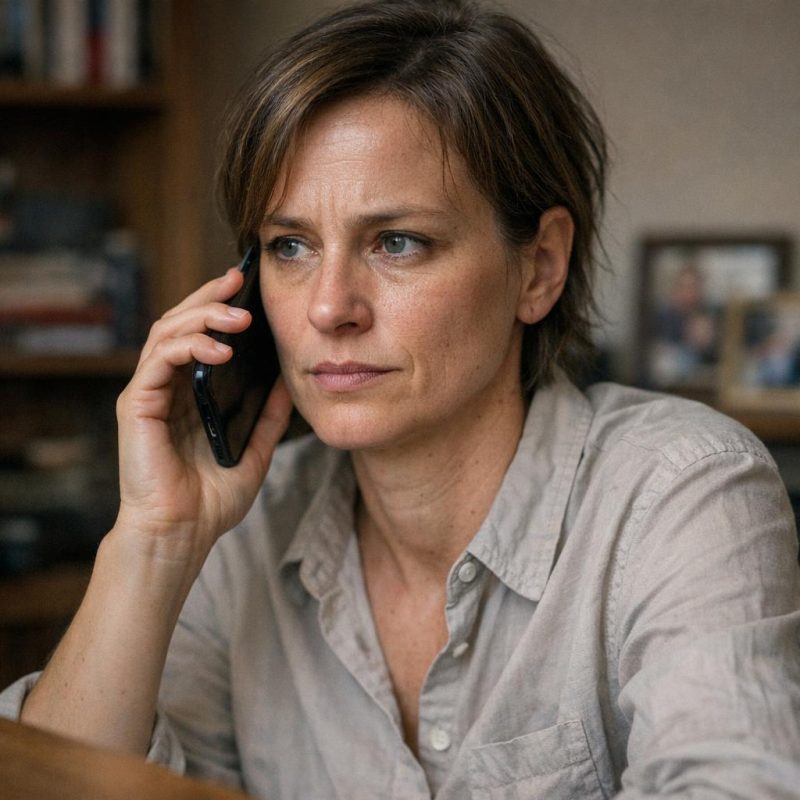 Image by RM AI
Insider Knowledge
I sat at my kitchen table after hanging up with the bank manager, a notepad in front of me. I wrote down the list of information the impersonator had used: account number, birth date, mother's maiden name, account opening date, recent transaction amounts. Then I tried to trace back where someone could have obtained each piece of information. My account number appeared on my checkbook, my statements, my deposit slips. Someone could have photographed it if they had access to my desk or my purse. My birth date was more restricted but still findable—medical forms, maybe driver's license if someone had seen it. But my mother's maiden name? That wasn't written anywhere in my house. It wasn't on documents. It was just knowledge, something you would only know from conversation. The account opening date—approximate, the manager had said—again, not documented anywhere easily accessible. And recent transaction amounts? That meant looking at my statements, which I kept in a file folder in my office. Or it meant I had mentioned them in conversation. All of it pointed to someone who knew me, who had talked with me, who had been in my home and my life. Account numbers, birth dates, security questions—information I had never written down anywhere someone could find it.
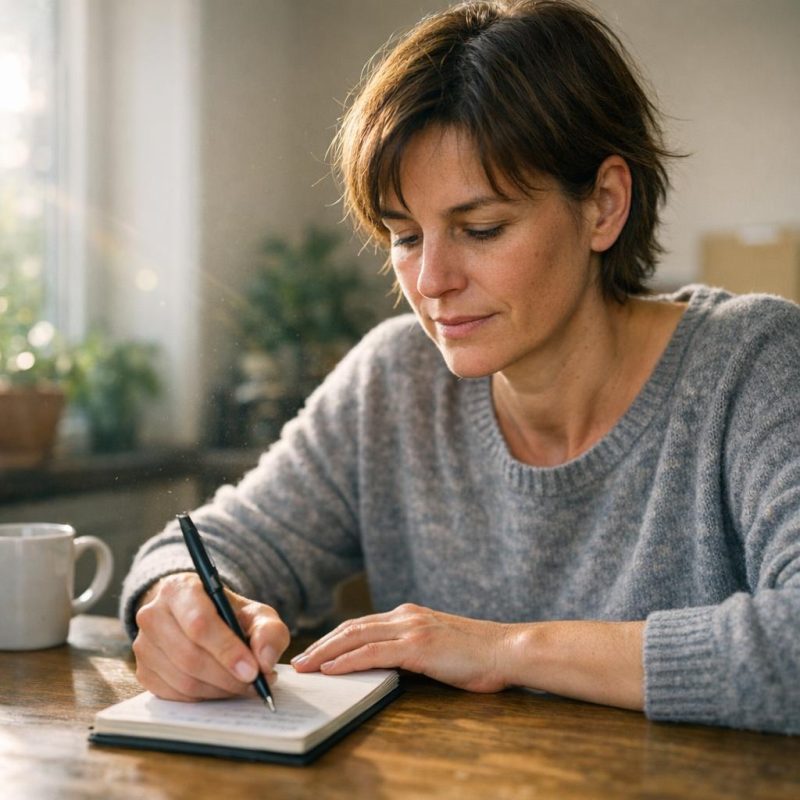 Image by RM AI
The Day Before
Saturday afternoon, I spread everything out on my dining room table. The letter from the bank about the unauthorized access attempt. The receipt from the locksmith who had changed my locks without my authorization. My notes from the conversation with the bank manager. The business card Detective Morrison had given me. The list of information the impersonator had used, with my notes about where that knowledge could have come from. I had a manila folder ready—the kind I used to organize household files, medical records, tax documents. Everything fit inside neatly. Evidence. That's what this was. Not suspicions or theories or paranoid thoughts. Actual evidence of actual crimes. Identity theft, fraud, unauthorized entry. I closed the folder and stared at it for a long time. Tomorrow, David and Rachel would arrive around five. We would have drinks, make small talk, eat dinner. And at some point during that evening, I would need to decide: do I confront this, or do I wait? Do I protect my relationship with my son, or do I protect myself? The folder sat on the table, accusatory in its silence. Everything was ready except me—I still didn't know if I could go through with accusing my son's wife.
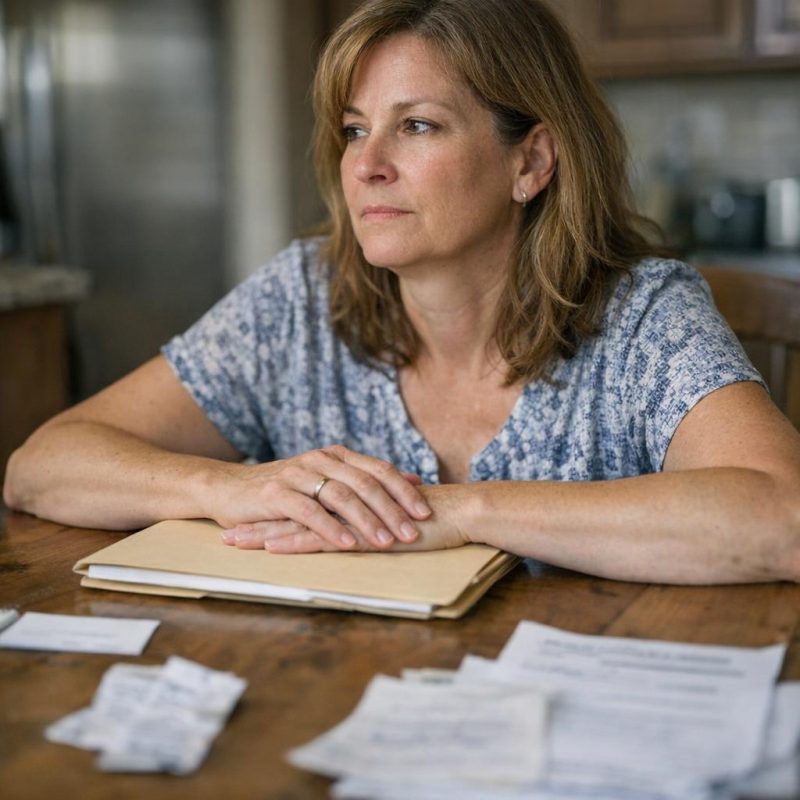 Image by RM AI
Morning of the Dinner
Sunday morning, I woke at six even though I'd barely slept. The dinner wasn't until five, but I couldn't stay in bed. I started cleaning. Not regular cleaning—deep cleaning, the kind you do before guests arrive, even though the house was already perfectly presentable. I scrubbed the kitchen counters until they shined. I vacuumed every room, including the closets. I dusted baseboards. I washed windows. I organized the spice rack, alphabetically. I polished the bathroom fixtures until they gleamed like they'd just been installed. I cleaned the refrigerator shelves and threw out anything that was even close to its expiration date. I swept the front porch, wiped down the patio furniture, deadheaded the flowers in the front garden. I worked with a kind of manic energy, my hands busy while my mind raced through scenario after scenario. What would I say? What would she say? What would David think? By three o'clock, the house was immaculate. I showered and dressed carefully—nothing too formal, nothing too casual. I put on the pearl earrings Richard had given me for our twentieth anniversary. I needed all the strength I could find. Every surface gleamed, every detail perfect—as if control over my home could give me control over what was coming.
 Image by RM AI
Angela's Warning
At four-thirty, there was a knock at the door. I nearly jumped out of my skin—too early for David and Rachel. I opened it to find Angela from two doors down, holding a casserole dish. 'I made too much lasagna,' she said with a smile. 'Thought you might want some for the week.' We chatted on the porch for a few minutes, and I was grateful for the distraction, honestly. Then she mentioned something that made my blood run cold. 'Oh, speaking of visitors—I meant to ask you a few weeks ago. I saw a young woman leaving your house one afternoon when you weren't home. I was going to check on things, but she looked like she belonged, so I figured she was family or had a key.' My heart started pounding. 'When was this?' I asked, keeping my voice steady. Angela thought for a moment. 'Maybe three, four weeks ago? Weekday afternoon. Dark hair, pretty, maybe mid-thirties?' I pulled out my phone with trembling hands and found a photo from David's social media—Rachel at some restaurant, smiling at the camera. I showed it to Angela, watching her face carefully. When I showed her a photo of Rachel, Angela nodded immediately: 'Yes, that was her.'
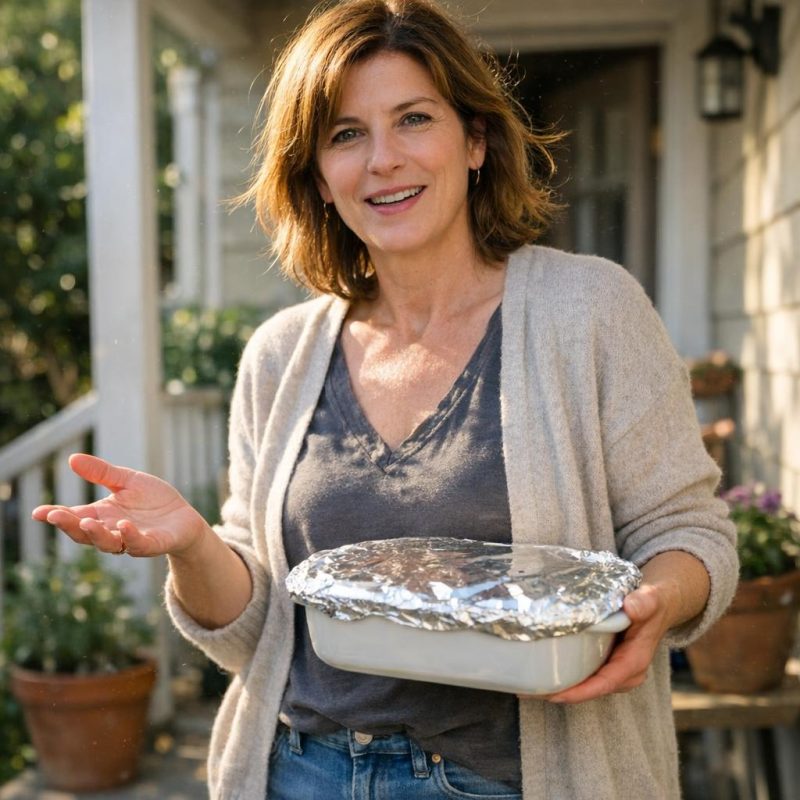 Image by RM AI
The Final Piece
After Angela left, I sat on the couch with the casserole dish still in my hands, staring at nothing. Independent confirmation. A witness who had no connection to the situation, no reason to lie, no knowledge of what I'd been investigating. Rachel had been at my house when I wasn't home, weeks before she claimed to have 'discovered' the lock had been changed. Before she'd acted so concerned and helpful. The timeline made perfect sense now—she'd changed the lock herself, then waited long enough that I wouldn't connect the two events. She'd calculated it all. I thought about the forged signature, the bank inquiry, the questions about my finances, the suggestions that I needed help. I thought about Detective Morris's careful words about patterns of behavior. I thought about my own son, completely in the dark about what his wife was doing. Every piece fit together into a picture I could no longer deny. The evidence was complete. Overwhelming, really. But having the evidence and using it—those were two different things. What would this do to David? To their marriage? To our family? I had evidence, witness testimony, motive—everything except the courage to destroy my son's marriage.
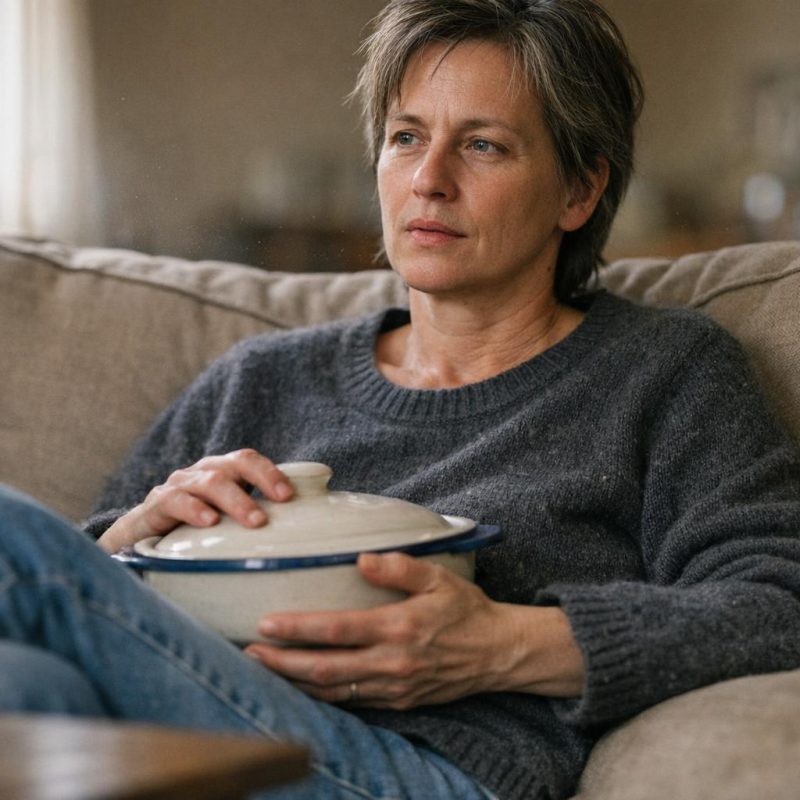 Image by RM AI
They Arrive
At exactly five o'clock, David's car pulled into the driveway. I watched from the window as they got out—David in khakis and a button-down, Rachel in a sundress that probably cost more than my monthly electric bill. She was carrying a bouquet of tulips, my favorite. Of course she'd remembered. Of course she'd come bearing gifts, playing the role of the perfect daughter-in-law. I opened the door before they could knock, painted a smile on my face. 'Right on time,' I said, hoping my voice sounded normal. David hugged me first, that familiar bear hug he'd given me since he was tall enough. 'Hey, Mom. House looks great.' Then Rachel stepped forward with that warm, genuine smile I'd once trusted completely. 'Diane, these are for you. I hope tulips are still your favorite.' She was good. I had to give her that. The concern in her eyes looked absolutely real, the affection in her voice perfectly calibrated. If I hadn't known better, I'd have believed every bit of it. She hugged me at the door, and I had to fight the urge to pull away—knowing what I knew, pretending I didn't.
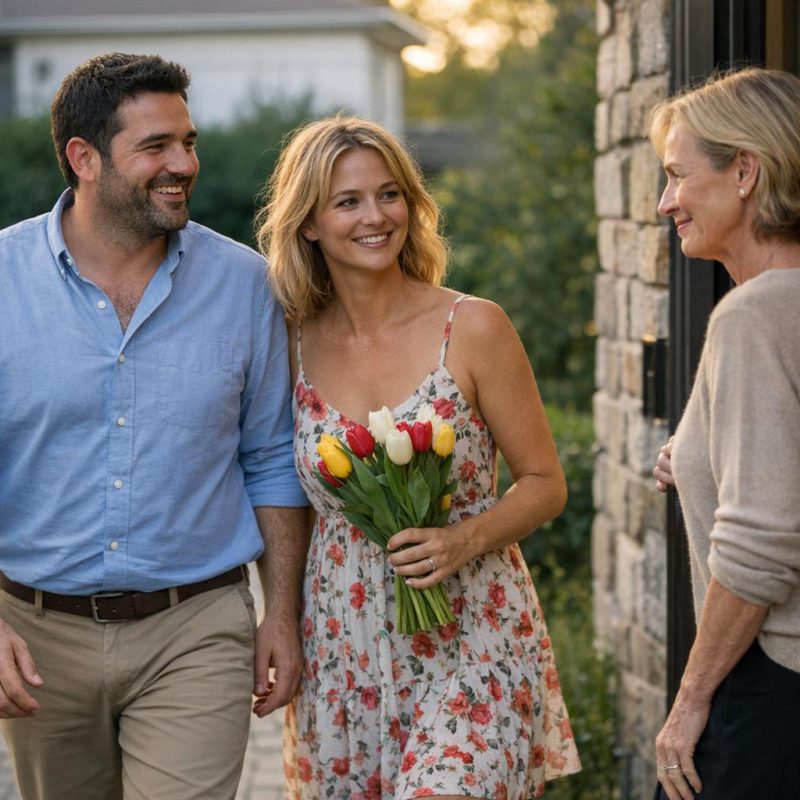 Image by RM AI
Small Talk and Observation
I'd prepared cheese and crackers, stuffed mushrooms, those little bruschetta things David liked. We sat in the living room with wine glasses, making small talk about David's work, the weather, a movie they'd seen last weekend. Normal conversation. Surface-level and safe. But I was watching Rachel the entire time—the way she touched David's arm when she spoke, the way she laughed at his jokes, the way her eyes scanned my living room when she thought I wasn't looking. Every gesture, every word, every glance. Was she cataloging my belongings? Assessing what I owned? Or was I reading malice into innocent behavior because I knew the truth? 'How have you been, Diane?' Rachel asked, leaning forward with what looked like genuine concern. 'David mentioned you had a busy week.' My hand tightened around my wine glass. She knew exactly how busy my week had been—she'd caused most of it. The police station, the bank, the locksmith, the lawyer consultation. But she sat there with those sympathetic eyes, that caring tone, as if she had no idea. Rachel asked about my week with such perfect concern that I almost believed she didn't know she was part of it.
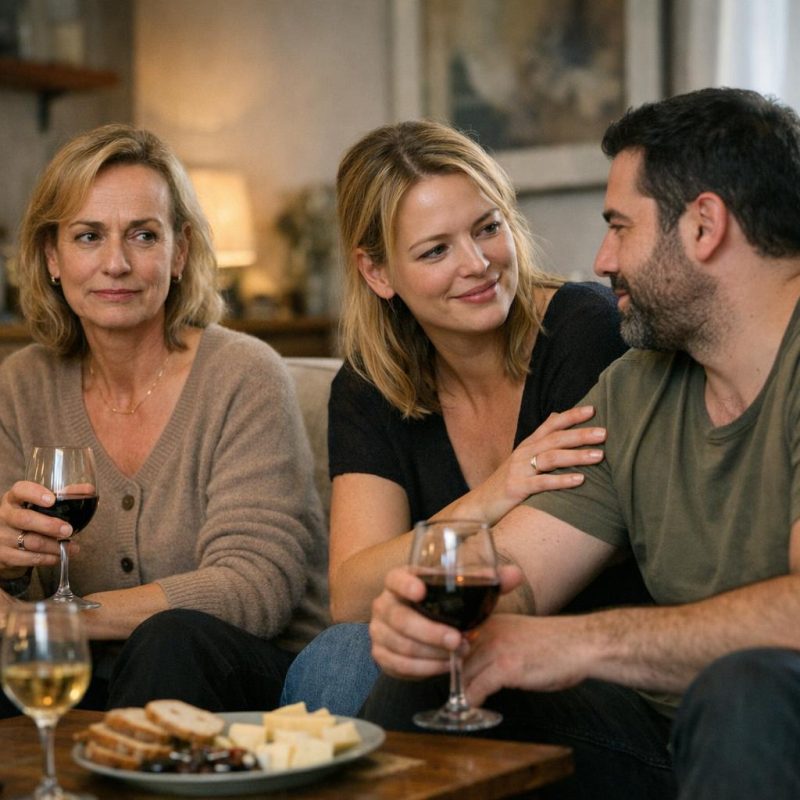 Image by RM AI
The Helpful Questions Resume
Over dinner—pot roast, roasted vegetables, fresh rolls—the conversation drifted toward practical matters. Rachel brought it up, as I'd known she would. 'Diane, have you given any more thought to what we discussed? About getting some help with day-to-day things?' She cut her meat delicately, not looking at me. 'I've been reading about services for seniors living independently. There are wonderful programs now—financial management, home maintenance coordination, that sort of thing.' David nodded enthusiastically. 'Rachel's right, Mom. It might take some stress off your plate.' I took a slow breath, chewed my food, bought myself time. 'What kind of financial management?' I asked carefully. Rachel's eyes lit up like I'd finally said something sensible. 'Oh, just help with bills, tracking expenses, making sure nothing falls through the cracks. Some people find it easier to have a family member with power of attorney handle those details. Less to worry about.' There it was. Power of attorney. Said so casually, like she was suggesting I hire a gardener. The questions felt different now—not helpful, but predatory, testing how much longer I'd resist.
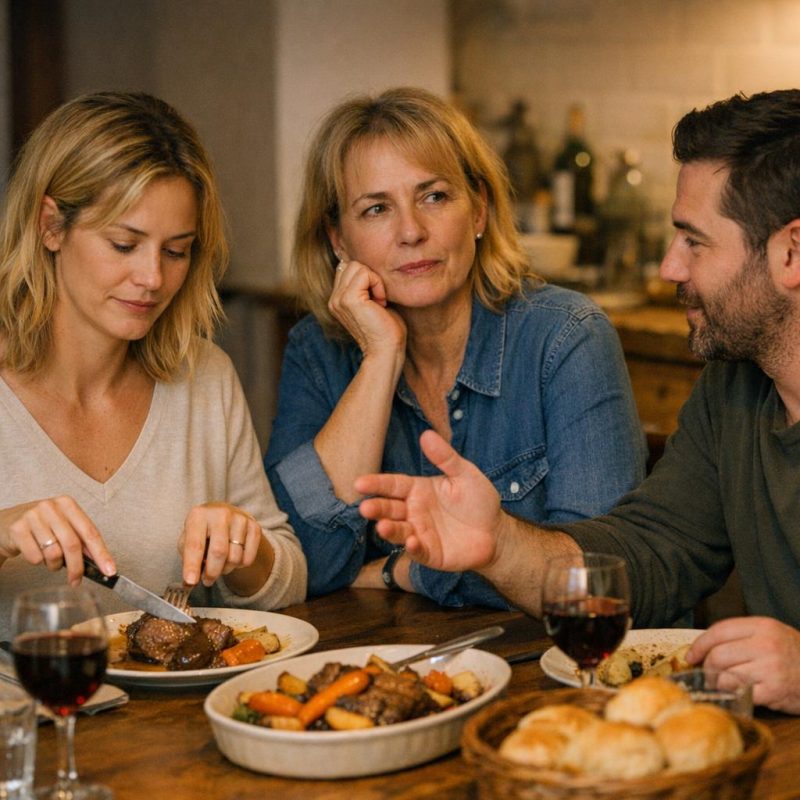 Image by RM AI
David's Obliviousness
David set down his fork and looked at me with those earnest eyes. 'You know, Mom, that's actually not a bad idea. Rachel and I could help you set something up. Take some of the burden off.' He meant well. I could see it in his face, hear it in his voice. My son genuinely believed he was being helpful, that his wife's suggestions came from a place of love and concern. He had no idea what she was really asking for. No clue that 'help with bills' and 'power of attorney' were tools that could strip me of control over everything I owned. Rachel reached over and squeezed his hand, giving him this grateful smile. 'That's sweet of you, honey.' She was using him. Using his love for me, his desire to be a good son, his trust in her. She'd positioned herself as the caring daughter-in-law while positioning me as the aging mother who needed managing. And David, bless his heart, couldn't see the manipulation because he'd never expect it from someone he loved. My son, my own son, was being used—and he had no idea his wife was playing him as much as she was playing me.
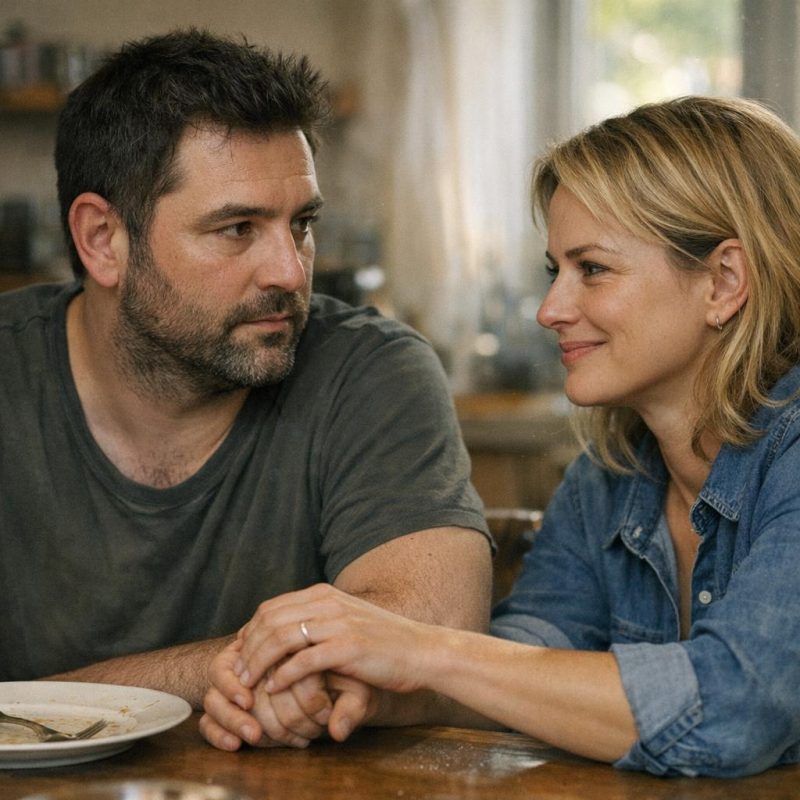 Image by RM AI
Clearing the Table
After the main course, Rachel stood and started gathering plates. 'Let me help you with these, Diane.' We carried dishes into the kitchen together, just the two of us, while David stayed at the table checking his phone. The kitchen felt smaller with her in it. She rinsed plates at the sink while I scraped leftovers into containers, and for a moment, we worked in comfortable silence. Almost like a real mother and daughter-in-law. Almost. 'This was delicious,' Rachel said softly. 'David's told me how much he loves your pot roast. I can see why.' She turned to me with such warmth, such apparent gratitude. 'Thank you for having us, Diane. I know things have been stressful lately with the lock situation and everything. I just want you to know we're here for you. Whatever you need.' Her voice was so sincere. Her eyes so kind. For one brief, disorienting second, I felt myself waver. What if I was wrong? What if this was all a terrible misunderstanding? She thanked me for dinner with such warmth that for one second, I questioned everything—then I remembered the signature.
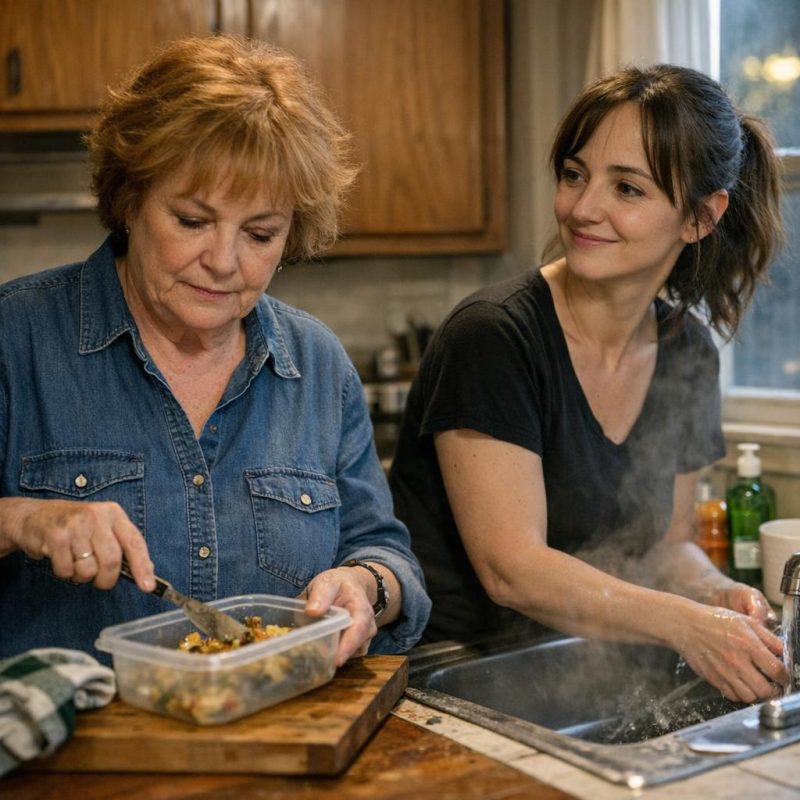 Image by RM AI
The Decision Point
I stood at the sink after Rachel returned to the dining room, my hands gripping the counter's edge. The forged signature on the bank document. Angela's confirmation that Rachel had been at my house without permission. The changed lock. The questions about power of attorney, asked in my own dining room like it was the most natural thing in the world. The pattern Detective Morris had described. All of it was real. Not a misunderstanding, not paranoia, not the confusion of an aging woman who couldn't keep track of her own affairs. Rachel had done these things deliberately, systematically. And she was still doing them, right now, in my home, with my son sitting there believing every word. I could let this go. I could finish dessert, send them home, pretend I didn't know. I could protect David from the truth about his wife, protect their marriage, avoid the confrontation that would shatter everything. But how long would that protection last? Another week? Another month? Until she tried again, armed with better tactics and more patience? I couldn't let this continue—every day I waited was another day she could try again, and next time she might succeed.
 Image by RM AI
Dessert and Waiting
I brought the pie to the table with hands that wouldn't stop shaking. Not from fear anymore—from the adrenaline of knowing what was about to happen. I'd spent years perfecting this apple pie recipe, and tonight it tasted like sawdust in my mouth, though I forced myself to take small bites. Rachel ate with her usual delicate precision, commenting on the cinnamon ratio, asking if I'd used Granny Smiths. David ate quickly, the way he always did, oblivious to the tension radiating from my side of the table. Every minute felt stretched out, surreal. I kept thinking about how normal this looked from the outside—a mother having dessert with her son and daughter-in-law on a Sunday evening. But I knew what was coming. I knew that in just a few minutes, I was going to place those documents on this table and watch Rachel's carefully constructed facade crumble. Part of me wanted to savor these last moments of peace, even if the peace was an illusion. The bigger part of me wanted this over with. I wanted the truth out in the open, wanted David to see what I'd seen, wanted Rachel to know that I knew. Rachel complimented the pie, and I nodded, counting down the minutes until I destroyed her illusion of safety.
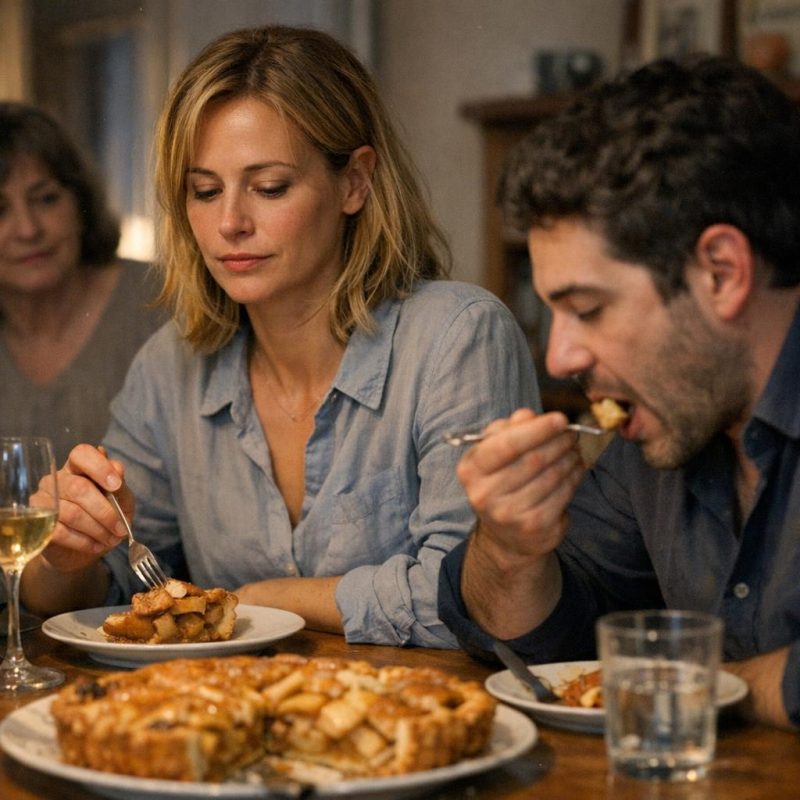 Image by RM AI
The Evidence on the Table
David set down his fork, and I stood up. Not to clear the plates—they could wait. I walked to the kitchen counter where I'd left the manila folder, my heart pounding so hard I could feel it in my throat. When I came back to the table, I didn't sit down. I opened the folder and took out the hardware store receipt first, placing it in the center of the table. Then the spare key Angela had given me. Then the authorization form with my forged signature. I did it all in silence, methodically, the way you'd lay out evidence in a courtroom. David looked at the items, confused, his eyes moving from one to the next like he was trying to solve a puzzle. Rachel's expression didn't change immediately—she glanced at the papers with what looked like mild curiosity, like I'd just shown her a grocery list. But I saw her eyes stop on the authorization form. I saw the微 flicker of recognition, the slight tightening around her mouth. The silence stretched out, heavy and thick. Nobody spoke. Nobody moved. The papers sat there between us like an accusation made visible, and the room went completely still.
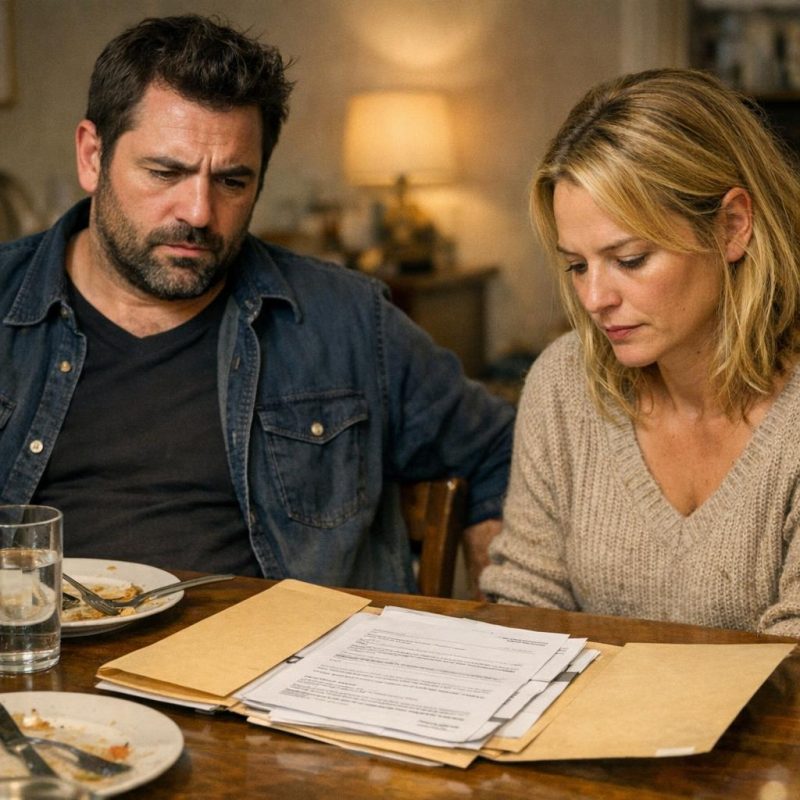 Image by RM AI
The Question
I looked directly at Rachel, not at David, and kept my voice steady. 'I need you to explain something to me, Rachel. Why did you sign my name on this form to have my locks changed without my permission?' The words came out calmer than I felt, each one deliberate. I wanted her to hear the specificity of it, wanted her to know I wasn't guessing or confused. David's head snapped toward his wife, his confusion deepening. Rachel stared at the form for a long moment, and I watched the calculations happening behind her eyes—should she deny it, should she deflect, should she try to explain it away. Then she did something I didn't expect. She laughed. It was a light, dismissive sound, the kind of laugh you'd give when someone accuses you of something absurd. 'Diane, I think there's been some kind of misunderstanding—' she started, reaching for the paper. But the laugh hadn't sounded right. It came out hollow and unconvincing, and I could see David noticed it too.
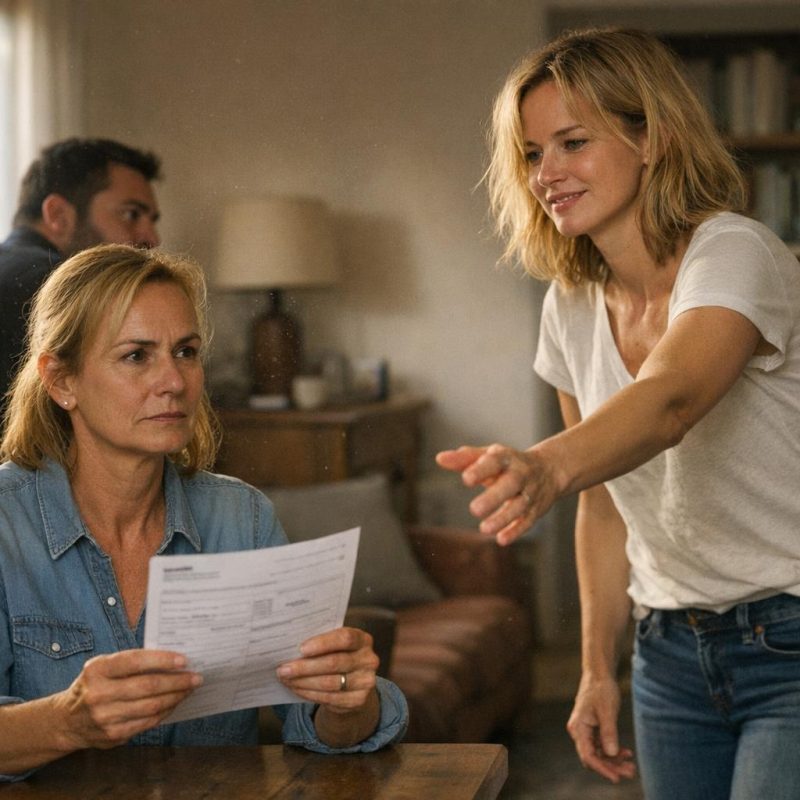 Image by RM AI
David's Confusion
David looked from me to Rachel, his expression shifting from confusion to something defensive. 'Mom, what is this? What are you accusing Rachel of?' His tone had that edge to it, the one he got when he thought I was being unreasonable. I understood—his wife was sitting there, and his mother was making serious accusations. Of course he'd defend her first. That's what you do when you love someone. But I also knew what I knew. 'I'm asking her to explain why she forged my signature to change my locks,' I said, keeping my eyes on Rachel. 'And why she went to my bank pretending to be a concerned family member, trying to add herself as an authorized user on my accounts.' Rachel reached for David's hand immediately, her fingers closing around his. 'David, your mom has been under a lot of stress lately, and I think—' she started, her voice taking on that gentle, concerned tone I'd heard her use so many times. But I wasn't going to let her redirect this. I cut her off with the bank inquiry.
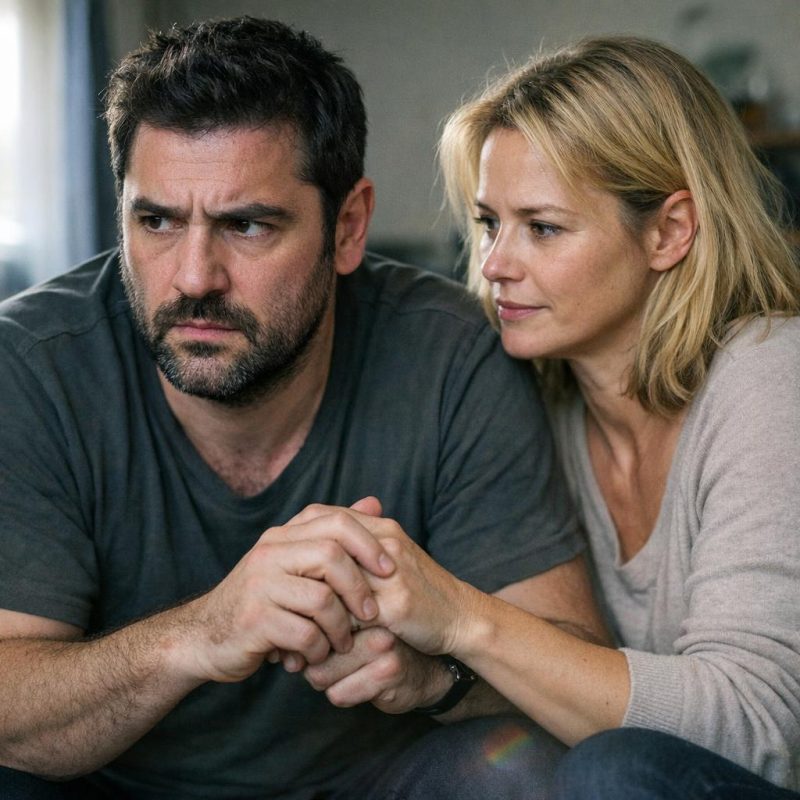 Image by RM AI
The Bank Inquiry Revealed
I pulled out my phone and opened the email from Jennifer at the bank, then read it aloud. Every word of it. The date Rachel had come in. The questions she'd asked about power of attorney and account access. The way she'd presented herself as a concerned daughter-in-law worried about my ability to manage my finances. David's face went pale as I read, and I could see him trying to process it, trying to reconcile what I was saying with the woman sitting next to him. When I finished, I looked at Rachel. Really looked at her. And I watched something shift in her expression. The concerned daughter-in-law act, the warmth, the gentle patience—all of it drained away like water going down a sink. What replaced it was something harder, colder. Her eyes narrowed slightly, and her mouth tightened into a thin line. It was subtle, but it was there, and it was real. This was a different Rachel, one I'd never fully seen before. Something in her face changed—the warmth disappeared, replaced by something colder and more calculating.
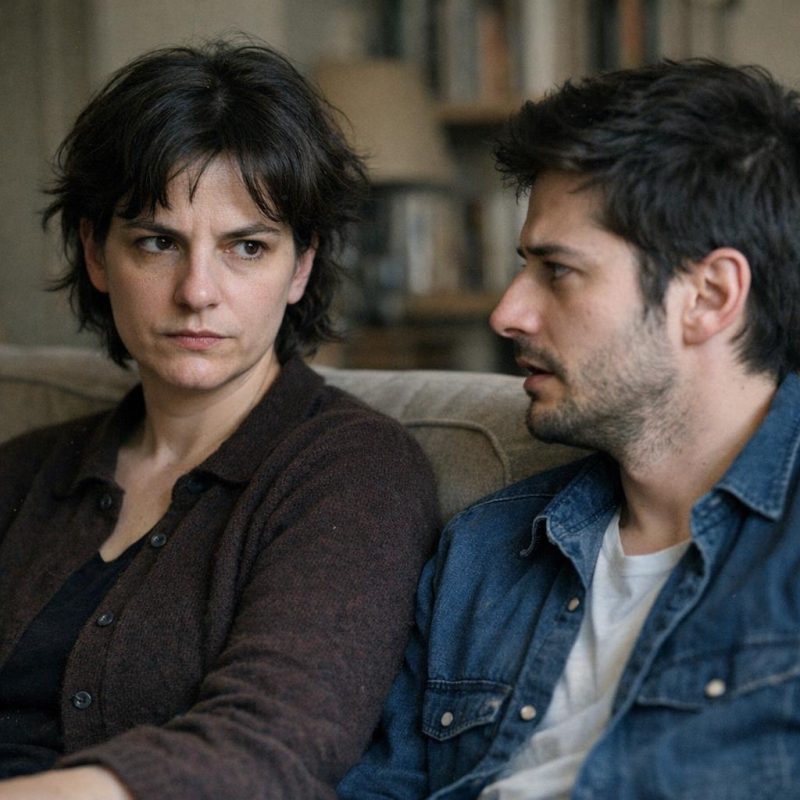 Image by RM AI
Rachel's First Defense
Rachel took a breath, and when she spoke, her voice had changed too—less gentle, more measured. 'Okay. Yes. I did go to the bank, and I did ask about the locks. But Diane, you have to understand—I was worried about you. You're living alone in this house, you're getting older, and I wanted to make sure you were safe. That you had help if you needed it.' She turned to David, squeezing his hand. 'You know how concerned I've been. We've talked about it.' David nodded slowly, but I could see the doubt creeping in. 'But why didn't you tell me you were doing this?' he asked her. 'Why didn't you mention going to the bank, or anything about the locks?' It was a fair question, and I watched Rachel hesitate. Just for a second, but it was there—that pause where she was deciding what to say, how to spin it. 'I... I didn't want to worry you,' she said finally. 'I thought I could handle it, make sure your mom was taken care of without adding stress to your plate.' But when David asked why she hadn't mentioned any of this to him, Rachel hesitated—and the lie became obvious.
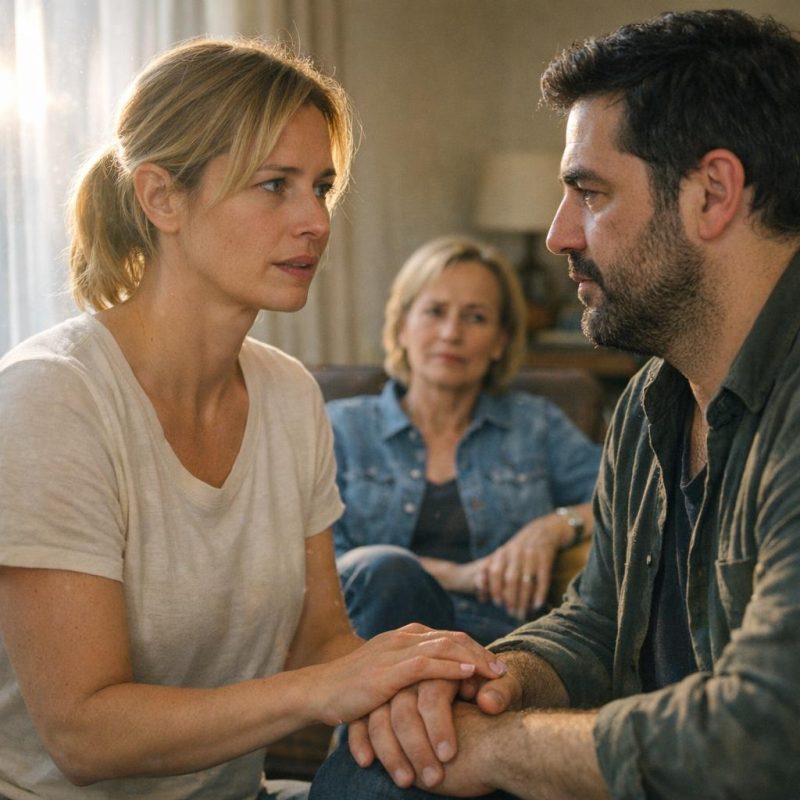 Image by RM AI
The Handwriting Evidence
I picked up the authorization form and held it up to the light. 'Look at the signature,' I said to David. 'Look at the slant of the letters, the way the 'D' curves. That's not how I write my name.' I set it down in front of him, then pulled out my checkbook from my purse and opened it to a recent check. 'That's my signature. You can see the difference.' David leaned forward, studying both samples. I saw his eyes moving back and forth, comparing. Then I said, quietly, 'The tilt on the authorization form—that's how Rachel writes. You've seen her handwriting a thousand times.' I watched his face as the recognition hit. He'd probably signed birthday cards with her, watched her write grocery lists, seen her signature on their mortgage papers. He knew her handwriting. David picked up the form, looked at it, looked at his wife—and I saw the moment he stopped defending her.
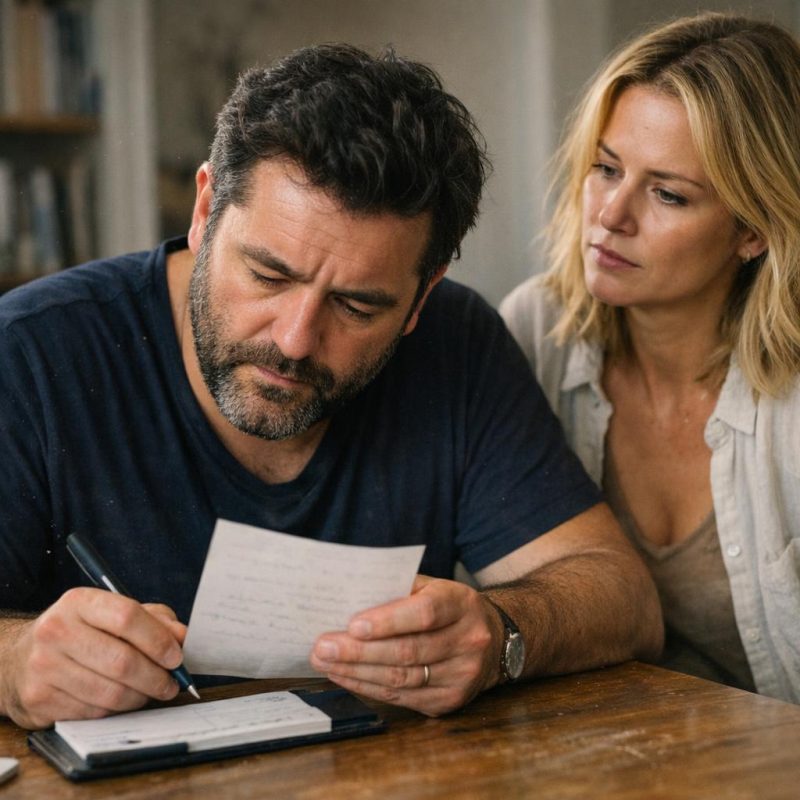 Image by RM AI
The Truth Comes Out
David's voice came out strained, almost pleading. 'Rachel. Tell me the truth. Right now.' The room felt like all the air had been sucked out of it. Rachel sat there for a long moment, and I could see her weighing her options. But there were no good options left. Finally, she let out a long breath and her shoulders dropped. 'Fine,' she said, and her voice had gone flat, emotionless. 'Yes. I changed the locks. I went to the bank. I've been... positioning myself. Building access to your mother's home and finances. Gradually. Carefully.' She looked at David, not me. 'You know we need the money. You know the business hasn't been doing well. And your mother has this house, these accounts, and she's alone. It made sense to—to establish myself as someone involved in her care, someone who could step in when needed.' The words landed like physical blows. This wasn't a concerned daughter-in-law. This wasn't someone worried about my safety. It wasn't concern—it was a plan, methodical and patient, to take over my life before I even knew I was losing it.
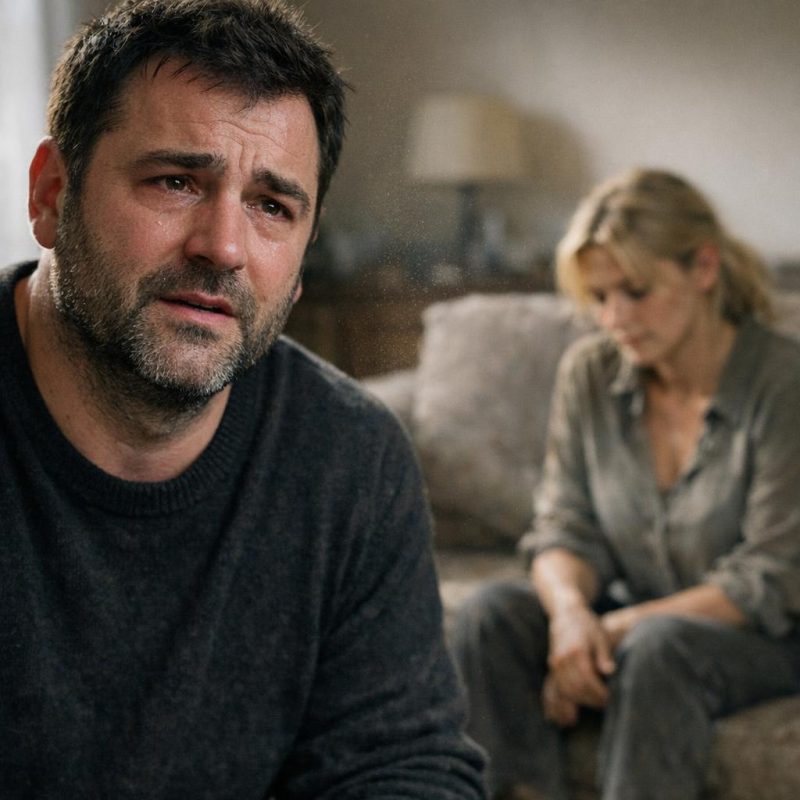 Image by RM AI
The Financial Motive
Rachel leaned back in her chair, and her voice took on this businesslike quality that made my skin crawl. 'David's consulting business has been struggling for two years,' she said, looking at him, not me. 'We've been carrying debt. The kind that doesn't just go away. And you—' she finally turned to me, 'you have this house, fully paid off. You have retirement accounts, savings. You live alone. You don't need all of it.' I felt David stiffen beside me, but she kept going. 'It made financial sense to position myself as someone who could access those resources when the time came. To establish legal standing. Power of attorney, eventually. Access to accounts. The locks were just the beginning—a way to show I was involved in your care, that I had legitimate reason to be in control.' The way she said 'resources'—not my home, not my life's savings, not the things I'd worked thirty years to build. Resources. Like I was a portfolio to be managed. An asset to be liquidated. She spoke about my home, my accounts, my life as if they were resources to be managed—not a person to be respected.
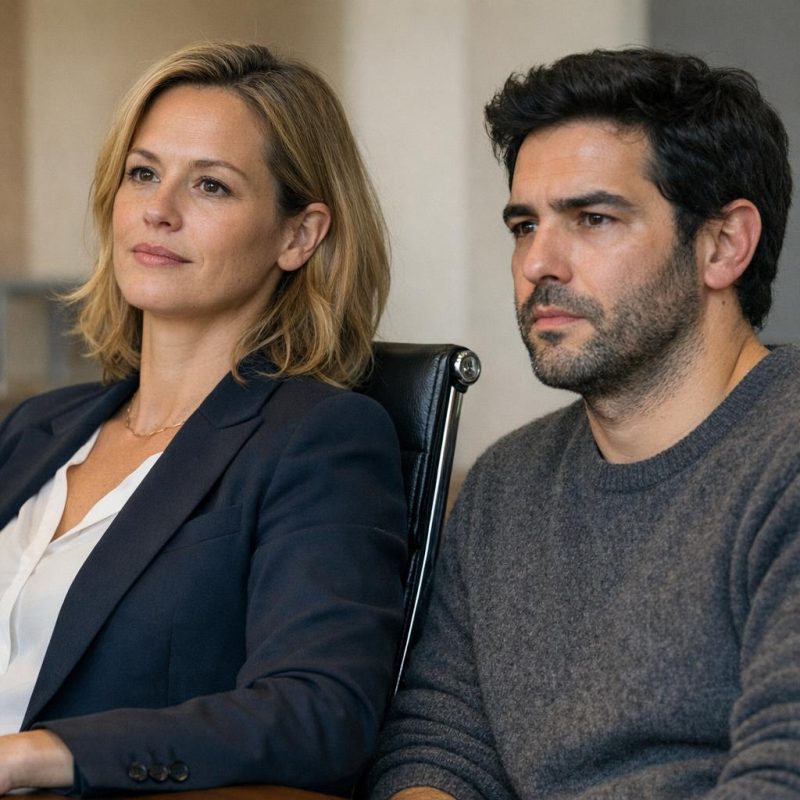 Image by RM AI
David's Denial
David's chair scraped back as he stood up, his face pale. 'I didn't know,' he said, looking at me with something close to panic. 'Mom, I swear to you, I didn't know she was doing any of this. The locks, the bank—none of it. I knew we had money problems, but I never, never would have agreed to this.' His voice cracked on the last word. I wanted to believe him. God, I wanted to believe him so badly. But Rachel's expression shifted, something cold and sharp replacing the calculated calm. She turned to David with what I can only describe as contempt. 'Don't you dare,' she said quietly. 'Don't you dare pretend you didn't benefit from every bit of this. You knew I was building a relationship with your mother. You knew I was visiting, helping, becoming indispensable. You never asked how I planned to solve our problems.' She paused, and the silence was devastating. 'You never asked where the money would come from.'
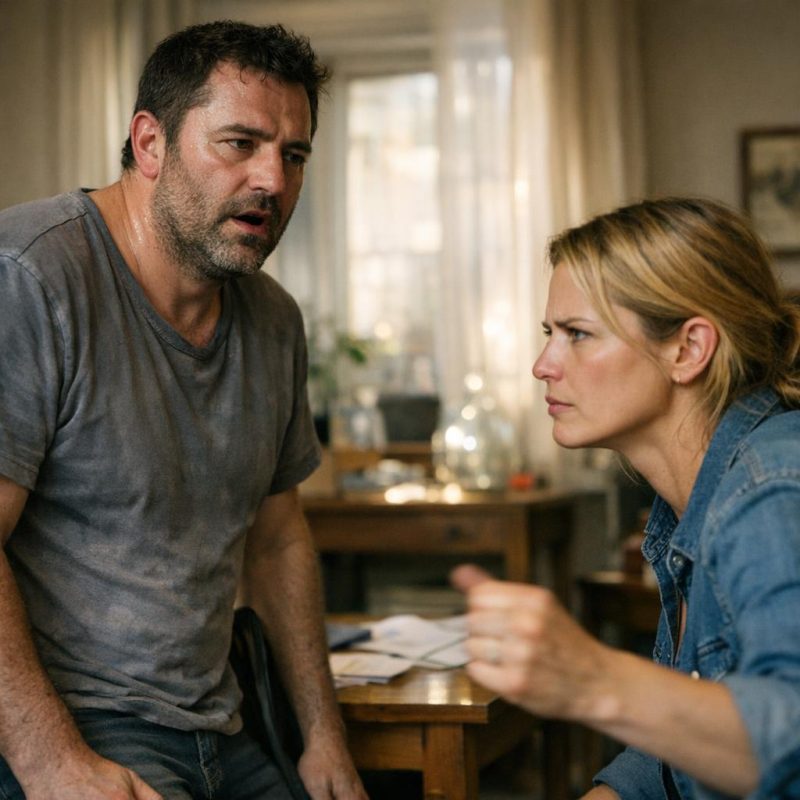 Image by RM AI
The Confrontation Peaks
That's when David exploded. 'Because I thought you were being kind! I thought you actually cared about her!' His voice rose to a shout. 'I thought my wife had a heart!' Rachel shot back, 'Your wife has bills! Your wife has kept us afloat while your business tanked!' They went back and forth, voices escalating, accusations flying. She called him naive. He called her a criminal. She said he was complicit through willful ignorance. He said she'd manipulated both of us. I sat there at my own dining room table, watching this marriage I'd watched them build over six years just disintegrate in real time. The worst part? I realized it didn't matter who knew what or when. The damage was done. David's innocence or guilt didn't change what Rachel had tried to do to me. And even if he was telling the truth, even if he really didn't know, he'd still brought this person into my life. He'd still married someone capable of this. They fought over truth and lies, over money and loyalty, while I sat there realizing I had lost my family either way.
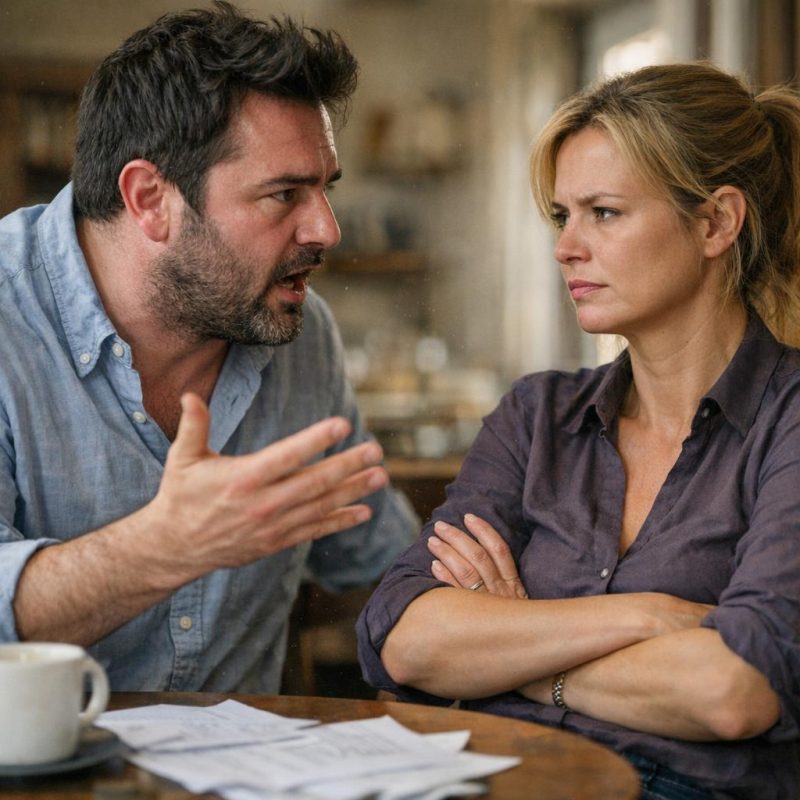 Image by RM AI
Rachel's Justification
Rachel turned back to me, and I saw her trying to regain control of the narrative. 'You have to understand,' she said, her voice dropping to something almost reasonable. 'This wasn't malicious. You're fifty-eight. In ten years, maybe fifteen, you would need help. Real help. Someone to manage your finances, make decisions, handle your affairs. I was just—I was just accelerating the timeline. Being proactive.' She actually used that word. Proactive. 'You would have needed me eventually, Diane. This way, everything would already be in place. No scrambling, no crisis management. I was thinking ahead.' David made a sound like he'd been punched, but she ignored him. 'People your age, they start to slip. Forget things. Make poor decisions. I was protecting you from future incompetence. From becoming a burden. Doesn't that make sense?' I stared at her. She'd decided I was too old to manage my own life. She'd decided my future without asking me. She'd deemed me incompetent before I'd shown a single sign of decline. The cruelty of it took my breath away—she had decided my future without my consent and called it kindness.
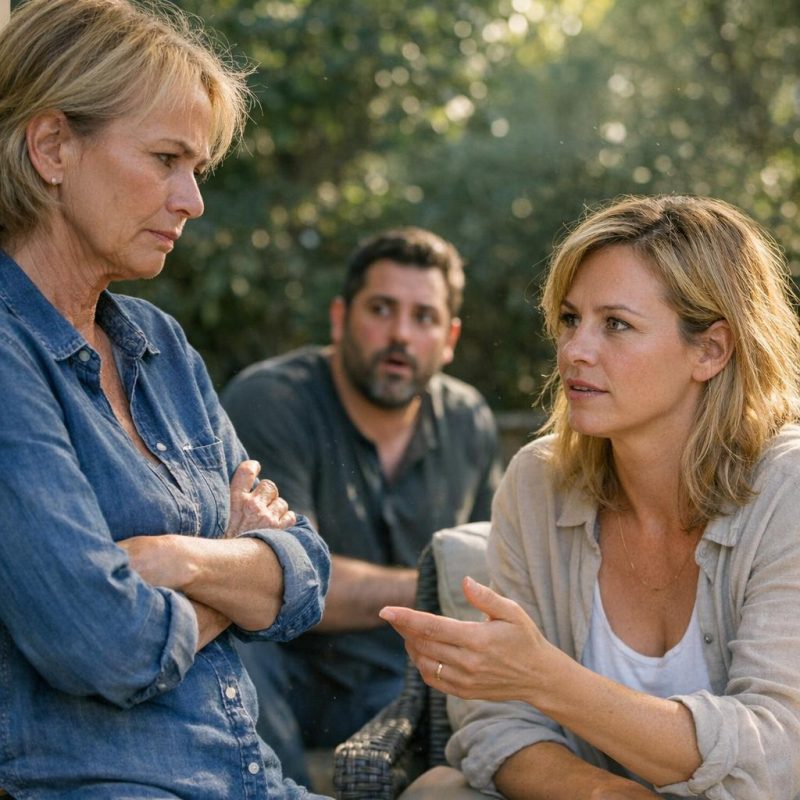 Image by RM AI
Diane's Response
I found my voice, and it came out steadier than I expected. 'Rachel, let me be very clear,' I said. 'What you're describing isn't help. It isn't kindness. It isn't protection.' I leaned forward slightly. 'Choosing for someone else, deciding their future without their knowledge or consent, taking control of their life because you've decided they can't handle it—that's not care. That's theft. Theft of agency. Theft of autonomy. Theft of dignity.' She opened her mouth, but I wasn't finished. 'You didn't ask if I needed help. You didn't offer assistance. You didn't have a conversation. You just took. You took my keys, my access, my control, my right to decide my own future. And you convinced yourself it was noble.' David was watching me with something like awe, but my eyes stayed on Rachel. 'There is no version of this where you're the hero. There's no justification that makes it right. You saw my life as something to take, and you took it. That's all this is.' Rachel had no answer to that, because there was no answer that didn't make her what she was—a thief.
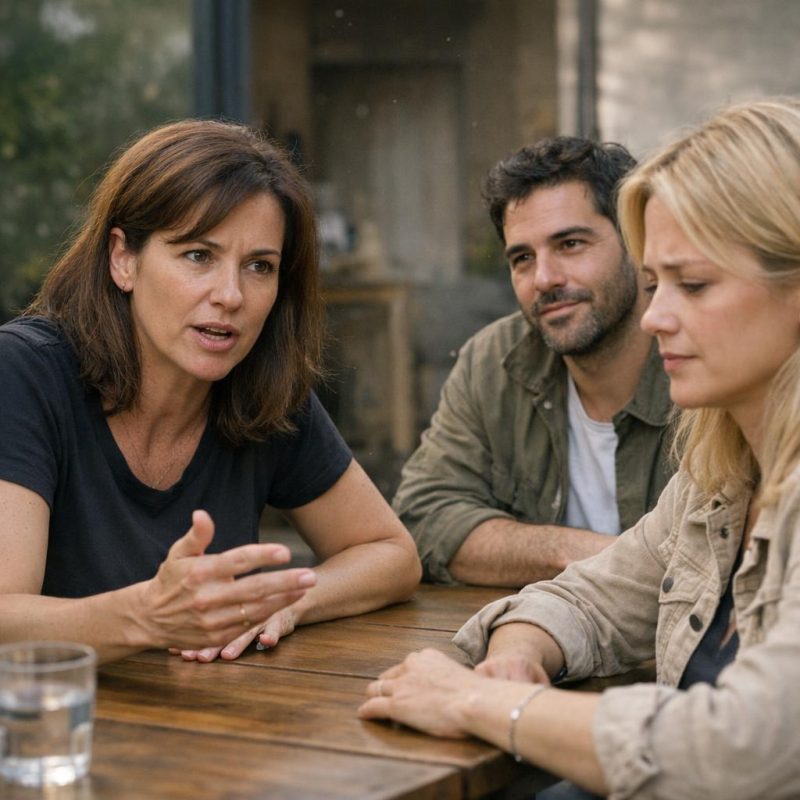 Image by RM AI
The Legal Threat
I reached into the folder I'd brought to the table and pulled out a document. My hands didn't shake. 'I filed a police report three days ago,' I said. 'Detective Morrison has documentation of the lock change, the bank visits, the impersonation. My lawyer has copies of everything.' I slid the paper across the table toward Rachel. 'You committed identity theft when you presented yourself as me at the bank. You committed fraud when you tried to access my accounts. The lock change could be considered illegal entry or trespassing, depending on how the prosecutor sees it.' Rachel's face went white. Actually white. 'These aren't just family problems we hash out over dinner,' I continued. 'These are crimes. Felonies. The kind that come with charges, court dates, possible jail time.' David had gone completely still beside me. 'I haven't decided yet whether to push for prosecution,' I said. 'That depends on what happens next. But the report is filed. The evidence is documented. This is real.' The color drained from Rachel's face as she realized this wasn't just a family matter—it was criminal.
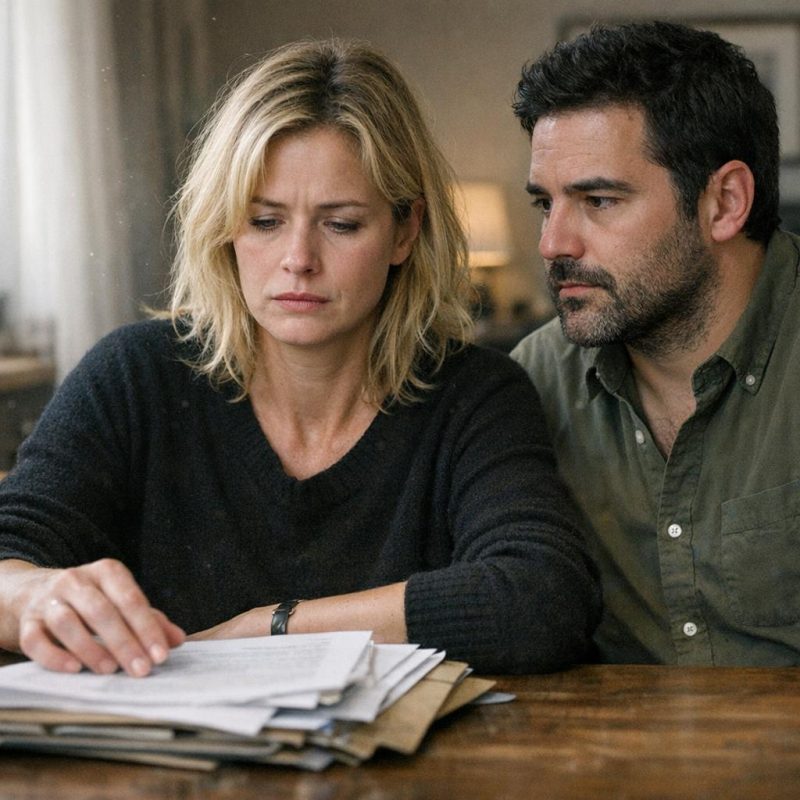 Image by RM AI
David's Choice
David sat frozen between us, and I could see the moment it hit him—he had to choose. His wife or his mother. The woman he'd married or the woman who'd raised him. I didn't envy him that choice. I really didn't. But I also wasn't going to make it easier. He needed to decide who he was, what he stood for. Rachel was watching him too, her expression unreadable now. The silence stretched out, awful and heavy. David's hands were shaking. 'I need you to understand something,' he finally said, but his voice was barely above a whisper. He cleared his throat and tried again. 'I need you both to understand. What happened here—what Rachel did—there's no defending it. There's no excuse.' He turned to Rachel, and I saw tears in his eyes. 'I can't. I can't stand by this. I can't pretend this is something I can overlook or forgive right now.' Then he looked at me, and his face was full of pain and something that looked like determination. He looked at Rachel, then at me, and finally said, 'Mom, what do you need me to do?'
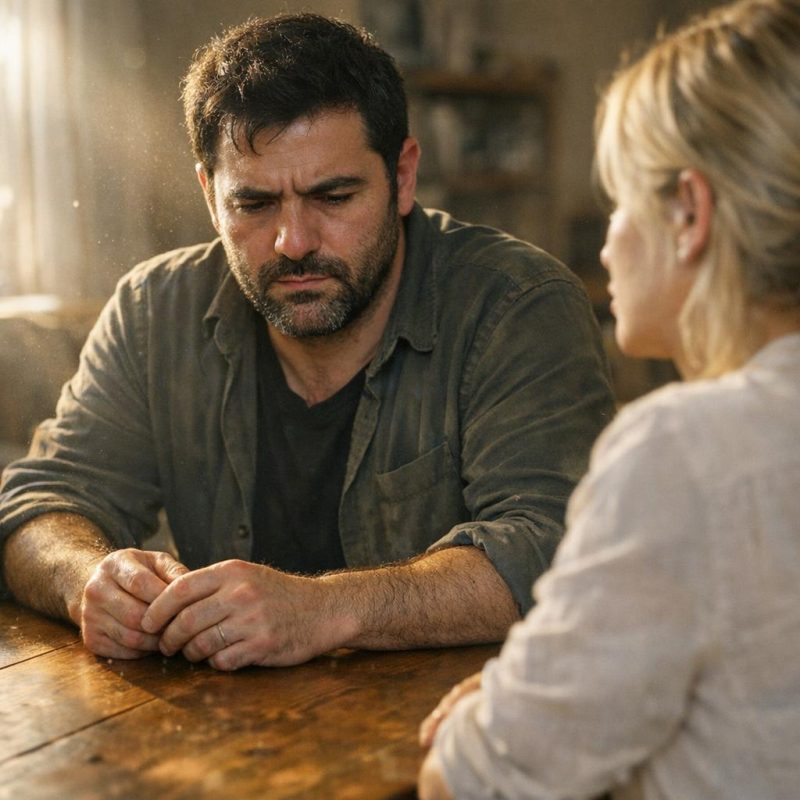 Image by RM AI
Rachel Leaves
Rachel stood up slowly. She didn't look at David. She didn't look at me. She just stood there for a moment, like she was processing that this was really happening, that her plan had truly fallen apart. Then she walked to the entryway where she'd left her purse and jacket. The sound of her gathering her things was the only noise in the house—the zip of her bag, the rustle of her coat. She came back to the doorway of the dining room, and I thought maybe she'd say something. Apologize, argue, explain. But she just looked at us both, her expression completely blank now, and then she turned and walked to the front door. The sound of it opening, then closing, was surprisingly quiet. No slam. No drama. Just a soft click. And then she was gone. The silence that followed was enormous. David and I sat there, not moving, barely breathing. His choice had been clear, and I was grateful. I was vindicated. But sitting there in my dining room, I didn't feel victorious. The door closed behind her, and in the silence that followed, David and I sat together in the wreckage.
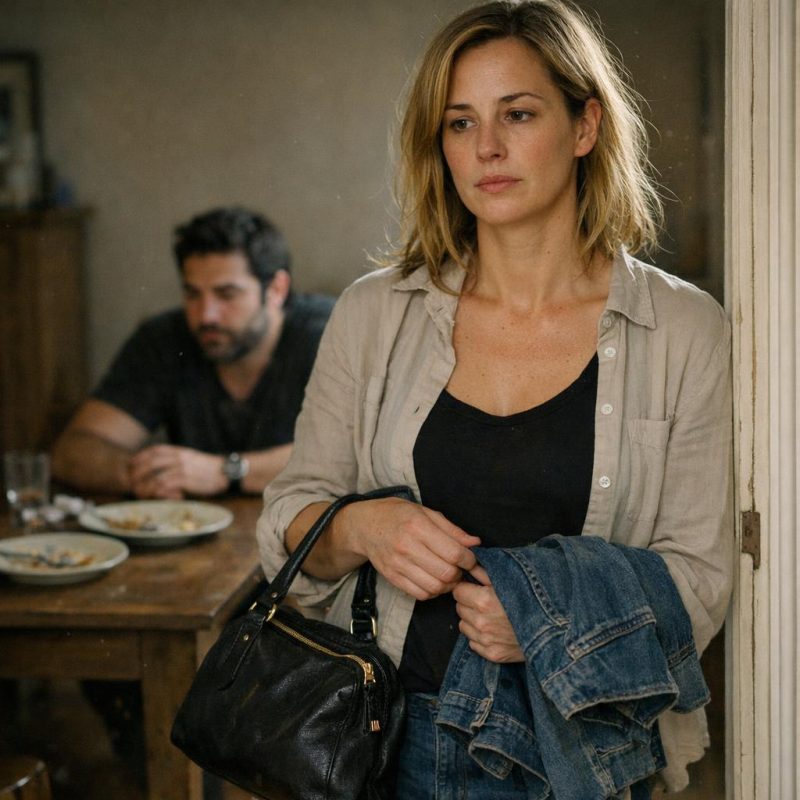 Image by RM AI
The Aftermath Conversation
We talked until almost three in the morning. David sat at my dining table, looking exhausted and hollowed out, and he asked me to tell him everything. Not just the lock, but all of it—every strange thing Rachel had done, every moment that felt off, every piece that I'd collected. So I walked him through it all. The changed lock. The mail. The pharmacy calling about prescriptions I never requested. The credit card application. The way she'd positioned herself between us, how she'd tried to isolate him from me. He listened without interrupting, his face getting paler with each detail. When I finished, he put his head in his hands. 'How did I not see it?' he said. I wanted to be angry at him for that—for being so blind, for choosing her over me so many times. But sitting there, watching him realize how thoroughly he'd been manipulated, I couldn't find it in me. 'She was very deliberate,' I said. 'She knew exactly what she was doing.' He looked up at me, and his eyes were red. 'I'm so sorry, Mom.' I reached across the table and squeezed his hand. He apologized for not seeing it, and I told him some people are very good at hiding what they are.
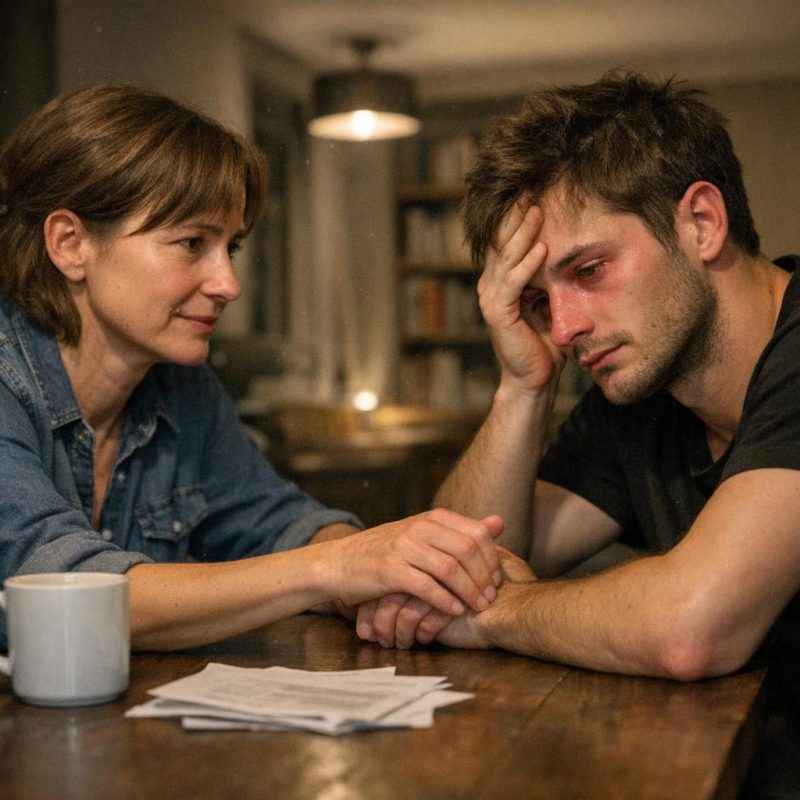 Image by RM AI
Changing the Locks Again
The next morning, I called a locksmith. Not just any locksmith—I researched companies, read reviews, checked credentials, verified they were licensed and bonded. I wasn't taking any chances this time. When the technician arrived, I watched every single step of the process. I chose deadbolts with reinforced strike plates. I selected locks that required keys on both sides for the back door. I even upgraded the lock on my bedroom door, just in case. The locksmith probably thought I was paranoid, standing there observing his every move, asking questions about security ratings and pick resistance. But I didn't care what he thought. This was my house. My safety. My life. When he finished, he handed me a set of keys—only one set, for me alone. I paid him in cash, got a detailed receipt, and asked him to note in his records that only I had authorized this service. After he left, I tested every lock three times. I checked the windows. I walked through each room, making sure everything was secure. This time, I chose the locks, I watched them installed, and I kept all the keys myself.
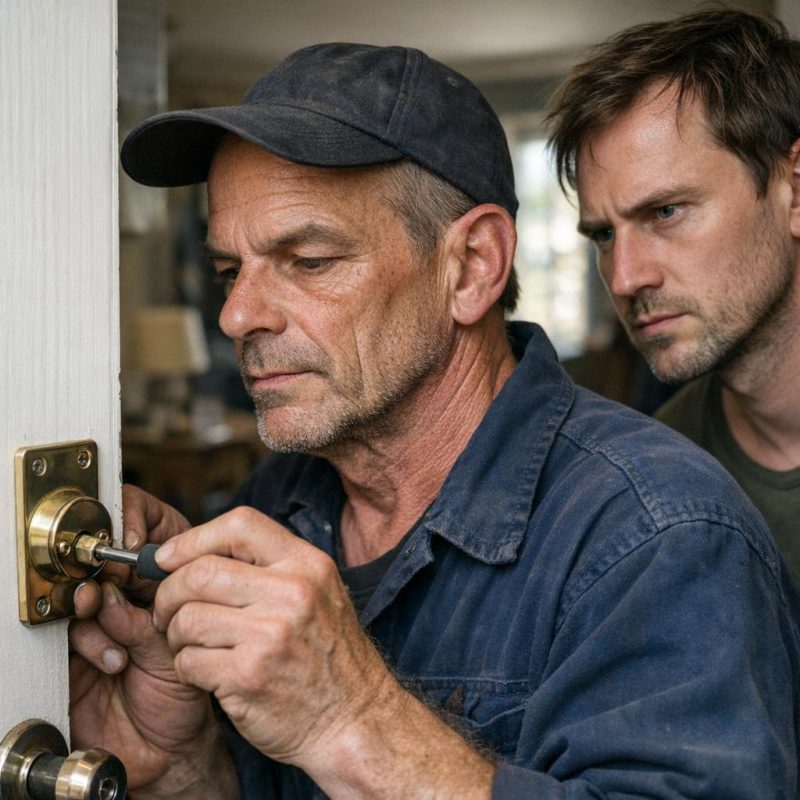 Image by RM AI
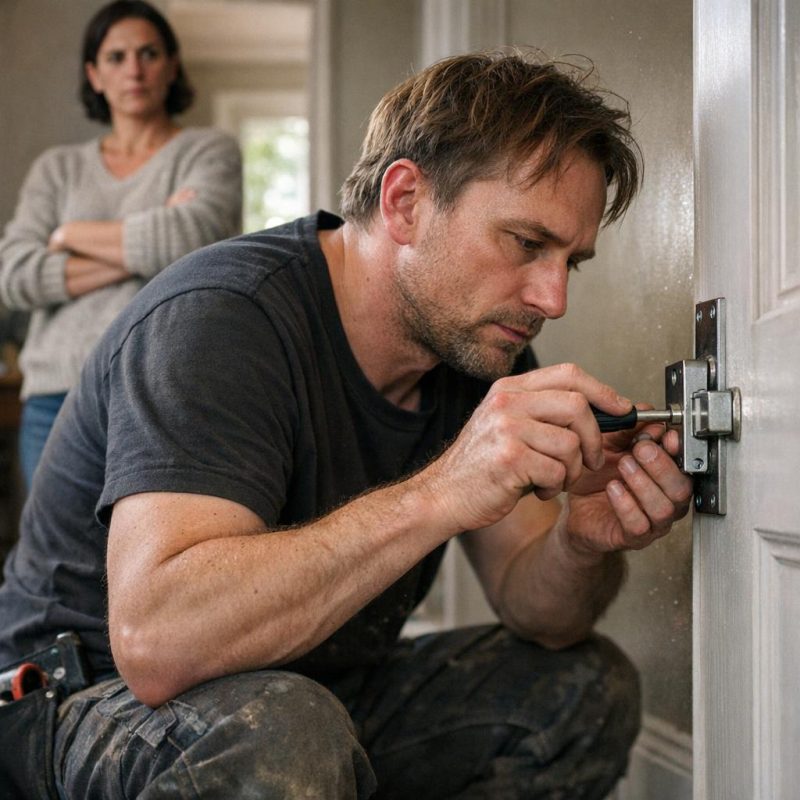 Image by RM AI
Legal and Financial Protection
That week, I made appointments with everyone who needed to know what had happened. My bank first—I sat down with the branch manager and explained the entire situation. We put fraud alerts on all my accounts. We changed my PINs, my security questions, everything. I requested that any major transaction require not just a password but a photo ID and verbal confirmation. Then I went to the credit bureaus and froze my credit. All three of them. No one could open anything in my name without me lifting that freeze first. After that, I met with a lawyer who specialized in identity theft. She helped me file reports, document everything, and establish a paper trail in case Rachel tried anything else. We discussed restraining orders, but the lawyer said unless Rachel made contact again, it might be hard to justify. Still, we prepared the paperwork, just in case. I also had the lawyer draft a formal letter to Rachel, stating that any attempt to contact me, enter my property, or use my personal information would result in immediate legal action. Every signature required verification, every account flagged for alerts—I built walls around my life that no one could breach.
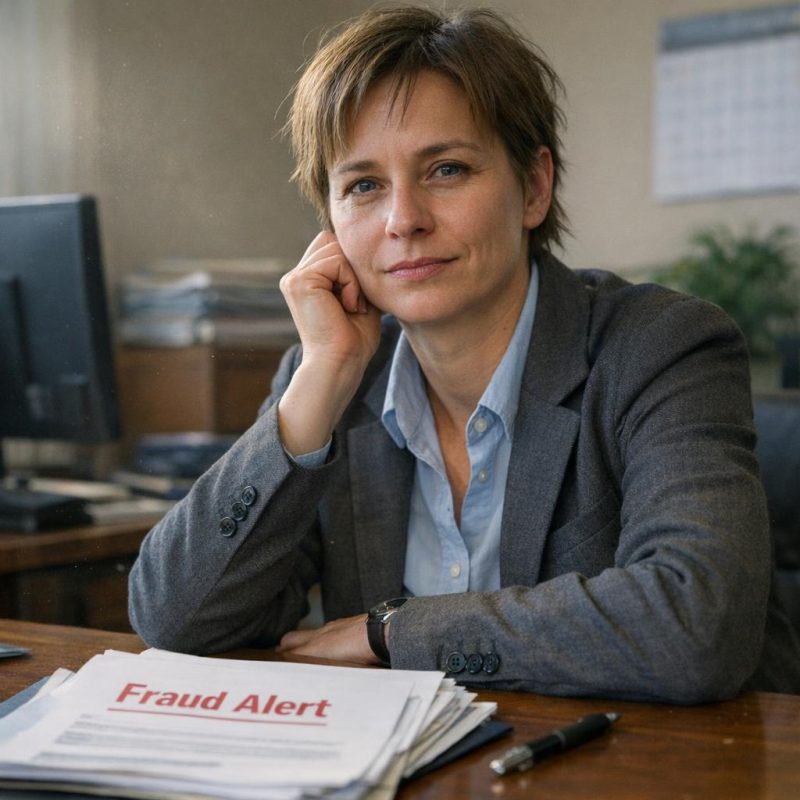 Image by RM AI
The New Key
A week later, I stood in my kitchen holding the new key to my front door. It was brass, freshly cut, with sharp edges that hadn't been worn down yet. It felt heavier than my old key, though I knew that was probably just my imagination. I'd gotten everything back—my locks, my accounts, my sense of security. The police had my statements. The bank had flagged my identity. My credit was frozen solid. I'd done everything right, everything I could possibly do to protect myself. But standing there, looking at that key, I kept thinking about how close it had been. How if I hadn't come home that specific day, if I hadn't noticed the lock was different, if I'd just accepted Rachel's explanation and moved on—where would I be now? Would she have slowly taken over my entire life? Would I have woken up one day to find my bank accounts empty, my house in someone else's name, my own son not believing me? I'd thought the scariest part was realizing someone was trying to steal my identity. But it wasn't. The most unsettling part wasn't that someone tried to take control of my life—it was how close they came by pretending to care.
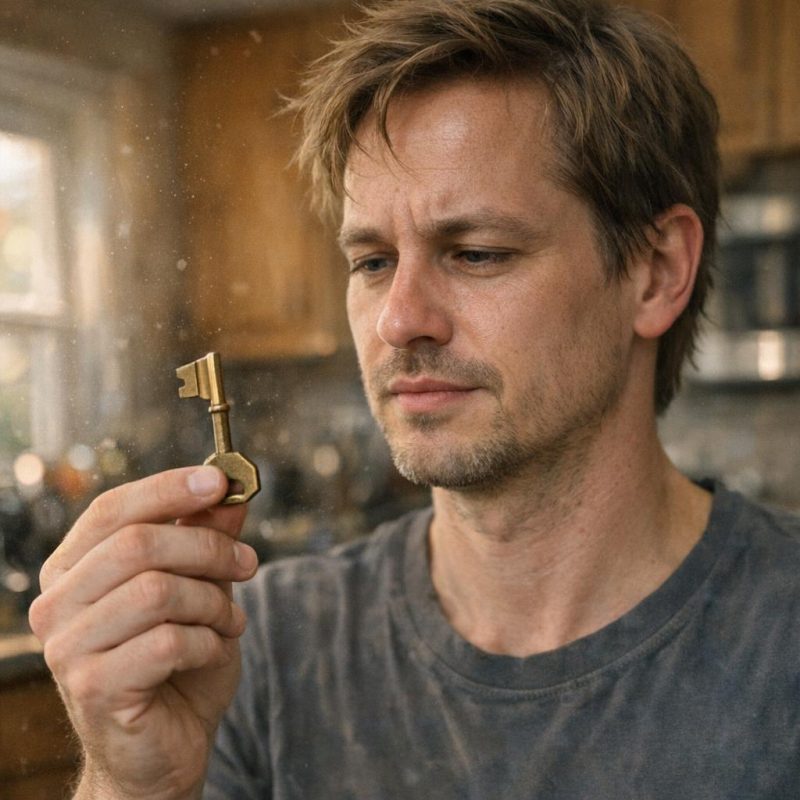 Image by RM AI